The City of Comrades
Basil King
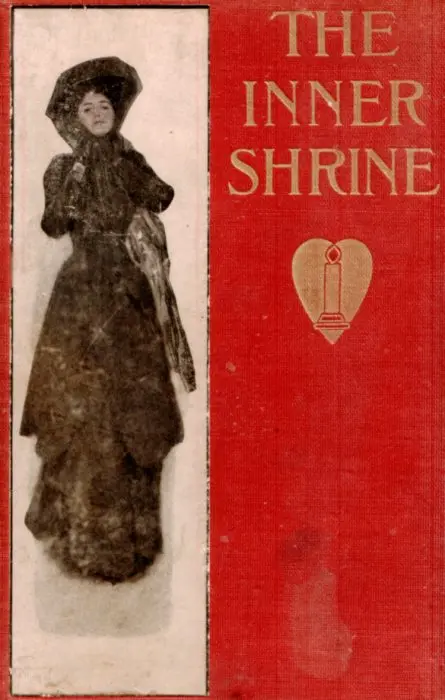
THE CLASSIC COLLECTION · 1908
"The Inner Shrine" by Basil King is a novel written during the early 20th century, around the time of its publication in 1909. The book delves into the complexities of human relationships, focusing primarily on Mrs. Eveleth, a mother harboring deep anxieties about the welfare of her son, George, and his marriage to Diane. The narrative revolves around themes of love, betrayal, and the societal pressures faced by individuals within the context of their family roles and social expectations. The opening of the novel introduces Mrs. Eveleth, who is anxiously awaiting the return of her son George and his wife Diane after a night out in Paris. Her restlessness is fueled by a vague sense of impending disaster, despite the outward appearance of normalcy in their lives. As the story unfolds, Mrs. Eveleth's fears are materialized when she learns that George has been involved in a duel, leading to tragic consequences. The stage is set for exploring the aftermath of this event, highlighting the contrasting grief between Mrs. Eveleth and Diane as they navigate the complexities of their lives in the wake of loss, setting in motion an intricate tale of redemption and societal critique.
Introduction adapted from the source catalogue; source summaries may be automatically generated.
Free to read · English · 79,040 words · No account needed
MAKE TIME FOR A GOOD BOOK
On by default. Untick to stop anonymous reading totals. Each page counts after 10 seconds in view. How this works.
Anonymous counting is on unless you have switched it off.
"Yes," he responded, with the absent air of a man getting his wits together; "I remember; that was the name."
"You knew, then, that I'd been married?"
"Yes; but I didn't know--"
His glance at her dress finished the sentence, and she hastened to
reply.
"No; of course not. My husband died at the beginning of last summer--six months ago. I hoped some one would have told you before we met. But we have not many common acquaintances, have we?"
"I hope we may have more now--if you're making a visit to New York."
"I'm making more than a visit; I expect to stay."
"Oh! Do you think you'll like that?"
"It isn't a question of liking; it's a question of living. I may as well tell you at once that since my husband's death I have my own bread to earn."
To no Frenchwoman of her rank in life could this statement have been an easy one, but by making it with a certain quiet outspokenness she hoped to cover up her foolish sense of shame. The moment was not made less difficult for her by the astonishment, mingled with embarrassment, with which he took her remark.
"You!" he cried. "You!"
"It isn't anything very unusual, is it?" she smiled.
"I'm not the first person in the world to make the attempt."
"And may I ask if you're succeeding?"
"I haven't begun yet. I only arrived a few days ago.
"Oh, I see. You've come here--"
"In the hope of finding employment--just like the rest of the disinherited of the earth. I hope to give French lessons, and--"
"There's always an opening to any one who can," he interrupted, encouragingly. "I'm not without influence in one or two good schools that my daughter has attended--"
"Is that your daughter?" she asked, glad to escape from her subject, now that it was stated plainly--"the very pretty girl in red?"
The question gave Pruyn the excuse he wanted or looking about him.
"I believe she's in red--but I don't see her."
He searched the dimly lighted room, where Mrs. Wappinger sat, silent and satisfied, behind her tea-table, while Mrs. Eveleth was conversing with Lucilla on Knickerbocker genealogy; but neither of the young people was to be seen. His look of anxiety did not escape Diane, who responded to it with her usual straightforward promptness.
"I fancy she's still in the ball-room with young Mr. Wappinger," she explained. "We were all there a few minutes ago, looking at the decorations for the dance Mrs. Wappinger is giving to-night. It was before you came."
Your reading position is saved on this browser. Take it to another device with a library code. Reading pages adapt to text, rather than matching a printed edition.
BEHIND THE BOOK
This eBook is for the use of anyone anywhere in the United States and most other parts of the world at no cost and with almost no restrictions whatsoever. You may copy it, give it away or re-use it under the terms of the Project Gutenberg License included with this eBook or online at www.gutenberg.org. If you are not located in the United States, you will have to check the laws of the country where you are located before using this eBook. Read the source licence.
The original source file, including credits and licence, is retained by this library. Request an original-format copy at no charge. Please include the book title and Project Gutenberg identifier #14393.
KEEP YOUR CURIOSITY GOING
Coulson Kernahan

Maurice Baring
Frances Wright
Cécile Tormay

Frederic Jesup Stimson

W. H. P. (William Henry Pope) Jarvis