The City of Comrades
Basil King
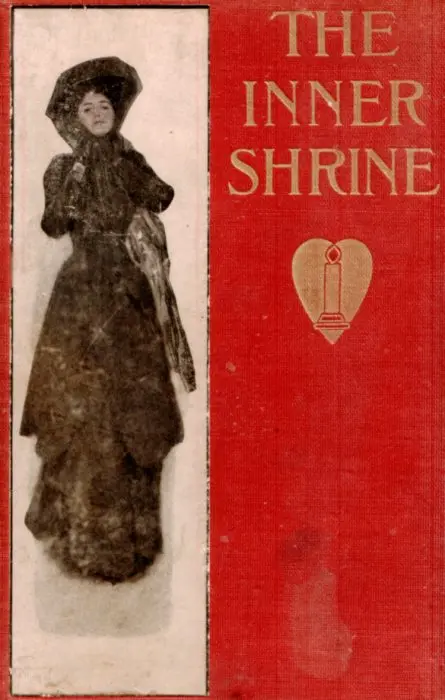
THE CLASSIC COLLECTION · 1908
"The Inner Shrine" by Basil King is a novel written during the early 20th century, around the time of its publication in 1909. The book delves into the complexities of human relationships, focusing primarily on Mrs. Eveleth, a mother harboring deep anxieties about the welfare of her son, George, and his marriage to Diane. The narrative revolves around themes of love, betrayal, and the societal pressures faced by individuals within the context of their family roles and social expectations. The opening of the novel introduces Mrs. Eveleth, who is anxiously awaiting the return of her son George and his wife Diane after a night out in Paris. Her restlessness is fueled by a vague sense of impending disaster, despite the outward appearance of normalcy in their lives. As the story unfolds, Mrs. Eveleth's fears are materialized when she learns that George has been involved in a duel, leading to tragic consequences. The stage is set for exploring the aftermath of this event, highlighting the contrasting grief between Mrs. Eveleth and Diane as they navigate the complexities of their lives in the wake of loss, setting in motion an intricate tale of redemption and societal critique.
Introduction adapted from the source catalogue; source summaries may be automatically generated.
Free to read · English · 79,040 words · No account needed
MAKE TIME FOR A GOOD BOOK
On by default. Untick to stop anonymous reading totals. Each page counts after 10 seconds in view. How this works.
Anonymous counting is on unless you have switched it off.
"Mrs. Eveleth, I believe," he said, when he had surveyed her well. "Have the goodness to sit down, and tell me what I can do for you."
Diane took the seat he indicated, which left a discreet space between them. The heavy black satchel she carried she placed on the floor beside her. When she raised her veil, Mr. van Tromp observed to himself that the pale face, touching in expression, and the brown eyes, in which there seemed to lurk a gentle reproach against the world for having treated her so badly, were exactly what he would have expected in a woman coming to borrow money.
"I've come to you, Mr. van Tromp," Diane began, timidly, "because I thought that perhaps--you might know--who I am."
"I don't know anything at all about you," was the not encouraging
response.
"Of course there's no reason why you should--" Diane hastened to say,
apologetically.
"None whatever," he assured her.
"Only that a good many people do know us--"
"I dare say. I haven't the honor to be among the number."
"And I thought that possibly--just possibly--you might be predisposed in
my favor."
"A banker is never predisposed in favor of any one--not even his own
flesh and blood."
"I didn't know that," Diane persisted, bravely, "otherwise I might just as well have gone to anybody else."
"Just as well."
"Would you like me to go now?"
The question took him by surprise, and before replying he looked at her again with queer, bulgy eyes peering through big circular glasses, in a way that made Diane think of an ogre in a fairy tale.
"You're not here for what I like," he said at last, "but for what you
want yourself."
"That's true," Diane admitted, ruefully, "but I might go away. I will
go away, if you say so."
"You'll please yourself. I didn't send for you, and I'll not tell you to
go. How old are you?"
It was Diane's turn to be surprised, but she brought out her age
promptly.
"Twenty-four."
"You look older."
"That's because I've had so much trouble, perhaps. It's because we're in trouble that I've come to you, Mr. van Tromp."
"I dare say. I didn't suppose you'd come to ask me to dinner. There are not many days go by without some one expecting me to pull him out of the scrape he would never have got into if it hadn't been for his own fault."
"I'm afraid that's very like my case."
"It's like a good many cases. You're no exception to the rule."
"And what do you do at such times, if I may ask?"
Your reading position is saved on this browser. Take it to another device with a library code. Reading pages adapt to text, rather than matching a printed edition.
BEHIND THE BOOK
This eBook is for the use of anyone anywhere in the United States and most other parts of the world at no cost and with almost no restrictions whatsoever. You may copy it, give it away or re-use it under the terms of the Project Gutenberg License included with this eBook or online at www.gutenberg.org. If you are not located in the United States, you will have to check the laws of the country where you are located before using this eBook. Read the source licence.
The original source file, including credits and licence, is retained by this library. Request an original-format copy at no charge. Please include the book title and Project Gutenberg identifier #14393.
KEEP YOUR CURIOSITY GOING
Coulson Kernahan

Maurice Baring
Frances Wright
Cécile Tormay

Frederic Jesup Stimson

W. H. P. (William Henry Pope) Jarvis