The City of Comrades
Basil King
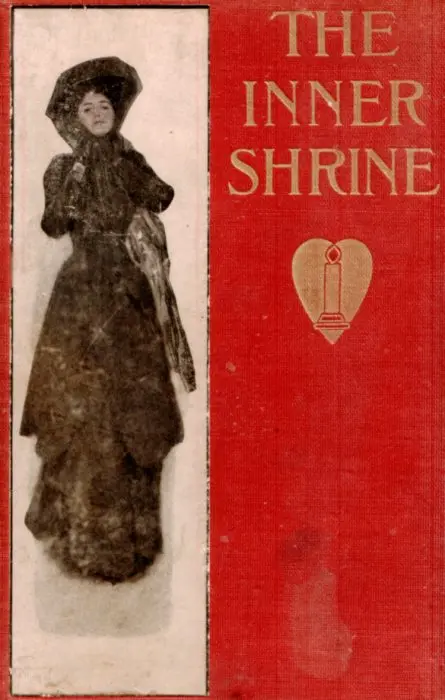
THE CLASSIC COLLECTION · 1908
"The Inner Shrine" by Basil King is a novel written during the early 20th century, around the time of its publication in 1909. The book delves into the complexities of human relationships, focusing primarily on Mrs. Eveleth, a mother harboring deep anxieties about the welfare of her son, George, and his marriage to Diane. The narrative revolves around themes of love, betrayal, and the societal pressures faced by individuals within the context of their family roles and social expectations. The opening of the novel introduces Mrs. Eveleth, who is anxiously awaiting the return of her son George and his wife Diane after a night out in Paris. Her restlessness is fueled by a vague sense of impending disaster, despite the outward appearance of normalcy in their lives. As the story unfolds, Mrs. Eveleth's fears are materialized when she learns that George has been involved in a duel, leading to tragic consequences. The stage is set for exploring the aftermath of this event, highlighting the contrasting grief between Mrs. Eveleth and Diane as they navigate the complexities of their lives in the wake of loss, setting in motion an intricate tale of redemption and societal critique.
Introduction adapted from the source catalogue; source summaries may be automatically generated.
Free to read · English · 79,040 words · No account needed
MAKE TIME FOR A GOOD BOOK
On by default. Untick to stop anonymous reading totals. Each page counts after 10 seconds in view. How this works.
Anonymous counting is on unless you have switched it off.
"Wait!" the banker ordered, as the boy was about to turn. "Who is it?" Without ceremony he drew the card from Diane's hand and looked at it. "Heu!" he cried. "It's Bienville, is it? Of course you'll see him; of course you will; of course! Here, boy, I'll go with you."
Returning to Gramercy Park after this interview, the banker pottered about his apartment until, on hearing the door-bell ring, he looked out of the window and recognized Derek Pruyn's chauffeur. On the stairs, as he went down, he heard Miss Lucilla's voice in the hall.
"Oh, come in, Derek. Marion isn't here yet, but she won't be long. I asked you to come punctually, because I gathered from her note that she wanted to see you very particularly, and without Mrs. Bayford's knowledge. She has evidently something on her mind that she wants to tell you."
"Hello, dears!" the old man interrupted suddenly, as, leaning heavily on the baluster, he descended the stairs. "I've got good news for you."
"Good news, Uncle James?" Miss Lucilla said, reproachfully. With her long, grave face, and in her heavy crape, she looked as though she found good news decidedly out of place.
"The very best," the banker declared, reaching the hall and taking his nephew and niece each by an arm. "Come into the library and I'll tell you. There!" he went on, pushing Miss Lucilla into an arm-chair. "Sit down, Derek, and make yourself comfortable. Now, listen, both of you. Perhaps you're going to have a new aunt."
"Oh, Uncle James!" Miss Lucilla cried, in the voice of a person about to
faint.
"You're going to be married!" Derek roared, with the fury of a father
addressing a wayward son.
"The young woman," the banker went on to explain, "is of French extraction, but Irish on the mother's side."
Derek grasped the arms of his chair and half rose, making an
inarticulate sound.
"'Sh! 'Sh!" the old man went on, lifting a warning hand. "She'd had reverses of fortune; but that wasn't the reason why she came to me. Though her husband had just died, leaving nothing, she had her own dot, on the income of which she could have lived. But that didn't suit her. Her husband had left a mother, who had neither dot nor anything else in the world. At the age of sixty the old woman was a pauper. My little lady came to see me in order to transfer all her own money secretly to her mother-in-law, and face the world herself with empty hands."
"My God!" Derek breathed, just audibly. Miss Lucilla sat upright and tense, hot tears starting to her eyes.
Your reading position is saved on this browser. Take it to another device with a library code. Reading pages adapt to text, rather than matching a printed edition.
BEHIND THE BOOK
This eBook is for the use of anyone anywhere in the United States and most other parts of the world at no cost and with almost no restrictions whatsoever. You may copy it, give it away or re-use it under the terms of the Project Gutenberg License included with this eBook or online at www.gutenberg.org. If you are not located in the United States, you will have to check the laws of the country where you are located before using this eBook. Read the source licence.
The original source file, including credits and licence, is retained by this library. Request an original-format copy at no charge. Please include the book title and Project Gutenberg identifier #14393.
KEEP YOUR CURIOSITY GOING
Coulson Kernahan

Maurice Baring
Frances Wright
Cécile Tormay

Frederic Jesup Stimson

W. H. P. (William Henry Pope) Jarvis