The City of Comrades
Basil King
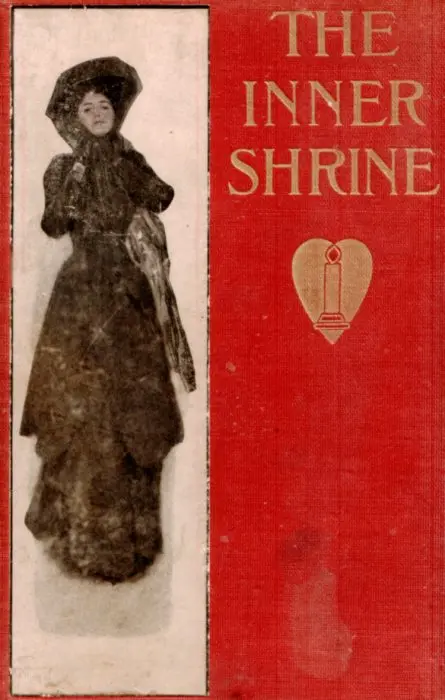
THE CLASSIC COLLECTION · 1908
"The Inner Shrine" by Basil King is a novel written during the early 20th century, around the time of its publication in 1909. The book delves into the complexities of human relationships, focusing primarily on Mrs. Eveleth, a mother harboring deep anxieties about the welfare of her son, George, and his marriage to Diane. The narrative revolves around themes of love, betrayal, and the societal pressures faced by individuals within the context of their family roles and social expectations. The opening of the novel introduces Mrs. Eveleth, who is anxiously awaiting the return of her son George and his wife Diane after a night out in Paris. Her restlessness is fueled by a vague sense of impending disaster, despite the outward appearance of normalcy in their lives. As the story unfolds, Mrs. Eveleth's fears are materialized when she learns that George has been involved in a duel, leading to tragic consequences. The stage is set for exploring the aftermath of this event, highlighting the contrasting grief between Mrs. Eveleth and Diane as they navigate the complexities of their lives in the wake of loss, setting in motion an intricate tale of redemption and societal critique.
Introduction adapted from the source catalogue; source summaries may be automatically generated.
Free to read · English · 79,040 words · No account needed
MAKE TIME FOR A GOOD BOOK
On by default. Untick to stop anonymous reading totals. Each page counts after 10 seconds in view. How this works.
Anonymous counting is on unless you have switched it off.
"It isn't generosity. I'm saying nothing new. I've come only for an answer to the question I asked you before going to South America, three months ago."
"Oh, but I thought that question had answered itself."
"Then perhaps it has--in that, whatever reply you might have given me under other conditions, now you must accept me."
"You mean, I must accept--your name."
"My name, and all that goes with it."
"How could you expect me to do that, after what happened last night?"
"What happened last night shall be--as though it had not happened."
"Could you ever forget it?"
"I didn't say I should forget it. I suppose I couldn't do that any more than you. I said it should be as though it hadn't been."
"And what about Dorothea?"
"That must be as it may."
"You mean that Dorothea would have to take her chance."
"She needn't know anything about it--yet."
"You couldn't keep it from her forever."
"No. But she'll probably marry soon. After that she'll understand things
better."
"That is, she'll understand the position in which you've been placed--that you could hardly have acted otherwise."
"I don't want to go into definitions. There are times in life when words become as dangerous as explosives. Let us do what we see to be our obvious duty, without saying too much about it."
"Isn't it your first duty to protect your child?"
"My first duty, as I see it now, is to protect you."
"I don't see much to be gained by shielding one person when you expose another. What happens to me is a small matter compared with the consequences to her."
"Your influence hasn't hurt her in the past; why should it do so now?"
"You forget that there are other things besides my influence. Her whole position, her whole life, would be changed, if she had for a mother--if you had for a wife--a notorious woman like me."
"There are situations where the child must follow the parent."
"But there are none, as far as I know, in which the parent must
sacrifice the child."
"I don't agree with you. There are moments in which we must act in a certain definite manner, no matter what may be the outcome. Don't let us talk of it any more, Diane. You must know as well as I that there is but one thing for us to do."
"You mean, of course, that I must marry you."
"You must give me the right to take care of you."
"Because it's a duty that no one else would assume. That's what it comes
to, isn't it?"
"I repeat that I don't want to discuss it--"
Your reading position is saved on this browser. Take it to another device with a library code. Reading pages adapt to text, rather than matching a printed edition.
BEHIND THE BOOK
This eBook is for the use of anyone anywhere in the United States and most other parts of the world at no cost and with almost no restrictions whatsoever. You may copy it, give it away or re-use it under the terms of the Project Gutenberg License included with this eBook or online at www.gutenberg.org. If you are not located in the United States, you will have to check the laws of the country where you are located before using this eBook. Read the source licence.
The original source file, including credits and licence, is retained by this library. Request an original-format copy at no charge. Please include the book title and Project Gutenberg identifier #14393.
KEEP YOUR CURIOSITY GOING
Coulson Kernahan

Maurice Baring
Frances Wright
Cécile Tormay

Frederic Jesup Stimson

W. H. P. (William Henry Pope) Jarvis