THE CLASSIC COLLECTION✦Eline VereCLASSIC FREE BOOKS
Eline Vere
Louis Couperus

THE CLASSIC COLLECTION · 1920
"The Inevitable" by Louis Couperus is a novel written in the late 19th century. The story unfolds in a boarding house in Rome, focusing on the life of Cornélie de Retz van Loo, a young Dutch woman recovering from a recent divorce. As she navigates her new reality, the novel explores themes like loneliness, societal expectations, and the search for identity in a foreign city. The opening of the novel introduces the Marchesa Belloni's boarding house, where Cornélie arrives, filled with a mix of excitement and an undercurrent of foreboding. She is greeted by various characters, including the friendly porter and the boisterous marchesa, each representing different facets of life in the pension. While Cornélie attempts to settle into her new environment, she grapples with feelings of displacement and anticipates the arrival of new experiences. The foundation is laid for her introspective journey as she begins to confront not just the loneliness of travel but also the complexities of her past and the uncertain future that lies ahead.
Introduction adapted from the source catalogue; source summaries may be automatically generated.
Free to read · English · 85,880 words · No account needed
MAKE TIME FOR A GOOD BOOK
On by default. Untick to stop anonymous reading totals. Each page counts after 10 seconds in view. How this works.
Anonymous counting is on unless you have switched it off.
"My dear girl, you're upsetting yourself about nothing. But, if
you like, I will write to the prince that he must pay me no more
attentions."
"No, no, don't do that: it'll make Gilio think I'm jealous!"
"And aren't you?"
"Why do you monopolize Gilio? Why do you flirt with him? Why do you make yourself conspicuous with him, as you did yesterday, in a restaurant full of people?"
"Well, if you dislike it, I won't flirt with Gilio again or make myself conspicuous with him again. I don't care twopence about your prince."
"That's an extra reason."
"Very well, dear, that's settled."
Her coolness calmed Urania, who asked:
"And do we remain good friends?"
"Why, of course, my dear girl. Is there any occasion for us to
quarrel? I don't see it."
Both of them, the prince and Urania, were quite indifferent to her. True, she had preached to Urania in the beginning, but about a general idea: when afterwards she perceived Urania's insignificance, she withdrew the interest which she took in her. And, if the girl was offended by a little gaiety and innocent flirtation, very well, there should be no more of it. Her thoughts were more with the proofs which the post had brought her.
She got out of bed and stretched herself:
"Go into the sitting-room, Urania dear, and just let me have my bath."
Presently, all fresh and smiling, she joined Urania in the
sitting-room. Urania was crying.
"My dear child, why are you upsetting yourself like this? You've achieved your ideal. Your marriage is as good as certain. You're waiting for an answer from Chicago? You're impatient? Then cable out. I should have cabled at once in your place. You don't imagine, do you, that your father has any objection to your becoming Duchess di San Stefano?"
"I don't know yet what I myself want," said Urania, weeping. "I don't
know, I don't know."
Cornélie shrugged her shoulders:
"You're more sensible than I thought," she said.
"Are you really my friend? Can I trust you? Can I trust your advice?"
"I won't advise you again. I have advised you. You must know your
own mind."
Urania took her hand:
"Which would you prefer, that I accepted Gilio ... or not?"
Cornélie looked her straight in the eyes:
"You're making yourself unhappy about nothing. You think--and the marchesa probably thinks with you--that I want to take Gilio from you? No, darling, I wouldn't marry Gilio if he were king and emperor. I have a bit of the socialist in me: I don't marry for the sake of a title."
"No more would I."
Your reading position is saved on this browser. Take it to another device with a library code. Reading pages adapt to text, rather than matching a printed edition.
Louis Couperus

Louis Couperus
Louis Couperus
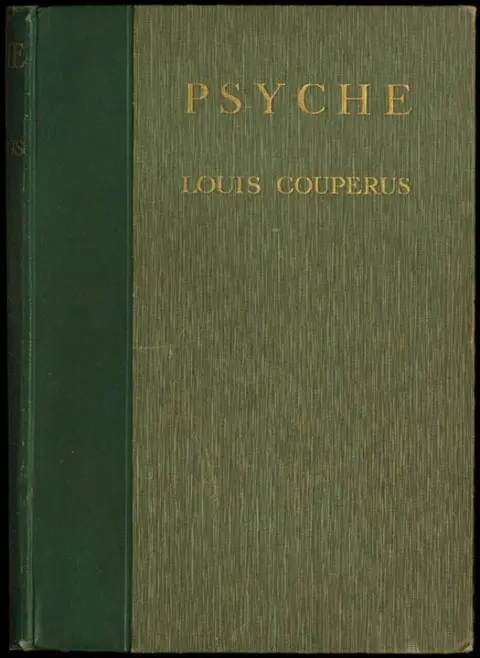
Louis Couperus
BEHIND THE BOOK
This eBook is for the use of anyone anywhere in the United States and most other parts of the world at no cost and with almost no restrictions whatsoever. You may copy it, give it away or re-use it under the terms of the Project Gutenberg License included with this eBook or online at www.gutenberg.org. If you are not located in the United States, you will have to check the laws of the country where you are located before using this eBook. Read the source licence.
The original source file, including credits and licence, is retained by this library. Request an original-format copy at no charge. Please include the book title and Project Gutenberg identifier #43005.
KEEP YOUR CURIOSITY GOING
Coulson Kernahan

Maurice Baring
Frances Wright
Cécile Tormay

Frederic Jesup Stimson

W. H. P. (William Henry Pope) Jarvis