
Living the Radiant Life: A Personal Narrative
George Wharton James
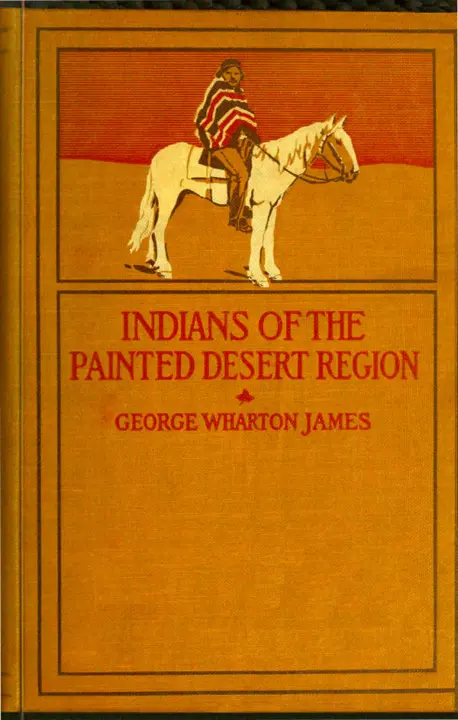
THE CLASSIC COLLECTION · 1903
"The Indians of the Painted Desert Region" by George Wharton James is an ethnographic account written in the early 20th century. The book explores the lives, customs, and cultures of several Native American tribes, namely the Hopis, Navahoes, Wallapais, and Havasupais, who inhabit the Painted Desert region of Arizona. This work seeks to provide readers with a deeper understanding of the unique environment and the people who have adapted to it, emphasizing the complex interplay between their traditions and the harsh realities of their landscape. The opening of the book vividly introduces the fascinating yet daunting landscape of the Painted Desert. James describes the region with poetic imagery, presenting it as a land of striking contrasts where beauty and desolation coexist. He reflects on the historical encounters between Native Americans and early Spanish explorers, establishing the rich cultural tapestry of the tribes that inhabit this area. The chapter also hints at the enduring spirit of these peoples, their religious practices, and the harsh challenges faced in such an unforgiving environment, setting the stage for a more detailed exploration of their customs and history in the following chapters.
Introduction adapted from the source catalogue; source summaries may be automatically generated.
Free to read · English · 81,679 words · No account needed
MAKE TIME FOR A GOOD BOOK
On by default. Untick to stop anonymous reading totals. Each page counts after 10 seconds in view. How this works.
Anonymous counting is on unless you have switched it off.
Suddenly a murmur of approval goes up on every hand. The chief priest of the Antelopes has come out of the kiva, and he is immediately followed by all the others; and, as soon as the line is formed, with reverent mien and stately step, they march to the dance plaza. Here has been erected a cottonwood bower called the "kisi," in the base of which ollas have been placed containing the snakes. In front of this kisi is a hole covered by a plank. This hole represents the entrance to the underworld, and now the chief priest advances toward it, sprinkles a pinch of sacred meal over it, then vigorously stamps upon it, and marches on. The whole line do likewise. Four times the priests circle before the kisi, moving always from right to left, and stamping upon the meal-sprinkled board as they come to it. This is to awaken the attention of the gods of the underworld to the fact that the dance is about to begin.
Now the Antelope priests line up either alongside or in front of the kisi--there being slight and unimportant variations in this and other regards at the different villages--all the while keeping up a solemn and monotonous humming song or prayer, while they await the coming of the Snake priests.
At length, with stately stride and rapid movement, the Snake men come, led by their chief. They go through the same ceremonies of sprinkling, stamping, and circling that the Antelope priests did, and then line up, facing the kisi.
The two lines now for several minutes sing, rattle, sway their bodies to and fro and back and forth in a most impressive and interesting manner, until, at a given signal, the Snake priests break up their line and divide into groups of three. The first group advances to the kisi. The first man of the group kneels down and receives from the warrior priest, who has entered the kisi, a writhing, wriggling, and, perhaps, dangerous reptile. Without a moment's hesitation the priest breathes upon it, puts it between his teeth, rises, and upon his companion's placing one arm around his shoulders, the two begin to amble and prance along, followed by the third member of their group, around the prescribed circuit. With a peculiar swaying of body, a rapid and jerky lifting high of one leg, then quickly dropping it and raising the other, the "carrier" and his "hugger" proceed about three-fourths of the circuit, when the carrier drops the snake from his mouth, and passes on to take his place to again visit the kisi, obtain another snake, and repeat the performance. But now comes in the duty of the "gatherer," the third man of the group. As soon as the snake falls to the ground, it naturally desires to escape. With a pinch of sacred meal in his fingers and his snake whip in his hand, the gatherer rapidly advances, scatters the meal over the snake, stoops, and like a flash has him in his hands. Sometimes, however, a vicious rattlesnake, resenting the rough treatment, coils ready to strike. Now watch the dexterous handling by a Hopi of a venomous creature aroused to anger. With a "dab" of meal, the snake whip is brought into play, and the tickling feathers gently touch the angry reptile. As soon as he feels them, he uncoils and seeks to escape. Now is the time! Quicker than the eye can follow, the expert "gatherer" seizes the escaping creature, and that excitement is ended, only to allow the visitor to witness a similar scene going on elsewhere with other participants. In the meantime all the snake carriers have received their snakes and are perambulating around as did the first one, so that, until all the snakes are brought into use, it is an endless chain, composed of "carrier," snake, "hugger," and "gatherer." Now and again a snake glides away toward the group of spectators, and there is a frantic dash to get away. But the gatherers never fail to stop and capture their particular reptile. As the dance continues, the gatherers have more than their hands full, so, to ease themselves, they hand over their excited and wriggling victims to the Antelope priests, who, during the whole of this part of the ceremony, remain in line, solemnly chanting.
Your reading position is saved on this browser. Take it to another device with a library code. Reading pages adapt to text, rather than matching a printed edition.
George Wharton James

George Wharton James

George Wharton James
George Wharton James
BEHIND THE BOOK
This eBook is for the use of anyone anywhere in the United States and most other parts of the world at no cost and with almost no restrictions whatsoever. You may copy it, give it away or re-use it under the terms of the Project Gutenberg License included with this eBook or online at www.gutenberg.org. If you are not located in the United States, you will have to check the laws of the country where you are located before using this eBook. Read the source licence.
The original source file, including credits and licence, is retained by this library. Request an original-format copy at no charge. Please include the book title and Project Gutenberg identifier #44627.
KEEP YOUR CURIOSITY GOING

David Patterson (Spirit) Hatch

David Patterson (Spirit) Hatch

David Patterson (Spirit) Hatch
Cécile Tormay

Moritz Busch
John L. Ransom