
Living the Radiant Life: A Personal Narrative
George Wharton James
THE CLASSIC COLLECTION · 1903
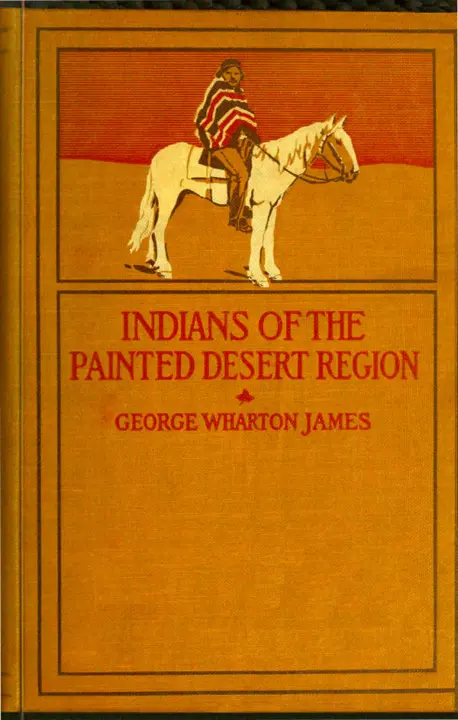
"The Indians of the Painted Desert Region" by George Wharton James is an ethnographic account written in the early 20th century. The book explores the lives, customs, and cultures of several Native American tribes, namely the Hopis, Navahoes, Wallapais, and Havasupais, who inhabit the Painted Desert region of Arizona. This work seeks to provide readers with a deeper understanding of the unique environment and the people who have adapted to it, emphasizing the complex interplay between their traditions and the harsh realities of their landscape. The opening of the book vividly introduces the fascinating yet daunting landscape of the Painted Desert. James describes the region with poetic imagery, presenting it as a land of striking contrasts where beauty and desolation coexist. He reflects on the historical encounters between Native Americans and early Spanish explorers, establishing the rich cultural tapestry of the tribes that inhabit this area. The chapter also hints at the enduring spirit of these peoples, their religious practices, and the harsh challenges faced in such an unforgiving environment, setting the stage for a more detailed exploration of their customs and history in the following chapters.
Introduction adapted from the source catalogue; source summaries may be automatically generated.
Free to read · English · 81,679 words · No account needed
MAKE TIME FOR A GOOD BOOK
On by default. Untick to stop anonymous reading totals. Each page counts after 10 seconds in view. How this works.
Anonymous counting is on unless you have switched it off.
Of no people of the Southwest, perhaps, has so much utter nonsense been written as of this interesting People of the Blue Water, the pai (people) of the vasu (blue) haha (water)--the Havasupais. As far as we know, Padre Garcés was the first white man to visit them in their Cataract Canyon home, and he speaks of his visit in his interesting Diary translated and annotated by the lamented Elliott Coues shortly before his death.
Captain Sitgreaves, Lieutenant Ives, Captain Palfrey, Major J. W. Powell, Lieut. F. H. Cushing, and others in turn visited them, but very little was either known or written about them when, over a dozen years ago, I was conducted to their marvellously picturesque home by Mr. W. W. Bass, the well-known guide of the Grand Canyon.
The journey on that occasion was a remarkable one for me, as, though I was fairly well versed in the trails of the Grand Canyon (having then descended four of them), I had never seen such a trail as was the Topocobya Trail down which we descended late in the evening. Leaving our wagon, after sixteen miles' drive through the Kohonino Forest from Bass Camp, we packed food, blankets, and cameras on horses and burros, and, after two miles of travel in what in Western parlance is called a "draw," the real head of the trail was reached. We walked in the closing dusk of day to the edge of the precipice and looked off to where our guide told us we must shortly be travelling. Far below, almost a thousand feet, without the sign of a trail, it seemed as if he must be hoaxing us. Soon, however, as we followed him, we found ourselves on a rocky shelf, and then began the most stupendous series of zigzags I had ever been on. Back and forth we wended, our trail a mere scratch on the rocky slope, here descending rugged steps, where a misstep meant sure and awful death. Higher and higher the walls rose around us; darker and darker grew the night; more weird and awesome the wind and weather carved figures sculptured on the sides and summits of the walls, and still down we went. At last we reached a vast cavernous-like place where Topocobya Spring is located. A small flow of water comes from the solid rock, and there we watered our horses and filled up our canteens prior to advancing on our seemingly never-ending descent. At last we reached the level, and there, lighting a fire, made camp and rested before penetrating farther into the deep and mystic recesses of the Havasupais. Early in the morning we began the farther descent. Mile after mile we traversed, first riding on the dry bed of the winter stream, then entering the narrower walls formed by the erosion of centuries through first one stratum of rock, then another. Now we were riding on a narrow shelf, on one side of which was a high wall, and on the other a deep, narrow ravine, in the bottom of which the erosive forces have cut a number of holes,--small troughs or bath tubs in the sandstone, where during the rainy season pools of delicious water may be found. In a short time we were riding up or down literal stairways cut in the rock, or rounding "Cape Horns," where we held our breath at the dreadful consequences that would ensue were horse or man to slip. Entering Rattlesnake Canyon our whole course was on a shelving slope of rock, over which even experienced horses tread gingerly. At last we came to the bed of the main canyon, and then for five or six miles we journeyed on, in the sand or the gravelly wash, for the stream that flows through this narrow canyon in storm times has no other law than its own wilful force. To-day we ride in one place, to-morrow's storm changes everything. After numberless twinings and twistings, all of which, however, gave a persistent northwesterly direction to our travelling, we came in sight of a score or so of large and fine cottonwood trees, whose height far surpassed the smaller mesquite, cottonwood, and other trees that line much of the canyon's bed. These large trees told us our journey was practically at an end, for here begins the outpouring of the numberless springs that make the stream we can already hear rushing in its pebbly bed lower down. Without any premonition they spring out in large and small volume at the foot of some of these trees, and the Havasu--the Blue Water--is made. Every few yards adds to the water's volume, for more springs empty their flow into it. The first and only real buildings are the schoolhouse and the homes of the farmer and teachers, and then, at once, begin the small farms of the Havasupais.
Your reading position is saved on this browser. Take it to another device with a library code. Reading pages adapt to text, rather than matching a printed edition.
George Wharton James

George Wharton James
George Wharton James
George Wharton James
BEHIND THE BOOK
This eBook is for the use of anyone anywhere in the United States and most other parts of the world at no cost and with almost no restrictions whatsoever. You may copy it, give it away or re-use it under the terms of the Project Gutenberg License included with this eBook or online at www.gutenberg.org. If you are not located in the United States, you will have to check the laws of the country where you are located before using this eBook. Read the source licence.
The original source file, including credits and licence, is retained by this library. Request an original-format copy at no charge. Please include the book title and Project Gutenberg identifier #44627.
KEEP YOUR CURIOSITY GOING

David Patterson (Spirit) Hatch

David Patterson (Spirit) Hatch

David Patterson (Spirit) Hatch
Cécile Tormay

Moritz Busch
John L. Ransom