
Living the Radiant Life: A Personal Narrative
George Wharton James
THE CLASSIC COLLECTION · 1903
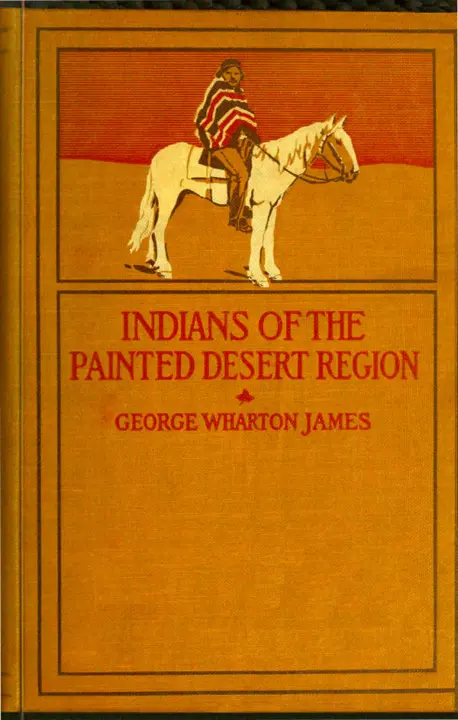
"The Indians of the Painted Desert Region" by George Wharton James is an ethnographic account written in the early 20th century. The book explores the lives, customs, and cultures of several Native American tribes, namely the Hopis, Navahoes, Wallapais, and Havasupais, who inhabit the Painted Desert region of Arizona. This work seeks to provide readers with a deeper understanding of the unique environment and the people who have adapted to it, emphasizing the complex interplay between their traditions and the harsh realities of their landscape. The opening of the book vividly introduces the fascinating yet daunting landscape of the Painted Desert. James describes the region with poetic imagery, presenting it as a land of striking contrasts where beauty and desolation coexist. He reflects on the historical encounters between Native Americans and early Spanish explorers, establishing the rich cultural tapestry of the tribes that inhabit this area. The chapter also hints at the enduring spirit of these peoples, their religious practices, and the harsh challenges faced in such an unforgiving environment, setting the stage for a more detailed exploration of their customs and history in the following chapters.
Introduction adapted from the source catalogue; source summaries may be automatically generated.
Free to read · English · 81,679 words · No account needed
MAKE TIME FOR A GOOD BOOK
On by default. Untick to stop anonymous reading totals. Each page counts after 10 seconds in view. How this works.
Anonymous counting is on unless you have switched it off.
Of the flora and fauna of the Painted Desert Region I have made no study. That they are fascinating the works of Hart Merriam, Coville, Lemmon, Hough, and others of later days, and of the specialists of the earlier government surveys, abundantly testify. There are cacti of varieties into the hundreds, sagebrush, black and white grama, bunch grass, salt grass, hackberry, buck-brush, pines, junipers, spruces, cottonwoods, and willows, besides a thousand flowering plants. There are lizards, swifts, rattlesnakes, scorpions, Gila monsters, vinegerones, prairie dogs, hedgehogs, turtles, squirrels, cottontail and jack-rabbits, antelope, deer, mountain sheep, wildcats, and some bear.
It is more of its physiographic conditions in a general way, however,
that I would here write.
Most people's conception of a desert is a flat, level place of nothing but sand. It is sand instead of water; a desert instead of an ocean. Few deserts conform to this conception,--none, indeed, that I know of in the boundaries of the United States. This Painted Desert Region is wonderfully diversified. There is sand, of course, but much rock, many trees, more canyons, some mountains and lava flows, extinct volcanoes, forests, and pastures. The Grand Canyon runs across its northern borders, and it is the vampire river that flows in that never-to-be-described water-way that drains away the water which leaves this the desert region it is; for the Colorado has many tributaries, and tributaries of tributaries,--the Little Colorado, Havasu (Cataract) Creek, Canyon Padre, Canyon Diablo, Walnut Creek, Oak Creek, Willow Creek, Diamond Creek, and a score or hundred others.
Its great mountains are the San Francisco range, on the shoulders of which Flagstaff is located, Mount San Mateo, seen from the Santa Fé train near Grants in New Mexico, and Williams Mountain, west of Flagstaff, at the foot of which the railway traveller will see the town of Williams.
Near Flagstaff are a number of extinct volcanoes and great masses of lava flow; from the train at Blue Water to the right a few miles one may see the crater Tintaro--the Inkstand. The Zuni Mountains have many craters, chief of which is the Agua Fria crater, and lava flows from the Zuni Mountains and Mount San Mateo meet in the valley, and one rides alongside them for miles coming west beyond Laguna.
South of Canyon Diablo is a wonderful meteoritic mountain, the explanation of whose existence the scientists have not yet determined. From Peach Springs a large meteoric rock was sent to the Smithsonian, and I have one dug out of a hole of its own making in the Zuni Mountains, both of which weigh upwards of a ton.
Your reading position is saved on this browser. Take it to another device with a library code. Reading pages adapt to text, rather than matching a printed edition.
George Wharton James

George Wharton James
George Wharton James
George Wharton James
BEHIND THE BOOK
This eBook is for the use of anyone anywhere in the United States and most other parts of the world at no cost and with almost no restrictions whatsoever. You may copy it, give it away or re-use it under the terms of the Project Gutenberg License included with this eBook or online at www.gutenberg.org. If you are not located in the United States, you will have to check the laws of the country where you are located before using this eBook. Read the source licence.
The original source file, including credits and licence, is retained by this library. Request an original-format copy at no charge. Please include the book title and Project Gutenberg identifier #44627.
KEEP YOUR CURIOSITY GOING

David Patterson (Spirit) Hatch

David Patterson (Spirit) Hatch

David Patterson (Spirit) Hatch
Cécile Tormay

Moritz Busch
John L. Ransom