Living the Radiant Life: A Personal Narrative
George Wharton James
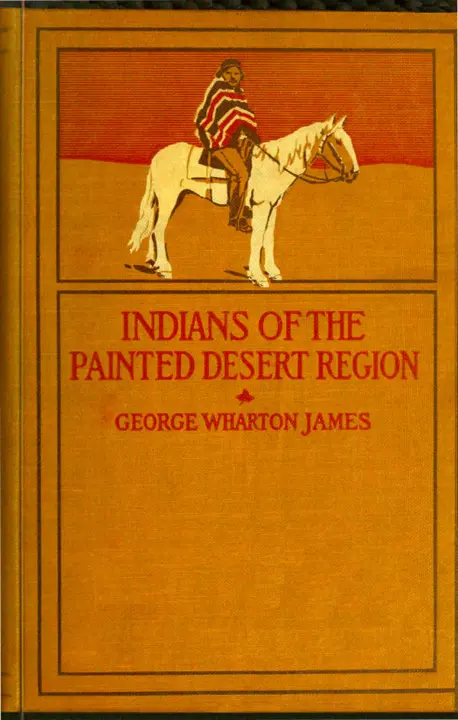
THE CLASSIC COLLECTION · 1903
"The Indians of the Painted Desert Region" by George Wharton James is an ethnographic account written in the early 20th century. The book explores the lives, customs, and cultures of several Native American tribes, namely the Hopis, Navahoes, Wallapais, and Havasupais, who inhabit the Painted Desert region of Arizona. This work seeks to provide readers with a deeper understanding of the unique environment and the people who have adapted to it, emphasizing the complex interplay between their traditions and the harsh realities of their landscape. The opening of the book vividly introduces the fascinating yet daunting landscape of the Painted Desert. James describes the region with poetic imagery, presenting it as a land of striking contrasts where beauty and desolation coexist. He reflects on the historical encounters between Native Americans and early Spanish explorers, establishing the rich cultural tapestry of the tribes that inhabit this area. The chapter also hints at the enduring spirit of these peoples, their religious practices, and the harsh challenges faced in such an unforgiving environment, setting the stage for a more detailed exploration of their customs and history in the following chapters.
Introduction adapted from the source catalogue; source summaries may be automatically generated.
Free to read · English · 81,679 words · No account needed
MAKE TIME FOR A GOOD BOOK
On by default. Untick to stop anonymous reading totals. Each page counts after 10 seconds in view. How this works.
Anonymous counting is on unless you have switched it off.
Indeed, the Painted Desert Region, though a part of the United States of America, is a land of peoples strange, unique, complex, diverse, and singular as can be found in any similar area on the earth, and the physical contour of the country is as strange and diverse as are the peoples who inhabit it.
It is a land of gloriously impressive mountains, crowned with the snows of blessing and bathed in a wealth of glowing colors, changing hues, and tender tints that few other countries on earth can boast.
On its eastern outskirt is a portion of one of the largest cretaceous monoclines in the world, and near by is a natural inkstand, half a mile in circumference, from which, centuries ago, flowed fiery, inky lava which has now solidified in intensest blackness over hundreds of miles of surrounding country.
It is a land of mountain-high plateaus, edged with bluffs, cliffs, and escarpments that delight the distant beholder with their richness of coloring and wondrous variety of outline, and thrill with horror those who unexpectedly stand on their brinks.
It is a land of laziness and indifferent content, where everything is done "poco tiempo"--"in a little while"--and where "to-morrow" is early enough for all laborious tasks, and yet a land of such tireless energy, never-ceasing work, and arduous labor as few countries else have ever known.
A land where people live in refinement, education, and all the luxuries of twentieth-century civilization side by side with peoples whose dress, modes of living, habits of eating and sleeping, styles of food and cookery are similar to those of the subjects of Boadicea and Caractacus.
In the Painted Desert Region the root of one dangerous-looking prickly cactus is used for soap, and the fruit of another for food.
Here horses dig for water, and mules are stimulated by whiskey to draw their weighty loads over torrid deserts and up mountain steeps.
It is a land of ruins, desolate and forlorn, buried and forgotten, with histories tragic, bloody, romantic; ruins where charred timbers, ghastly bones, and demolished walls speak of midnight attacks, treacherous surprises, and cruel slaughters; where whole cities have been exterminated and destroyed as if under the ancient commands to the Hebrews: "Destroy, slay, kill, and spare not."
A desert country, and yet, in spots, marvellously fertile. Barren, wild, desolate, forsaken it is, and yet, here and there, fertile valleys, wooded slopes, and garden patches may be found as rich as any on earth.
Your reading position is saved on this browser. Take it to another device with a library code. Reading pages adapt to text, rather than matching a printed edition.
George Wharton James
George Wharton James
George Wharton James
George Wharton James
BEHIND THE BOOK
This eBook is for the use of anyone anywhere in the United States and most other parts of the world at no cost and with almost no restrictions whatsoever. You may copy it, give it away or re-use it under the terms of the Project Gutenberg License included with this eBook or online at www.gutenberg.org. If you are not located in the United States, you will have to check the laws of the country where you are located before using this eBook. Read the source licence.
The original source file, including credits and licence, is retained by this library. Request an original-format copy at no charge. Please include the book title and Project Gutenberg identifier #44627.
KEEP YOUR CURIOSITY GOING

David Patterson (Spirit) Hatch

David Patterson (Spirit) Hatch

David Patterson (Spirit) Hatch
Cécile Tormay

Moritz Busch
John L. Ransom