
Living the Radiant Life: A Personal Narrative
George Wharton James
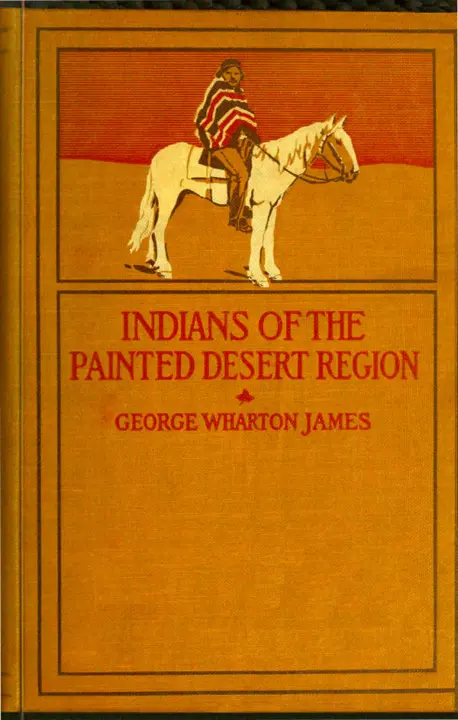
THE CLASSIC COLLECTION · 1903
"The Indians of the Painted Desert Region" by George Wharton James is an ethnographic account written in the early 20th century. The book explores the lives, customs, and cultures of several Native American tribes, namely the Hopis, Navahoes, Wallapais, and Havasupais, who inhabit the Painted Desert region of Arizona. This work seeks to provide readers with a deeper understanding of the unique environment and the people who have adapted to it, emphasizing the complex interplay between their traditions and the harsh realities of their landscape. The opening of the book vividly introduces the fascinating yet daunting landscape of the Painted Desert. James describes the region with poetic imagery, presenting it as a land of striking contrasts where beauty and desolation coexist. He reflects on the historical encounters between Native Americans and early Spanish explorers, establishing the rich cultural tapestry of the tribes that inhabit this area. The chapter also hints at the enduring spirit of these peoples, their religious practices, and the harsh challenges faced in such an unforgiving environment, setting the stage for a more detailed exploration of their customs and history in the following chapters.
Introduction adapted from the source catalogue; source summaries may be automatically generated.
Free to read · English · 81,679 words · No account needed
MAKE TIME FOR A GOOD BOOK
On by default. Untick to stop anonymous reading totals. Each page counts after 10 seconds in view. How this works.
Anonymous counting is on unless you have switched it off.
This, in the main, is the snake legend. The catching of the snakes foreshadowed in the snake legend is faithfully carried out each year by the Snake men. After earnest prayer, each man is provided with a hoe, a snake whip, consisting of feathers tied to two sticks, a sack of sacred meal (corn-meal especially prayed and smoked over by the chief priest), and a small buckskin bag, and on the fourth day after the setting up of the Antelope altar they go out to the north for the purpose of catching the snakes. Familiarity from childhood with the haunts of the snakes, which are never molested, enables them to go almost directly to places where they may be found. As soon as a reptile is seen, prayers are offered, sacred meal sprinkled upon him, the snake whip gently stroked upon him, and then he is seized and placed in the bag. In the evening the priests return and deposit their snakes in a large earthenware olla provided for the occasion. I should have noted that before they go out their altar is erected. This varies in the different villages, the most complete and perfect altar being at Walpi. At Oraibi the altar consists of the two wooden images--the little war gods--named Pü-ü-kon-hoy-a and Pal-un-hoy-a; and in 1898 I succeeded, with considerable difficulty, in getting into the Snake kiva and making a fairly good photograph of these gods.
The catching of the snakes occupies four days, one day for each of the
four world quarters.
At near sunset of the eighth day a public dance of the Antelope priests takes place in the plaza, similar in many respects to the Snake Dance, except that corn stalks are carried by the priests instead of snakes.
On the morning of the ninth day the race of the young men occurs. This is an exciting scene. Long before sunrise the Hopis, and as many visitors as have climbed the mesa heights, huddle together or sleepily sit watching a point far off in the desert. It is from that region--one of the springs--the racers are to come. Soon they are seen in the far-away distance as tiny specks, moving over the tawny sand, and scarcely distinguishable. One morning I stayed below at the spring on the western side of the mesa to watch them. The whole line of the mesa-top ruled an irregular but clearly defined line against the morning sky. The air was clear and pure, sweet and cool. From the Gap to the end of the mesa upon which Walpi stands crowds of spectators were silhouetted against the sky. The background, seen from my low angle of vision, was a pure blue; above, the sky was mottled with white clouds. On every projecting point which afforded a view the spectators stood, tiny figures taken from a child's Noah's Ark, chunky bodies, with a crowning ball of wood for head. But even at that distance and against the coming sunlight the brilliant colors of the dresses of the Indians, men and women, were revealed. Every note in the gorgeous gamut of color was played in fantastic and unrestrained melody. At Walpi the spectators crowded the house-tops, which there overlook the very edge of the mesa. The point was crowded. The morning light was just touching the cliffs of the west when the sound of the coming bells was heard. Jingle, jingle, jingle, they came, growing in sound at every step. There was movement among the spectators, each one craning his neck to see the strenuous efforts of the runners. Jingle, jingle, jingle, louder and louder, showing that the strides of these runners are great; they are making rapid bites at the distance that intervenes between them and the goal. Now they can be individually discerned. Their reddish-brown bodies, long black hair streaming behind, sunflowers crowning some, heaving chests, tremendous strides, swinging gait, make a fascinating picture. Now they crowd each other on the sandy trail. A spurt is being made, and one of the rear men passes to the front and becomes the leader. From the mesa heights the shouts and cheers denote that his success has been observed. Others crowd along. The spectators become excited and cheer on their favorites. Now the foot of the steep portion of the trail is reached. Surely this precipitous ascent will abate their ardor and slacken their speed. The steps are high, and it is a rise of several hundred feet to the mesa-top. The very difficulties seem to spur them on to greater effort. With bounds like those of deer or chamois, up they fly, two steps at a time. The pace and ascent are killing, but they are trained to it, having spent their lives running over these hot sands and climbing these trails. To them a "rush" up the mesa heights is a part of their religious training. The priests are now ready to receive them at the head of the trail. The first to arrive is the winner, and he is sprinkled with the sacred meal and water, and then he hurries on to the Antelope kiva, where the chief priest gives him bahos, sacred meal, and an amulet of great power. The other racers in the meantime have reached the summit, and I could see their running figures on the narrow neck of rock which connects Sichumavi with Walpi. They are going to deposit prayer offerings at an appointed shrine. On their arrival the race is done.
Your reading position is saved on this browser. Take it to another device with a library code. Reading pages adapt to text, rather than matching a printed edition.
George Wharton James

George Wharton James

George Wharton James
George Wharton James
BEHIND THE BOOK
This eBook is for the use of anyone anywhere in the United States and most other parts of the world at no cost and with almost no restrictions whatsoever. You may copy it, give it away or re-use it under the terms of the Project Gutenberg License included with this eBook or online at www.gutenberg.org. If you are not located in the United States, you will have to check the laws of the country where you are located before using this eBook. Read the source licence.
The original source file, including credits and licence, is retained by this library. Request an original-format copy at no charge. Please include the book title and Project Gutenberg identifier #44627.
KEEP YOUR CURIOSITY GOING

David Patterson (Spirit) Hatch

David Patterson (Spirit) Hatch

David Patterson (Spirit) Hatch
Cécile Tormay

Moritz Busch
John L. Ransom