Living the Radiant Life: A Personal Narrative
George Wharton James
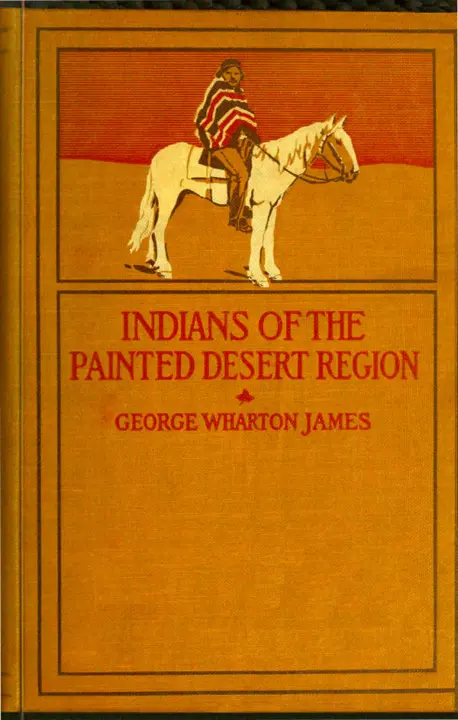
THE CLASSIC COLLECTION · 1903
"The Indians of the Painted Desert Region" by George Wharton James is an ethnographic account written in the early 20th century. The book explores the lives, customs, and cultures of several Native American tribes, namely the Hopis, Navahoes, Wallapais, and Havasupais, who inhabit the Painted Desert region of Arizona. This work seeks to provide readers with a deeper understanding of the unique environment and the people who have adapted to it, emphasizing the complex interplay between their traditions and the harsh realities of their landscape. The opening of the book vividly introduces the fascinating yet daunting landscape of the Painted Desert. James describes the region with poetic imagery, presenting it as a land of striking contrasts where beauty and desolation coexist. He reflects on the historical encounters between Native Americans and early Spanish explorers, establishing the rich cultural tapestry of the tribes that inhabit this area. The chapter also hints at the enduring spirit of these peoples, their religious practices, and the harsh challenges faced in such an unforgiving environment, setting the stage for a more detailed exploration of their customs and history in the following chapters.
Introduction adapted from the source catalogue; source summaries may be automatically generated.
Free to read · English · 81,679 words · No account needed
MAKE TIME FOR A GOOD BOOK
On by default. Untick to stop anonymous reading totals. Each page counts after 10 seconds in view. How this works.
Anonymous counting is on unless you have switched it off.
Preliminary Account of an Expedition to the Pueblo Ruins near Winslow, Arizona, in 1896. (In Smithsonian Report for 1896. Pages 517 to 539.)
Preliminary Account of Archæological Field Work in Arizona in 1897. (In Smithsonian Report for 1897. Pages 601 to 603.)
Two Ruins Recently Discovered in the Red Rock Country, Arizona. (In American Anthropologist, August, 1896. Pages 263 to 283.)
Pueblo Ruins near Flagstaff, Arizona. (In American Anthropologist, N. S., Vol. II, 1900. Pages 422 to 450.)
A Suggestion as to the Meaning of the Moki Snake Dance. (In Journal of American Folk-Lore, date unknown. Pages 129 to 138.)
The Owakulti Altar at Sichomovi Pueblo. (In American Anthropologist, N. S., Vol. III, 1901. Pages 211 to 226.)
An Interpretation of Katchina Worship. (In the Journal of American Folk-Lore, April-June, 1901. Pages 81 to 94.)
The Pueblo Settlements near El Paso, Texas. (In American Anthropologist, N. S., Vol. IV, No. 1, 1902. Pages 57 to 95.)
The New Fire Ceremony at Walpi. (In American Anthropologist, N. S., Vol. II, No. 1, 1900. Pages 80 to 138.)
Property Rights in Eagles among the Hopi. (In American Anthropologist, N. S., Vol. II, 1900. Pages 690 to 707.)
Tusayan Flute and Snake Ceremonies. (In Nineteenth Annual Report Bureau of American Ethnology, 1901. Pages 957 to 1011.)
Archæological Expedition to Arizona in 1895. (In Seventeenth Annual Report Bureau of American Ethnology, 1898. Pages 520 to 744.)
Snake Ceremonials at Walpi. (Vol. XIV. of Journal of American Ethnology and Archæology. Houghton, Mifflin & Co., Boston, 1894. In this volume is a carefully prepared bibliography on the Snake Dance (see pages 124 to 126) which is too lengthy to be reproduced here and to which the student is referred.)
Diary and Itinerary, translated by Elliott Coues. (See Coues.)
Environmental Interrelations in Arizona. (In American Anthropologist for May, 1898. Pages 133 to 155.)
In and Around the Grand Canyon. Little, Brown, & Co., Boston, Mass.,
1900.
Indian Basketry. Henry Malkan, New York, 1901.
The Havasupai Indians and their Cataract Canyon Home. (In Good Health, Battle Creek, Mich., August, 1899. Pages 446 to 456.)
The Industries of the Navahoes and Mokis. (In Good Health, June, 1899.
Pages 315 to 322.)
The Pueblo Indians and their Prayer Spring. (In Good Health, July,
1899. Pages 379 to 384.)
The Snake Dance of the Mokis. (Two articles in Scientific American, New York, June 24, 1899, and September 9, 1899.)
Scenes of Spanish Occupancy in our Southwest. (In American Monthly Review of Reviews, July, 1899. Pages 51 to 59.)
Discovery of Cliff Dwellings in the Southwest. (In Scientific American, New York, January 20, 1900.)
What I Saw at the Snake Dance. (In Wide World Magazine, London, January, 1900. Pages 264 to 274.)
Harvest Festivals of Some of our Southwestern Aborigines. (In Good Health, October, 1899. Pages 583 to 589.)
Moki Fashions and Customs. (In Good Health, November, 1899. Pages 641
to 647).
Types of Female Beauty among the Indians of the Southwest. (In Overland Monthly, San Francisco, Cal., March, 1900. Pages 195 to 209).
Some Indian Women. (In New York Tribune Supplement, April 8, 1900.)
Your reading position is saved on this browser. Take it to another device with a library code. Reading pages adapt to text, rather than matching a printed edition.
George Wharton James

George Wharton James
George Wharton James
George Wharton James
BEHIND THE BOOK
This eBook is for the use of anyone anywhere in the United States and most other parts of the world at no cost and with almost no restrictions whatsoever. You may copy it, give it away or re-use it under the terms of the Project Gutenberg License included with this eBook or online at www.gutenberg.org. If you are not located in the United States, you will have to check the laws of the country where you are located before using this eBook. Read the source licence.
The original source file, including credits and licence, is retained by this library. Request an original-format copy at no charge. Please include the book title and Project Gutenberg identifier #44627.
KEEP YOUR CURIOSITY GOING

David Patterson (Spirit) Hatch

David Patterson (Spirit) Hatch

David Patterson (Spirit) Hatch
Cécile Tormay

Moritz Busch
John L. Ransom