Living the Radiant Life: A Personal Narrative
George Wharton James
THE CLASSIC COLLECTION · 1903
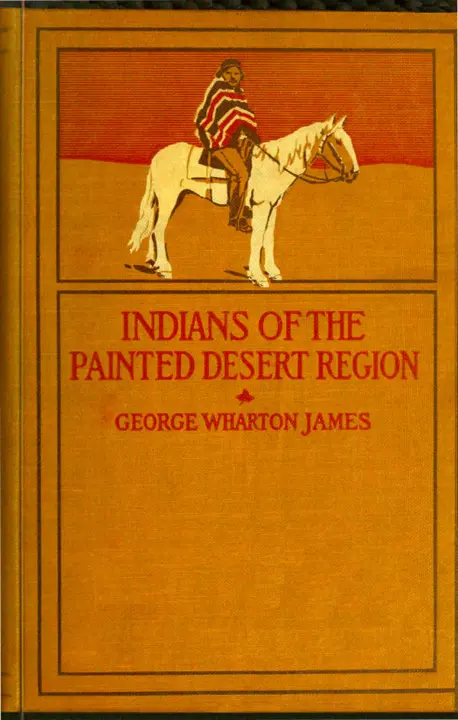
"The Indians of the Painted Desert Region" by George Wharton James is an ethnographic account written in the early 20th century. The book explores the lives, customs, and cultures of several Native American tribes, namely the Hopis, Navahoes, Wallapais, and Havasupais, who inhabit the Painted Desert region of Arizona. This work seeks to provide readers with a deeper understanding of the unique environment and the people who have adapted to it, emphasizing the complex interplay between their traditions and the harsh realities of their landscape. The opening of the book vividly introduces the fascinating yet daunting landscape of the Painted Desert. James describes the region with poetic imagery, presenting it as a land of striking contrasts where beauty and desolation coexist. He reflects on the historical encounters between Native Americans and early Spanish explorers, establishing the rich cultural tapestry of the tribes that inhabit this area. The chapter also hints at the enduring spirit of these peoples, their religious practices, and the harsh challenges faced in such an unforgiving environment, setting the stage for a more detailed exploration of their customs and history in the following chapters.
Introduction adapted from the source catalogue; source summaries may be automatically generated.
Free to read · English · 81,679 words · No account needed
MAKE TIME FOR A GOOD BOOK
On by default. Untick to stop anonymous reading totals. Each page counts after 10 seconds in view. How this works.
Anonymous counting is on unless you have switched it off.
A few years later I was again at Oraibi, and strangely near the same camping place. This time my companions were W. W. Bass, whose early adventures have been recounted in my "In and Around the Grand Canyon," a photographer, and a British friend of his who had stopped off in California on his way home from Japan. Mr. Britisher had contributed a small share towards the expenses of the expedition, but with insular ignorance he had presumed that his small mite would pay the expenses of the whole outfit for a long period. It must be confessed that we had had a most arduous trip. The Painted Desert had shown its ugly side from the very moment we left the railway. Four miles out we had been stopped by the most terrific and vivid lightning-storm it has ever been my good fortune to witness and to be scared half out of my wits with. At Rock Tanks we had another storm. We had been jolted and shaken on our way out to Hopi Point of the Grand Canyon, and had come so near to perishing for want of water that we fell on our knees and greedily drank the vilest liquid from an alkali pool, a standing place of horses, on our way to the Little Colorado. At the old Tanner Crossing of that stream we had had another rain and lightning-storm near unto the first in fury, and in which our British friend had been caught in his blankets and nearly frightened to death. In the Moenkopi Wash he was offended because I left the wagon to ride to the home and accept the hospitality of the Mormon bishop, which he interpreted again with insular ignorance to mean a palace, a place of luxury, exquisite restfulness, good foods, and delicious iced wines, while he was left to beans, bacon, flapjacks, and dried fruit, and a roll of blankets on the rough and uneven ground. (It didn't make any difference that I explained to him next day that I had slept on a grass plot with one quilt and no pillow, cold, shivering, and longing for my good substantial roll of Navaho blankets, left for him to use if he so desired, and that our "banquet" had been coarse bread and a bowl of milk.) Then we had had another storm at Toh-gas-je, which I had partially avoided by riding on ahead in the light wagon of the Indian agent who piloted us, while he--Mr. Britisher--was in the heavier ambulance. The next night we camped, attempting to sleep on the stony slopes of the hillside at Blue Canyon in wretchedness and misery, because it was too late when we arrived to dare to drive down into the canyon. The next day we drove over the Sahara of America, a sandy desert which even to the Hopis is the most a-tu-u-u (hot) of all earthly places. That noon we camped in the dry wash of Tnebitoh, where we had to dig for water, waiting for it slowly to seep into the hole we had dug. It was a sandy, alkaline decoction, but we were glad and thankful for it, and the way the poor horses stood and longingly looked on as we waited for the inflow was pitiable. At night we camped some twelve or fifteen miles farther on, without water, hobbling the horses and turning them loose. I had engaged an Indian to go with us from Blue Canyon as helper and guide, so I sent him, in the morning, to bring in the horses. Two or three hours later he returned, with but one of the animals, and said he had tried to track the others, but could not do so. Imagine what our predicament would have been, in the heart of the desert, without horses and water, and many miles away from any settlement. There was but one thing to be done, and Mr. Bass at once did it. Putting a bridle on the one horse, he rode off barebacked after the runaways. Knowing the character of his mules, he aimed directly for the Tnebitoh. When he arrived at the spot where we had watered the day before, he found that, with unerring instinct, the horses had returned to this spot and had dug new watering places for themselves. Then, scenting the cool grass of the San Francisco Mountains, they had aimed directly west, and, hobbled though they were, the tracks showed they were travelling at a lively rate of speed. Knowing the urgency and desperateness of our case, Bass followed as fast as he could make his almost exhausted animal go, and after an hour's hard riding saw, in the far-away distance, the three perverse creatures "hitting" the trailless desert as hard as they could. Jersey, a knowing mule, was in the lead. He soon saw Bass, and, seeming to communicate with the others, they turned and saw him also. Jack (the other mule) and the horse at once showed a disposition to stop, but Jersey with bite and whinney tried to drive them on. Finding his efforts useless, he stopped with the others, and, when Bass rode up, allowed himself to be "necked" (tied neck to neck) with the other two. Horses and man were as near "played out" as we cared to see them when, later in the day, they returned to camp.
Your reading position is saved on this browser. Take it to another device with a library code. Reading pages adapt to text, rather than matching a printed edition.
George Wharton James

George Wharton James
George Wharton James
George Wharton James
BEHIND THE BOOK
This eBook is for the use of anyone anywhere in the United States and most other parts of the world at no cost and with almost no restrictions whatsoever. You may copy it, give it away or re-use it under the terms of the Project Gutenberg License included with this eBook or online at www.gutenberg.org. If you are not located in the United States, you will have to check the laws of the country where you are located before using this eBook. Read the source licence.
The original source file, including credits and licence, is retained by this library. Request an original-format copy at no charge. Please include the book title and Project Gutenberg identifier #44627.
KEEP YOUR CURIOSITY GOING

David Patterson (Spirit) Hatch

David Patterson (Spirit) Hatch

David Patterson (Spirit) Hatch
Cécile Tormay

Moritz Busch
John L. Ransom