THE CLASSIC COLLECTION✦Along the Hudson with Washington IrvingCLASSIC FREE BOOKS
Along the Hudson with Washington Irving
Wallace Bruce
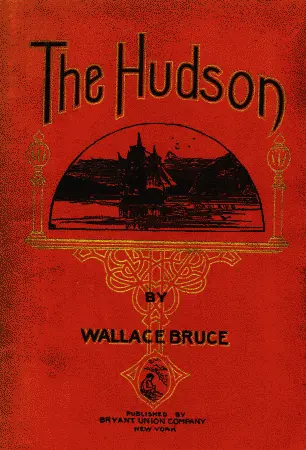
THE CLASSIC COLLECTION · 1907
"The Hudson" by Wallace Bruce is a historical account written in the early 20th century. This centennial edition delves into the rich history, romance, and inventions associated with the Hudson River over the course of three centuries. The text explores significant moments, figures, and the aesthetic grandeur of the river that connects New York City to Albany and serves as a vital artery of American culture and commerce. At the start of the book, the author sets the stage by highlighting the historical significance of the Hudson, intertwining the legacies of explorers like Hendrick Hudson and inventors like Robert Fulton. He reflects on the river's majestic beauty and its role as a metaphoric "open book" of history, inviting readers to appreciate its stories, from indigenous peoples and early settlers to its transformation into a bustling transport route. Bruce enriches his narrative with poetic observations, emphasizing the Hudson as a source of inspiration and pride, portraying a captivating blend of exploration, artistic heritage, and the evolving American identity.
Introduction adapted from the source catalogue; source summaries may be automatically generated.
Free to read · English · 76,013 words · No account needed
MAKE TIME FOR A GOOD BOOK
On by default. Untick to stop anonymous reading totals. Each page counts after 10 seconds in view. How this works.
Anonymous counting is on unless you have switched it off.
Rhinecliff, on east bank.
City of Kingston, embraces Kingston and Rondout.
Kingston Point. Delightful park and picnic grounds near the landing.
Old Beekman Place, on east bank, a short distance above Rhinecliff. One of the old Revolutionary houses.
Ferncliff, Residence of John Jacob Astor. Fine villa with pointed
tower.
Out-of-Door Sports. A large building on east bank, erected by Mr.
Astor.
Garretson Place, north of Ferncliff, on east bank.
"Leacote," Douglas Merritt's Residence, north of Clifton Point.
Flatbush, on west bank opposite Clifton Point.
Rokeby, Residence of late William B. Astor, above Astor's Point.
Barrytown, on east side.
Aspinwall Place, north of Barrytown, formerly John R. Livingston's
place.
Montgomery Place, east bank, among the trees.
"Annandale," name of John Bard's place. East of this is St. Stephen's College, a training school for the ministry.
Cruger's Residence, on Cruger's Island--once called Lower Red Hook
Island.
Tivoli, on east side, 100 miles from New York.
Glasco, south of Tivoli on the west side.
Saugerties, on the west side.
Idele, property of Miss Clarkson, known as the old Chancellor Place,
on east bank.
Hotel Kaaterskill is plainly seen from this point.
O would that she were here,
Sure Eden's garden-plot,
Did not embrace more varied charms
Than this romantic spot.
George P. Morris.
Malden, above Saugerties, on west side.
Clermont, above Tivoli. The original Livingston manor.
West Camp, on west side, above Malden.
Four County Island. The "meeting point" of Dutchess, Columbia,
Greene and Ulster.
Germantown, on east side, 105 miles from New York.
Man in the Mountain. Between Germantown and Catskill we get a fine view of the reclining giant, traced by the following outline:--the peak to the south is the knee; the next to the north is the breast; and two or three above this, the chin, the nose, and the forehead.
Roeliff Jansen's Kill meets the Hudson on east bank above what is known by the pilots as Nine Mile Tree.
Herman Livingston's Residence, on point above.
Catskill Creek joins the Hudson south of Catskill.
Catskill, 110 miles from New York. Route from this point to Catskill Mountains, via Catskill Mountain Railroad.
Prospect Park Hotel, on west bank, north of Catskill.
Cole's Grove, north of Catskill. Here was the residence of Thomas
Cole, the artist.
Frederick E. Church's Residence. One of the most commanding sites and finest residences, opposite Catskill.
Rodger's Island, on the east side, where the last battle was fought between the Mohawks and the Mahicans.
Mount Merino, two miles north of Roger's Island.
State Reformatory for Women, on bluff south of Hudson.
Hudson, 115 miles from New York. Promenade Hill just north of
landing.
Athens, quiet village, on the west bank.
Your reading position is saved on this browser. Take it to another device with a library code. Reading pages adapt to text, rather than matching a printed edition.
BEHIND THE BOOK
This eBook is for the use of anyone anywhere in the United States and most other parts of the world at no cost and with almost no restrictions whatsoever. You may copy it, give it away or re-use it under the terms of the Project Gutenberg License included with this eBook or online at www.gutenberg.org. If you are not located in the United States, you will have to check the laws of the country where you are located before using this eBook. Read the source licence.
The original source file, including credits and licence, is retained by this library. Request an original-format copy at no charge. Please include the book title and Project Gutenberg identifier #17823.
KEEP YOUR CURIOSITY GOING
Wilfrid Scawen Blunt
Wilfrid Scawen Blunt

E. W. (Edgar Watson) Howe
Cécile Tormay

Moritz Busch
John L. Ransom