THE CLASSIC COLLECTION✦Along the Hudson with Washington IrvingCLASSIC FREE BOOKS
Along the Hudson with Washington Irving
Wallace Bruce
THE CLASSIC COLLECTION · 1907
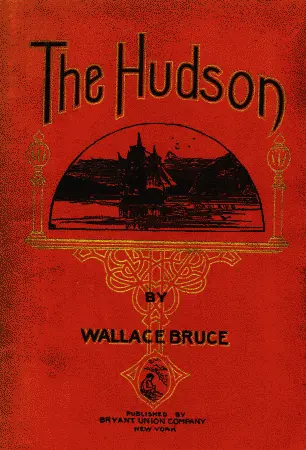
"The Hudson" by Wallace Bruce is a historical account written in the early 20th century. This centennial edition delves into the rich history, romance, and inventions associated with the Hudson River over the course of three centuries. The text explores significant moments, figures, and the aesthetic grandeur of the river that connects New York City to Albany and serves as a vital artery of American culture and commerce. At the start of the book, the author sets the stage by highlighting the historical significance of the Hudson, intertwining the legacies of explorers like Hendrick Hudson and inventors like Robert Fulton. He reflects on the river's majestic beauty and its role as a metaphoric "open book" of history, inviting readers to appreciate its stories, from indigenous peoples and early settlers to its transformation into a bustling transport route. Bruce enriches his narrative with poetic observations, emphasizing the Hudson as a source of inspiration and pride, portraying a captivating blend of exploration, artistic heritage, and the evolving American identity.
Introduction adapted from the source catalogue; source summaries may be automatically generated.
Free to read · English · 76,013 words · No account needed
MAKE TIME FOR A GOOD BOOK
On by default. Untick to stop anonymous reading totals. Each page counts after 10 seconds in view. How this works.
Anonymous counting is on unless you have switched it off.
Old Cro' Nest, picturesque mountain north of West Point on west
bank.
Cold Spring, on east bank, opposite Old Cro' Nest.
Undercliff, once the home of George P. Morris, on slope north of
Cold Spring.
Break Neck Mountain, on east bank, from which point the Highlands trend away to the northeast, known as the Beacon Mountains or the Fishkill Range.
Storm King, on west bank, marking northern portal of the Highlands.
Cornwall, under the slope of Storm King.
Pollopel's Island, at northern portal of the Highlands.
Idlewild, above Cornwall, former home of N. P. Willis.
Washington's Headquarters, Newburgh, seen as the boat approaches the city. A flag-staff marks the point.
Newburgh, west bank, 59 miles from New York.
Fishkill Landing, on east bank, opposite Newburgh.
Let us toast our foster-father, the Republic as you know-- Who in the path of science taught us upward for to go-- And the maidens of our native land whose cheeks like roses glow, They're oft remembered in our songs, at Benny Havens--oh!
Benny Havens, West Point.
Low Point or Carthage, 4 miles above Fishkill.
Devil's Dans Kammer, point on west bank covered with cedars.
New Hamburg, above Low Point, on the east side.
Hampton Point, opposite New Hamburgh. Here are the finest white
cedars on the river.
Irving Grinnell's Residence, "Netherwood," east bank, just
distinguished through the trees.
Shawangunk Mountains, on the west side, reach away in the distance
toward the Catskills.
Marlborough and Milton, on west bank.
Locust Grove. Home of the late Prof. S. F. B. Morse on east bank, with
square central tower.
The Lookout, a wooded hill owned by Poughkeepsie Cemetery.
Livingston Place, now occupied by a rolling mill.
Vassar Brothers Hospital, brick building on the hillside.
Poughkeepsie, 74 miles from New York.
Poughkeepsie Bridge, 12,608 feet in length. Track 212 feet above
tide-water.
Mrs. John F. Winslow's Residence, seen through opening of trees on
east bank.
Hudson River State Hospital. Large red buildings on east bank, two miles north of Poughkeepsie.
Hyde Park, on the east side.
Residence of Frederick W. Vanderbilt, with white marble Corinthian
columns.
Manresa Institute, large building above Crum Elbow, on west side.
A. R. Frothingham. Grecian portico with columns.
John Burrough's brown stone cottage, north of Frothingham's.
The Novitiate of the Redemption Fathers, a large new building on
west bank at Esopus.
Staatsburgh, on east side. Dock and ice houses in foreground.
While fashion seeks the islands
Encircled by the sea,
Taste finds the Hudson Highlands
More beautiful to see.
George P. Morris.
D. O. Mills' Mansion, palatial residence on the east bank above
Staatsburgh.
Dinsmore's Residence, a large building charmingly located on
Dinsmore Point, east bank.
Ellerslie, residence of Ex-Vice-President Levi P. Morton, below
Rhinecliff.
Your reading position is saved on this browser. Take it to another device with a library code. Reading pages adapt to text, rather than matching a printed edition.
BEHIND THE BOOK
This eBook is for the use of anyone anywhere in the United States and most other parts of the world at no cost and with almost no restrictions whatsoever. You may copy it, give it away or re-use it under the terms of the Project Gutenberg License included with this eBook or online at www.gutenberg.org. If you are not located in the United States, you will have to check the laws of the country where you are located before using this eBook. Read the source licence.
The original source file, including credits and licence, is retained by this library. Request an original-format copy at no charge. Please include the book title and Project Gutenberg identifier #17823.
KEEP YOUR CURIOSITY GOING
Wilfrid Scawen Blunt
Wilfrid Scawen Blunt

E. W. (Edgar Watson) Howe
Cécile Tormay

Moritz Busch
John L. Ransom