THE CLASSIC COLLECTION✦Along the Hudson with Washington IrvingCLASSIC FREE BOOKS
Along the Hudson with Washington Irving
Wallace Bruce
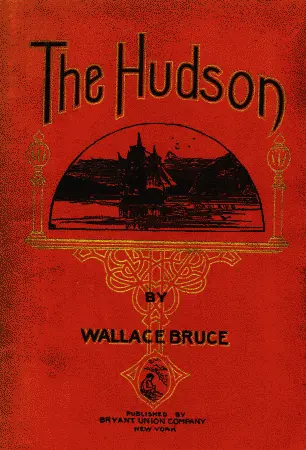
THE CLASSIC COLLECTION · 1907
"The Hudson" by Wallace Bruce is a historical account written in the early 20th century. This centennial edition delves into the rich history, romance, and inventions associated with the Hudson River over the course of three centuries. The text explores significant moments, figures, and the aesthetic grandeur of the river that connects New York City to Albany and serves as a vital artery of American culture and commerce. At the start of the book, the author sets the stage by highlighting the historical significance of the Hudson, intertwining the legacies of explorers like Hendrick Hudson and inventors like Robert Fulton. He reflects on the river's majestic beauty and its role as a metaphoric "open book" of history, inviting readers to appreciate its stories, from indigenous peoples and early settlers to its transformation into a bustling transport route. Bruce enriches his narrative with poetic observations, emphasizing the Hudson as a source of inspiration and pride, portraying a captivating blend of exploration, artistic heritage, and the evolving American identity.
Introduction adapted from the source catalogue; source summaries may be automatically generated.
Free to read · English · 76,013 words · No account needed
MAKE TIME FOR A GOOD BOOK
On by default. Untick to stop anonymous reading totals. Each page counts after 10 seconds in view. How this works.
Anonymous counting is on unless you have switched it off.
Stockport. On east side, four miles north of Hudson, near the mouth of Columbiaville Creek, formed by the union of the Kinderhook and Claverack Creeks.
Four-mile Point. On west side, about 125 feet high; four miles from Hudson and four from Coxsackie.
Coxsackie. On west side, 8 miles from Hudson.
For while the beautiful moon arose,
And drifted the boat in the yellow beams,
My soul went down the river of thought
That flows in the mystic land of dreams.
Richard Henry Stoddard.
Newtown Hook, opposite Coxsackie. The wooded point is called
Prospect Grove.
Stuyvesant. On the east side. Once called Kinderhook Landing.
Schodack Island. On east side, about two miles above Stuyvesant. The island is about 3 miles long.
New Baltimore. About opposite the centre of Schodack Island; fifteen miles from Hudson and fifteen from Albany. The Government dykes begin opposite New Baltimore.
Berren Island. Site of the famous "Castle of Rensselaerstien."
Coeymans. Right above Berren Island. Above Coeymans is what is known as the Coeyman's Cross Over.
Shad Island. The first island to the westward above Coeymans; 3 miles long; old Indian fishing ground.
Castleton, on east bank, in the town of Schodack.
Mourdeners Kill, a small stream which empties into the Hudson above
Castleton.
Sunnyside Island near east bank.
Cedar Hill, above, on west bank.
Staats Island, settled by the Staats family before the arrival of
the Van Rensselaers.
The Overslaugh reaches from Van Wies' Point (the first point above Cedar Hill), on east bank, about two miles up the river.
Albany, 142 miles from New York, is now near at hand, and we see to the south the Convent of the Sacred Heart; to the north the Cathedral, the Capitol, the State House, the City Hall, etc.
Rensselaer, opposite. Connected with Albany by ferries two railroad bridges, and carriage bridge.
Old Van Rensselaer Place. One of the Van Rensselaer houses on the east bank, built before the Revolution. The tourist will note the port holes on either side of the door as defense against Indians.
In love to the deep-bosomed stream of the west I fling this loose blossom to float on its breast.
Oliver Wendell Holmes.
[Transcriber's Note--Errata (Old Typos) and Corrections
Your reading position is saved on this browser. Take it to another device with a library code. Reading pages adapt to text, rather than matching a printed edition.
BEHIND THE BOOK
This eBook is for the use of anyone anywhere in the United States and most other parts of the world at no cost and with almost no restrictions whatsoever. You may copy it, give it away or re-use it under the terms of the Project Gutenberg License included with this eBook or online at www.gutenberg.org. If you are not located in the United States, you will have to check the laws of the country where you are located before using this eBook. Read the source licence.
The original source file, including credits and licence, is retained by this library. Request an original-format copy at no charge. Please include the book title and Project Gutenberg identifier #17823.
KEEP YOUR CURIOSITY GOING
Wilfrid Scawen Blunt
Wilfrid Scawen Blunt

E. W. (Edgar Watson) Howe
Cécile Tormay

Moritz Busch
John L. Ransom