THE CLASSIC COLLECTION✦Along the Hudson with Washington IrvingCLASSIC FREE BOOKS
Along the Hudson with Washington Irving
Wallace Bruce
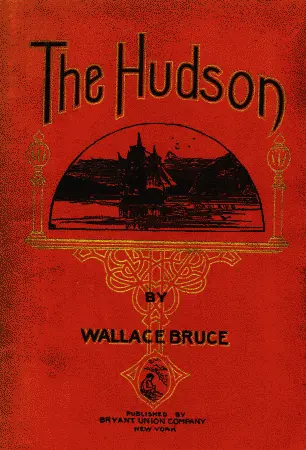
THE CLASSIC COLLECTION · 1907
"The Hudson" by Wallace Bruce is a historical account written in the early 20th century. This centennial edition delves into the rich history, romance, and inventions associated with the Hudson River over the course of three centuries. The text explores significant moments, figures, and the aesthetic grandeur of the river that connects New York City to Albany and serves as a vital artery of American culture and commerce. At the start of the book, the author sets the stage by highlighting the historical significance of the Hudson, intertwining the legacies of explorers like Hendrick Hudson and inventors like Robert Fulton. He reflects on the river's majestic beauty and its role as a metaphoric "open book" of history, inviting readers to appreciate its stories, from indigenous peoples and early settlers to its transformation into a bustling transport route. Bruce enriches his narrative with poetic observations, emphasizing the Hudson as a source of inspiration and pride, portraying a captivating blend of exploration, artistic heritage, and the evolving American identity.
Introduction adapted from the source catalogue; source summaries may be automatically generated.
Free to read · English · 76,013 words · No account needed
MAKE TIME FOR A GOOD BOOK
On by default. Untick to stop anonymous reading totals. Each page counts after 10 seconds in view. How this works.
Anonymous counting is on unless you have switched it off.
Teller's Point. That part of Croton Point which juts into the Hudson. This point separates Tappan Zee from Haverstraw Bay.
O Tappan Zee! with peaceful hills,
And slumbrous sky and drowsy air,
Thy calm and restful spirit stills
The heart weighed down with weary care.
Wallace Bruce.
Haverstraw Bay, widest part of the river; over four miles in width.
West Shore R. R. Tunnel under mountain.
West Shore Railroad, west bank, meets the Hudson south of
Haverstraw.
Haverstraw, on west bank, with two miles of brickyards.
Treason Hill, where Arnold and Andre met at the house of Joshua Hett Smith, northwest of Haverstraw.
Stony Point, west bank. Lighthouse built on site and from the material of old fort captured from British by Anthony Wayne in 1778.
Verplank's Point, on east shore, full of brickyards. It was here Baron Steuben drilled the soldiers of '76.
Tompkin's Cove, on west bank. Lime kilns and quarries.
Peekskill, east bank, pleasantly located on Peekskill Bay.
New York State Encampment, on bluff north of Peekskill Creek.
Kidd's Point, on west bank, where steamer enters Highlands almost at
a right angle.
Dunderberg Mountain, west bank, forming with Manito Mountain on the east southern portal of Highlands.
Iona Island, former pleasure resort for excursions, now converted to
Government use.
The Race. The river channel is so termed by navigators, between Iona
Island and the east bank.
Anthony's Nose, east bank, with railroad tunnel.
Montgomery Creek, on west side, empties into the Hudson about opposite the point of Anthony's Nose. Fort Clinton was on the south side of this creek, and Fort Montgomery on the north side.
J. Pierpont Morgan's Residence, on west bank.
Sugar-Loaf, east bank, resembling an old "sugar-loaf" to one looking north from Anthony's Nose.
From Stony Point to Bemis Height,
From Saratoga to the sea,
We trace the lines, now dark, now bright,
From seventy-six to eighty-three.
Wallace Bruce.
Beverley Dock, at foot of Sugar-Loaf, from which point Arnold fled
to the "Vulture."
Lady-Cliff Academy, (west side) on bluff.
Hamilton Fish's Residence, on hill, east side.
William H. Osborne's Residence, on east bank; house with pointed
tower north of Sugar-Loaf.
Sam Sloan's lookout tower, east side, on top of mountain. Residence
on hillside below.
Buttermilk Falls, on west bank.
West Point, 50 miles from New York, Academy Buildings and Parade
Grounds.
Memorial Hall, building on bluff above landing.
Kosciusko's Garden with monument and spring below Memorial.
Garrison, opposite West Point on east bank.
Fort Putnam (596 feet), above the Hudson on west.
West Point Hotel, west bank, wide outlook to the north.
Battle Monument, surmounted by Statue of "Victory."
Constitution Island, on east bank; chain was thrown across the river at this point during the Revolution.
Your reading position is saved on this browser. Take it to another device with a library code. Reading pages adapt to text, rather than matching a printed edition.
BEHIND THE BOOK
This eBook is for the use of anyone anywhere in the United States and most other parts of the world at no cost and with almost no restrictions whatsoever. You may copy it, give it away or re-use it under the terms of the Project Gutenberg License included with this eBook or online at www.gutenberg.org. If you are not located in the United States, you will have to check the laws of the country where you are located before using this eBook. Read the source licence.
The original source file, including credits and licence, is retained by this library. Request an original-format copy at no charge. Please include the book title and Project Gutenberg identifier #17823.
KEEP YOUR CURIOSITY GOING
Wilfrid Scawen Blunt
Wilfrid Scawen Blunt

E. W. (Edgar Watson) Howe
Cécile Tormay

Moritz Busch
John L. Ransom