THE CLASSIC COLLECTION✦Along the Hudson with Washington IrvingCLASSIC FREE BOOKS
Along the Hudson with Washington Irving
Wallace Bruce
THE CLASSIC COLLECTION · 1907
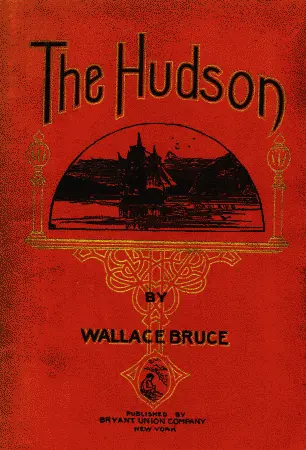
"The Hudson" by Wallace Bruce is a historical account written in the early 20th century. This centennial edition delves into the rich history, romance, and inventions associated with the Hudson River over the course of three centuries. The text explores significant moments, figures, and the aesthetic grandeur of the river that connects New York City to Albany and serves as a vital artery of American culture and commerce. At the start of the book, the author sets the stage by highlighting the historical significance of the Hudson, intertwining the legacies of explorers like Hendrick Hudson and inventors like Robert Fulton. He reflects on the river's majestic beauty and its role as a metaphoric "open book" of history, inviting readers to appreciate its stories, from indigenous peoples and early settlers to its transformation into a bustling transport route. Bruce enriches his narrative with poetic observations, emphasizing the Hudson as a source of inspiration and pride, portraying a captivating blend of exploration, artistic heritage, and the evolving American identity.
Introduction adapted from the source catalogue; source summaries may be automatically generated.
Free to read · English · 76,013 words · No account needed
MAKE TIME FOR A GOOD BOOK
On by default. Untick to stop anonymous reading totals. Each page counts after 10 seconds in view. How this works.
Anonymous counting is on unless you have switched it off.
Spuyten Duyvil, on east bank northern boundary of Manhattan Island.
Site of Fort Independence, east bank, on height north of Spuyten
Duyvil.
Riverdale Station. Station on the Hudson River Railroad above Spuyten Duyvil. Yonkers rising on the green slope to the north; and the Palisades blending in the far distance with green headlands of the Ramapo Range.
Convent of Mount St. Vincent. The gray, castle-like structure in front, was once the home of Edwin Forrest.
Yonkers, seventeen miles from Battery.
Greystone, on east bank, crowning hill, about one and a half miles north of Yonkers. Once property of Samuel J. Tilden.
Hastings, pleasant village on east bank.
Indian Head (510 feet), opposite Hastings, highest point of
Palisades.
Dobb's Ferry, on east bank, named after an old Swedish ferryman.
Cottinet Place, on east bank, built of stone brought from France. Easily distinguished by light shade through trees.
George L. Schuyler's Residence, near east bank. The late Col. James A. Hamilton's house almost east of Mr. Schuyler's. Stiner's place distinguished by its large dome.
From this brow of rock
That overlooks the Hudson's western marge,
I gaze upon the long array of groves,
The piles and gulfs of verdure drinking in the grateful heat.
William Cullen Bryant.
Ardsley, on east bank, just above Dobb's Ferry.
Ardsley Club and Golf Links.
Irvington, 24 miles from New York, named after Washington Irving.
Piermont, on west bank, with pier almost one mile in length
extending into river.
Sunnyside, home of Washington Irving, east bank, one-half mile north of Irvington Station, close to river bank and scarcely seen through the trees.
Helen M. Gould's Residence, east bank, prominent Abbey-like
structure, known as "Lyndehurst."
Tarrytown, east bank, 26 miles from New York.
Nyack, west bank, opposite Tarrytown.
J. D. Rockefeller's New Home on Kykuit or Kake-out Mt. back of
Tarrytown.
Tappan Zee, reaching from Dobb's Ferry to Croton Point, is about three miles wide at Tarrytown.
Sleepy Hollow, east bank, north of Tarrytown; burial place of Washington Irving. The tall shaft visible from steamer, erected by the Delavan family, is near his grave.
Kingsland Point, east bank, above lighthouse.
Rockwood, home of William Rockefeller. One of the most imposing
residences on the river.
Mrs. Elliot F. Shepard's Residence, on east bank.
Ramapo Mountains, on west side above Nyack, known as "Point No
Point."
Ossining, on east bank, six miles north of Tarrytown. Prison buildings are near the river below the village.
Rockland Lake, opposite Sing Sing, between two hills; source of the
Hackensack River.
Croton River, on east bank, meets the Hudson one mile above Sing Sing; crossed by drawbridge of the Hudson River Railroad.
Your reading position is saved on this browser. Take it to another device with a library code. Reading pages adapt to text, rather than matching a printed edition.
BEHIND THE BOOK
This eBook is for the use of anyone anywhere in the United States and most other parts of the world at no cost and with almost no restrictions whatsoever. You may copy it, give it away or re-use it under the terms of the Project Gutenberg License included with this eBook or online at www.gutenberg.org. If you are not located in the United States, you will have to check the laws of the country where you are located before using this eBook. Read the source licence.
The original source file, including credits and licence, is retained by this library. Request an original-format copy at no charge. Please include the book title and Project Gutenberg identifier #17823.
KEEP YOUR CURIOSITY GOING
Wilfrid Scawen Blunt
Wilfrid Scawen Blunt

E. W. (Edgar Watson) Howe
Cécile Tormay

Moritz Busch
John L. Ransom