THE CLASSIC COLLECTION✦Along the Hudson with Washington IrvingCLASSIC FREE BOOKS
Along the Hudson with Washington Irving
Wallace Bruce
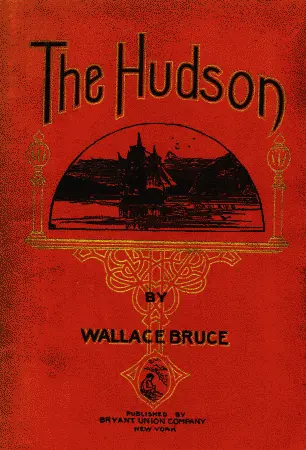
THE CLASSIC COLLECTION · 1907
"The Hudson" by Wallace Bruce is a historical account written in the early 20th century. This centennial edition delves into the rich history, romance, and inventions associated with the Hudson River over the course of three centuries. The text explores significant moments, figures, and the aesthetic grandeur of the river that connects New York City to Albany and serves as a vital artery of American culture and commerce. At the start of the book, the author sets the stage by highlighting the historical significance of the Hudson, intertwining the legacies of explorers like Hendrick Hudson and inventors like Robert Fulton. He reflects on the river's majestic beauty and its role as a metaphoric "open book" of history, inviting readers to appreciate its stories, from indigenous peoples and early settlers to its transformation into a bustling transport route. Bruce enriches his narrative with poetic observations, emphasizing the Hudson as a source of inspiration and pride, portraying a captivating blend of exploration, artistic heritage, and the evolving American identity.
Introduction adapted from the source catalogue; source summaries may be automatically generated.
Free to read · English · 76,013 words · No account needed
MAKE TIME FOR A GOOD BOOK
On by default. Untick to stop anonymous reading totals. Each page counts after 10 seconds in view. How this works.
Anonymous counting is on unless you have switched it off.
The influence of the moon's attraction is the preponderating one in the tide rising force, while that of the sun is about two-fifths as much as that of the moon. The tides therefore follow the motion of the moon, and the average interval between the times of high water is the half length of the lunar day, or about twelve hours and twenty-five minutes.
Nor lives there one whose boyhood's days
Of happiness were passed beneath that sun,
That in his manhood-prime can calmly gaze
Upon that Bay, or on that mountain stand,
Nor feel the prouder of his native land.
Fitz-Greene Halleck.
As Seen on the Hudson River Day Line Steamers.
Desbrosses Street Pier. On leaving landing a charming view is obtained of New York Harbor with Bartholdi Statue to the south.
Stevens Castle. Above Jersey City docks on the west, crowning a
commanding site.
St. Michael's Monastery, or Monastery of the Passionist Fathers, on west bank above Elysian Fields; distinguished by large dome and towers of the St. Paul (London) style of architecture. This dome is 300 feet high, and its summit is 515 feet above the Hudson.
42d Street Pier. Midway to the dwellers of Greater New York and convenient to all Elevated, Subway and Trolley Lines.
Weehawken, on the west bank, about opposite 50th Street. Near the river bank was the scene of the Hamilton and Burr duel, 1804.
Soldiers' and Sailors' Monument, 89th Street, New York. Dedicated May 30, 1902. Corner stone laid in 1900 by President Roosevelt when Governor.
Columbia University. Stately buildings on east bank.
St. Luke's Hospital. Beautiful dome in the distance southeast of
college.
The Cathedral of St. John the Divine, now in construction, will be one of the finest structures in the world.
General Grant's Tomb at Riverside Drive and 123d Street.
129th Street Pier. Above this landing is the Steel Viaduct of the
Boulevard Drive.
The land that from the rule of kings
In freeing us itself made free,
Our old world sister to us brings
Her sculptured dream of liberty.
John G. Whittier.
Carmansville (where Audubon, the ornithologist lived), a city suburb
at 152d Street.
Trinity Cemetery, 152d Street, and above this Audubon Park.
Old Fort Washington once crowned the hills on the east bank. Fort Lee was almost opposite on the southern point of the Palisades.
Stewart Castle, east bank, formerly owned by A. T. Stewart.
University of City of New York with dome, in distance.
Inwood. Station on the Hudson River Railroad, above the heights. Place once known as Tubbie Hook.
Palisades, on west bank, extend fifteen miles from Fort Lee to Piermont, a sheer wall of trap rock from 300 to 500 feet high.
Your reading position is saved on this browser. Take it to another device with a library code. Reading pages adapt to text, rather than matching a printed edition.
BEHIND THE BOOK
This eBook is for the use of anyone anywhere in the United States and most other parts of the world at no cost and with almost no restrictions whatsoever. You may copy it, give it away or re-use it under the terms of the Project Gutenberg License included with this eBook or online at www.gutenberg.org. If you are not located in the United States, you will have to check the laws of the country where you are located before using this eBook. Read the source licence.
The original source file, including credits and licence, is retained by this library. Request an original-format copy at no charge. Please include the book title and Project Gutenberg identifier #17823.
KEEP YOUR CURIOSITY GOING
Wilfrid Scawen Blunt
Wilfrid Scawen Blunt

E. W. (Edgar Watson) Howe
Cécile Tormay

Moritz Busch
John L. Ransom