THE CLASSIC COLLECTION✦A dead man’s diaryCLASSIC FREE BOOKS
A dead man’s diary
Coulson Kernahan
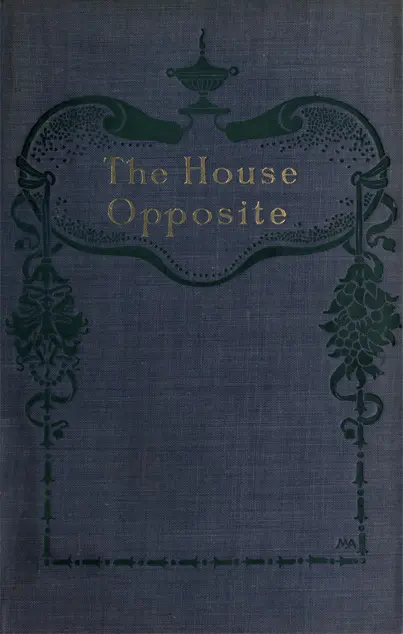
THE CLASSIC COLLECTION · 1902
"The House Opposite: A Mystery" by Elizabeth Kent is a mystery novel written in the early 20th century. The story revolves around Dr. Charles Fortescue, who becomes embroiled in a perplexing murder investigation after witnessing peculiar events from his rooftop. The narrative captures a sense of intrigue and suspense as Dr. Fortescue grapples with his observations and connects them to the unfolding crime. At the start of the novel, the protagonist, Dr. Fortescue, seeks relief from the oppressive heat of New York City's summer by moving to his rooftop. There, he witnesses a commotion in the neighboring Rosemere apartment building, which leads him to suspect something sinister is occurring. As he observes various characters such as a mysterious woman and a distressed man, his curiosity intensifies. Soon after, he is drawn into the investigation of a murder when he is called to the scene, revealing that the victim is a man found dead in the building under suspicious circumstances. As the story expands, Dr. Fortescue uncovers connections between the dead man and residents of the Rosemere, particularly Mrs. Atkins and the enigmatic Miss May Derwent, heightening the intrigue surrounding the case.
Introduction adapted from the source catalogue; source summaries may be automatically generated.
Free to read · English · 62,803 words · No account needed
MAKE TIME FOR A GOOD BOOK
On by default. Untick to stop anonymous reading totals. Each page counts after 10 seconds in view. How this works.
Anonymous counting is on unless you have switched it off.
That very evening, as I was sitting quietly in my office, trying to divert my mind from the murder by reading, my boy came in and told me that there was a lady in the waiting-room who wanted to see me. There was something so peculiar about the way he imparted this very commonplace information that my curiosity was aroused; but I refrained from questioning him, and curtly bade him show the lady in.
When she appeared I was no longer surprised at his manner, for a more strange and melodramatic figure I have seldom seen, even on the stage. The woman was tall and draped, or rather shrouded, in a long, black cloak, and a thick black veil was drawn down over her face. Her costume, especially considering the excessive heat, and that the clock pointed to 9.15, was alone enough to excite comment; but to a singularity in dress she added an even greater singularity of manner. She entered the room hesitatingly, and paused near the threshold to glance apprehensively about her, as if fearing the presence of some hidden enemy. The woman must be mad, I thought, as I motioned her to a chair and sat down opposite to her.
With a theatrical gesture, she threw back her veil, and to my astonishment I recognised the handsome, rotund features of--Madame Argot! She smiled, evidently enjoying my bewilderment.
"Meestair Docteur, I no disturb you?" she inquired.
"Certainly not, madame; what can I do for you?"
"Ah, meestair," she whispered, looking towards the door, "I so afraid zat my 'usban' 'e come back and fin' me gone; 'e terribly angry!"
"Why should he be angry?" I asked.
"He no like me to speak viz you. He no vant me to show you zis," she answered, pointing mysteriously to her left shoulder.
"What is it that he doesn't want me to see?"
"I go show you," and, opening her dress, she disclosed two terrible bruises, each as large as the palm of my hand; "and zat is not all," she continued, and, as she turned round, I saw that a deep gash disfigured one of her shoulder-blades.
I was really shocked.
"How did this happen?" I inquired.
"Oh, I fall," she said, smiling coquettishly at me.
"A very queer fall," I muttered.
The wound was several days old and not serious, but, owing to neglect, had got into a very bad condition.
"Ah, zat is better," she exclaimed, with a sigh of relief, when I had thoroughly cleansed the cut. I was just preparing to bandage it up, when she stopped me.
Your reading position is saved on this browser. Take it to another device with a library code. Reading pages adapt to text, rather than matching a printed edition.
BEHIND THE BOOK
This eBook is for the use of anyone anywhere in the United States and most other parts of the world at no cost and with almost no restrictions whatsoever. You may copy it, give it away or re-use it under the terms of the Project Gutenberg License included with this eBook or online at www.gutenberg.org. If you are not located in the United States, you will have to check the laws of the country where you are located before using this eBook. Read the source licence.
The original source file, including credits and licence, is retained by this library. Request an original-format copy at no charge. Please include the book title and Project Gutenberg identifier #41525.
KEEP YOUR CURIOSITY GOING
Coulson Kernahan

Maurice Baring
Frances Wright
Cécile Tormay

Frederic Jesup Stimson

W. H. P. (William Henry Pope) Jarvis