THE CLASSIC COLLECTION✦A dead man’s diaryCLASSIC FREE BOOKS
A dead man’s diary
Coulson Kernahan
THE CLASSIC COLLECTION · 1902
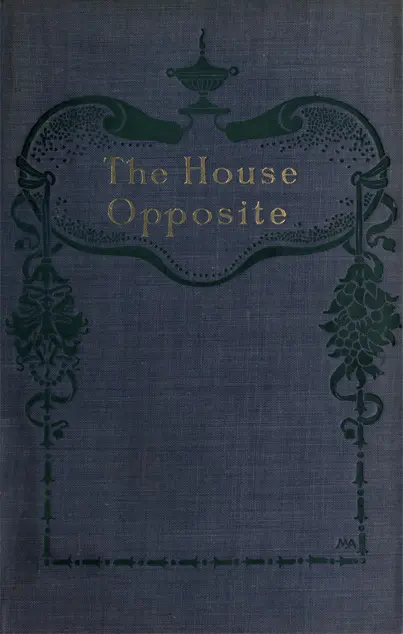
"The House Opposite: A Mystery" by Elizabeth Kent is a mystery novel written in the early 20th century. The story revolves around Dr. Charles Fortescue, who becomes embroiled in a perplexing murder investigation after witnessing peculiar events from his rooftop. The narrative captures a sense of intrigue and suspense as Dr. Fortescue grapples with his observations and connects them to the unfolding crime. At the start of the novel, the protagonist, Dr. Fortescue, seeks relief from the oppressive heat of New York City's summer by moving to his rooftop. There, he witnesses a commotion in the neighboring Rosemere apartment building, which leads him to suspect something sinister is occurring. As he observes various characters such as a mysterious woman and a distressed man, his curiosity intensifies. Soon after, he is drawn into the investigation of a murder when he is called to the scene, revealing that the victim is a man found dead in the building under suspicious circumstances. As the story expands, Dr. Fortescue uncovers connections between the dead man and residents of the Rosemere, particularly Mrs. Atkins and the enigmatic Miss May Derwent, heightening the intrigue surrounding the case.
Introduction adapted from the source catalogue; source summaries may be automatically generated.
Free to read · English · 62,803 words · No account needed
MAKE TIME FOR A GOOD BOOK
On by default. Untick to stop anonymous reading totals. Each page counts after 10 seconds in view. How this works.
Anonymous counting is on unless you have switched it off.
"No, meestair; not zat! My 'usban', 'e see zat, 'e know I come here, and zen 'e angry. Ze vashin' and ze salve zey make me better!"
"But look here, my good woman," I exclaimed, indignantly; "do you mean to say that your husband is such a brute that he objects to your having your wound dressed--a wound that you got in such a peculiar way, too?"
Her manner changed instantly; she drew herself haughtily up, and began
buttoning up her dress.
"My 'usban' 'e no brute; 'e verra nice man; 'e love' me verra much."
"Really!"
"Yes," she asserted, "'e love me much, oh oui, je vous assure qu'il m'adore!" and she tossed her head and looked at me through the thick lashes of her half-closed eyes; "'e man, you know, 'e sometime jealous," she continued, smiling, as if his jealousy were a feather in her cap.
"Well, Madame Argot; that cut should be looked after, and, as it is in such a place that you cannot properly attend to it yourself, you must come in here every day, and I will dress it for you. Your husband cannot carry his devotion so far as to object to your covering it with a clean piece of linen, so I advise you to do that."
"Alla right, meestair, and zank you verra much. I come again ven I can, ven my 'usban' 'e go out sometime," and, after carefully wrapping herself up again, she sallied forth with infinite precautions.
Of course, the woman is a silly fool, and eaten up with vanity, but she had been pretty roughly handled, and that she should consider such treatment a tribute to her charms, seemed to me perfectly incomprehensible.
After reading for some time longer, I decided to go to bed, and, therefore, went into the front room to turn the lights out. Having done so, I lingered near the window, for the temperature here was at least several degrees cooler than the room I had just left. Although it was still early, the street appeared to be completely deserted, not a footfall was to be heard. As I stood there, half hidden by the curtain, a queer muffled noise fell upon my ears. It seemed to come from outside, and I moved nearer to the window, so as to try and discover what it could be. As I did so, a white face, not a foot away, peered suddenly into mine. I was so startled that I fell back a step, and before I recovered myself the creature was gone. I rushed out into the hall, and, unfastening the front door as quickly as I could, dashed into the street. Not a soul was in sight! The slight delay had given the fellow a chance to escape. Who could it have been? I wondered. A burglar, tempted by my open window? Or Argot, perhaps? This latter supposition was much the more alarming. What if he had seen his wife come out of my office? I thought of the murdered man, and shuddered. Notwithstanding the heat, I shut and bolted the window, and, as an extra precaution, also locked the door which connected the front room with my office and bedroom. I had no mind to be the next victim of an insane man's jealousy. All night long I was haunted by that white face! More and more it appeared to me to resemble Argot, till at last I determined to see Mr. Merritt and ask him if we had not sufficient grounds to warrant the Frenchman's arrest.
Your reading position is saved on this browser. Take it to another device with a library code. Reading pages adapt to text, rather than matching a printed edition.
BEHIND THE BOOK
This eBook is for the use of anyone anywhere in the United States and most other parts of the world at no cost and with almost no restrictions whatsoever. You may copy it, give it away or re-use it under the terms of the Project Gutenberg License included with this eBook or online at www.gutenberg.org. If you are not located in the United States, you will have to check the laws of the country where you are located before using this eBook. Read the source licence.
The original source file, including credits and licence, is retained by this library. Request an original-format copy at no charge. Please include the book title and Project Gutenberg identifier #41525.
KEEP YOUR CURIOSITY GOING
Coulson Kernahan

Maurice Baring
Frances Wright
Cécile Tormay

Frederic Jesup Stimson

W. H. P. (William Henry Pope) Jarvis