THE CLASSIC COLLECTION✦A dead man’s diaryCLASSIC FREE BOOKS
A dead man’s diary
Coulson Kernahan
THE CLASSIC COLLECTION · 1902
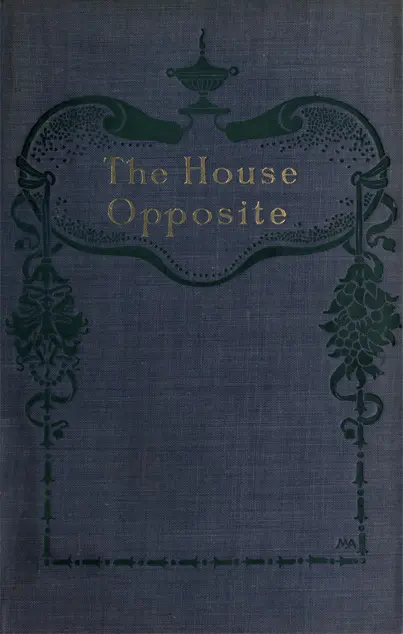
"The House Opposite: A Mystery" by Elizabeth Kent is a mystery novel written in the early 20th century. The story revolves around Dr. Charles Fortescue, who becomes embroiled in a perplexing murder investigation after witnessing peculiar events from his rooftop. The narrative captures a sense of intrigue and suspense as Dr. Fortescue grapples with his observations and connects them to the unfolding crime. At the start of the novel, the protagonist, Dr. Fortescue, seeks relief from the oppressive heat of New York City's summer by moving to his rooftop. There, he witnesses a commotion in the neighboring Rosemere apartment building, which leads him to suspect something sinister is occurring. As he observes various characters such as a mysterious woman and a distressed man, his curiosity intensifies. Soon after, he is drawn into the investigation of a murder when he is called to the scene, revealing that the victim is a man found dead in the building under suspicious circumstances. As the story expands, Dr. Fortescue uncovers connections between the dead man and residents of the Rosemere, particularly Mrs. Atkins and the enigmatic Miss May Derwent, heightening the intrigue surrounding the case.
Introduction adapted from the source catalogue; source summaries may be automatically generated.
Free to read · English · 62,803 words · No account needed
MAKE TIME FOR A GOOD BOOK
On by default. Untick to stop anonymous reading totals. Each page counts after 10 seconds in view. How this works.
Anonymous counting is on unless you have switched it off.
"Mrs. Atkins," said the detective, earnestly, "I do not think that you realise certain facts. A man has been murdered who has been identified, rightly or wrongly, with your visitor. Now, no one saw your friend leave the building, and it is our business to ascertain that he did so. Can you tell us what became of him?"
A hunted expression came into her eyes, but she answered in a steady voice: "My friend left me at a little after eleven; he was going to take the midnight train to Boston." She paused. "His name is Allan Brown--there, now!"
"Thank you, madam, and what is Mr. Brown's address in Boston?"
"I don't know."
"What was his address in New York?"
"I'm sure I don't know."
"Was he in any business?"
"I don't know," she answered, sullenly, with a glance at the door.
"Mrs. Atkins, you seem singularly ignorant about your friend,--your old
friend."
"Well, I hadn't seen him for some years. He's a stranger in the city."
"Where is his home?"
"I don't know," she answered, impatiently.
"Are you a New Yorker, Mrs. Atkins?" inquired the detective.
"No."
"Ah, I thought not! And where do you come from?"
"Chicago."
"Chicago? Indeed! I've been there some myself," Mr. Merritt continued, in a conversational tone. "Nice place. How long is it since you left there?"
"Six months," she answered, curtly.
"So it was in Chicago you knew your friend?"
"Yes," she admitted, with a slight start.
"And you are sure he didn't belong there?"
"Yes; but look here: why are you asking such a lot of questions about him? I've told you his name and where he's gone to, and if you can't find him that's your lookout."
"The consequences of our not being able to find him would be much more serious for you than for me," remarked Mr. Merritt, quietly.
"Now, Mrs. Atkins," resumed the Coroner, "can you say in what particular Mr. Brown differs from this dead man?"
"Oh, they're a good deal alike," she replied, fluently,--but I noticed that she did not look in the direction of the corpse,--"only Mr. Brown's younger, and not so heavy, and his nose is different. Still, the man does resemble Mr. Brown surprisingly. It gave me quite a shock when I first saw him." It certainly had, only I wondered if that were the true explanation.
"Please tell us what you did yesterday."
"I went out in the morning and I came home at about half-past five."
"What were you doing during all that time?"
"Oh, several things; I called on some friends and did some errands."
"Your husband has been out of town, I hear?"
"Yes."
Your reading position is saved on this browser. Take it to another device with a library code. Reading pages adapt to text, rather than matching a printed edition.
BEHIND THE BOOK
This eBook is for the use of anyone anywhere in the United States and most other parts of the world at no cost and with almost no restrictions whatsoever. You may copy it, give it away or re-use it under the terms of the Project Gutenberg License included with this eBook or online at www.gutenberg.org. If you are not located in the United States, you will have to check the laws of the country where you are located before using this eBook. Read the source licence.
The original source file, including credits and licence, is retained by this library. Request an original-format copy at no charge. Please include the book title and Project Gutenberg identifier #41525.
KEEP YOUR CURIOSITY GOING
Coulson Kernahan

Maurice Baring
Frances Wright
Cécile Tormay

Frederic Jesup Stimson

W. H. P. (William Henry Pope) Jarvis