THE CLASSIC COLLECTION✦A dead man’s diaryCLASSIC FREE BOOKS
A dead man’s diary
Coulson Kernahan
THE CLASSIC COLLECTION · 1902
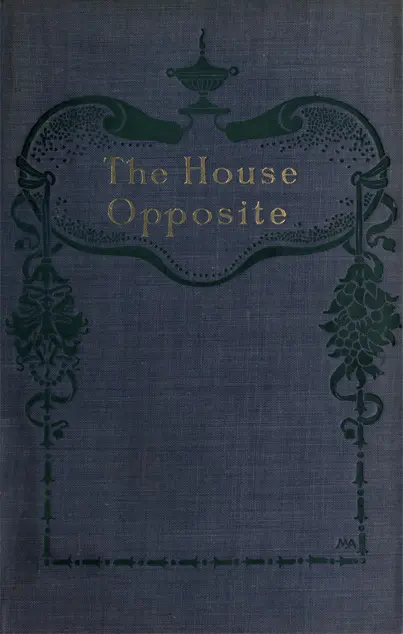
"The House Opposite: A Mystery" by Elizabeth Kent is a mystery novel written in the early 20th century. The story revolves around Dr. Charles Fortescue, who becomes embroiled in a perplexing murder investigation after witnessing peculiar events from his rooftop. The narrative captures a sense of intrigue and suspense as Dr. Fortescue grapples with his observations and connects them to the unfolding crime. At the start of the novel, the protagonist, Dr. Fortescue, seeks relief from the oppressive heat of New York City's summer by moving to his rooftop. There, he witnesses a commotion in the neighboring Rosemere apartment building, which leads him to suspect something sinister is occurring. As he observes various characters such as a mysterious woman and a distressed man, his curiosity intensifies. Soon after, he is drawn into the investigation of a murder when he is called to the scene, revealing that the victim is a man found dead in the building under suspicious circumstances. As the story expands, Dr. Fortescue uncovers connections between the dead man and residents of the Rosemere, particularly Mrs. Atkins and the enigmatic Miss May Derwent, heightening the intrigue surrounding the case.
Introduction adapted from the source catalogue; source summaries may be automatically generated.
Free to read · English · 62,803 words · No account needed
MAKE TIME FOR A GOOD BOOK
On by default. Untick to stop anonymous reading totals. Each page counts after 10 seconds in view. How this works.
Anonymous counting is on unless you have switched it off.
"Mrs. Atkins, I must request you to look at the dead man again," the detective said, fixing his eyes on her. "One of the elevator boys has identified the body as that of a gentleman who called on you on Tuesday evening."
She raised her arm as if to ward off a blow, and moved slightly away
from me.
"I don't know the man," she said.
"You deny that he called on you on Tuesday evening?"
"I do," she answered, in a steady voice.
I saw that she was rapidly recovering her self-control, and I made up my mind that I had misjudged the little woman. Under that soft, childish exterior must lie an indomitable will.
"Do you deny that you received a man on that evening?" She glanced hastily at each of us before answering: "No."
"Oh, you did see a gentleman? Who was he?"
She hesitated a moment: "An old friend."
"Will you kindly tell us his name?"
"No! I won't have him mixed up in this."
"Madam," said the detective, "the deceased has been murdered, and--" A
shriek interrupted him.
"Murdered! Oh, no, no," she gasped, her eyes wide with terror.
"I regret to say that there is no doubt of it."
"But when,--how?" she demanded, in a trembling voice.
"On Tuesday night."
She drew a deep breath. The horror faded slowly from her face, and she repeated with great composure, "Oh, Tuesday night," with a slight emphasis on the Tuesday.
The change in her was perfectly startling. She seemed calm,--almost
indifferent.
"Have you discovered how he was murdered?" she inquired.
"Yes; he was stabbed through the heart by an instrument no larger than a
knitting-needle."
"How strange," she exclaimed; "do you know who committed the crime?"
"Not yet," said the Coroner; "and now, Mrs. Atkins, I ask you again if you are quite sure that you have never seen the deceased before?"
"Yes," she answered, firmly.
"And you are willing to testify to this effect?"
"Yes."
"You are aware that the elevator boy has positively identified the body as that of your visitor?"
"I guess my word's as good as a nigger's," she said, with a defiant toss
of her head.
"No doubt," replied the Coroner, politely; "but if you would tell us the name and address of your friend we could look him up and be able to assure the police of his safety, and so save you the disagreeable necessity of appearing in court."
"In court," she repeated, with a horrified expression. Evidently this possibility had not occurred to her, and she glanced hurriedly around as if contemplating immediate flight.
Your reading position is saved on this browser. Take it to another device with a library code. Reading pages adapt to text, rather than matching a printed edition.
BEHIND THE BOOK
This eBook is for the use of anyone anywhere in the United States and most other parts of the world at no cost and with almost no restrictions whatsoever. You may copy it, give it away or re-use it under the terms of the Project Gutenberg License included with this eBook or online at www.gutenberg.org. If you are not located in the United States, you will have to check the laws of the country where you are located before using this eBook. Read the source licence.
The original source file, including credits and licence, is retained by this library. Request an original-format copy at no charge. Please include the book title and Project Gutenberg identifier #41525.
KEEP YOUR CURIOSITY GOING
Coulson Kernahan

Maurice Baring
Frances Wright
Cécile Tormay

Frederic Jesup Stimson

W. H. P. (William Henry Pope) Jarvis