THE CLASSIC COLLECTION✦A dead man’s diaryCLASSIC FREE BOOKS
A dead man’s diary
Coulson Kernahan
THE CLASSIC COLLECTION · 1902
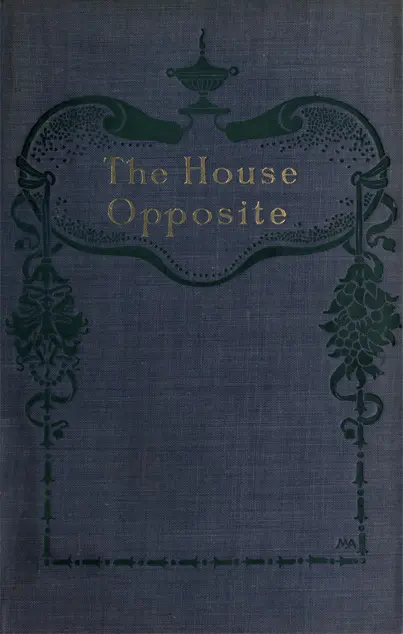
"The House Opposite: A Mystery" by Elizabeth Kent is a mystery novel written in the early 20th century. The story revolves around Dr. Charles Fortescue, who becomes embroiled in a perplexing murder investigation after witnessing peculiar events from his rooftop. The narrative captures a sense of intrigue and suspense as Dr. Fortescue grapples with his observations and connects them to the unfolding crime. At the start of the novel, the protagonist, Dr. Fortescue, seeks relief from the oppressive heat of New York City's summer by moving to his rooftop. There, he witnesses a commotion in the neighboring Rosemere apartment building, which leads him to suspect something sinister is occurring. As he observes various characters such as a mysterious woman and a distressed man, his curiosity intensifies. Soon after, he is drawn into the investigation of a murder when he is called to the scene, revealing that the victim is a man found dead in the building under suspicious circumstances. As the story expands, Dr. Fortescue uncovers connections between the dead man and residents of the Rosemere, particularly Mrs. Atkins and the enigmatic Miss May Derwent, heightening the intrigue surrounding the case.
Introduction adapted from the source catalogue; source summaries may be automatically generated.
Free to read · English · 62,803 words · No account needed
MAKE TIME FOR A GOOD BOOK
On by default. Untick to stop anonymous reading totals. Each page counts after 10 seconds in view. How this works.
Anonymous counting is on unless you have switched it off.
So he was the tradesman I had seen leaving the Rosemere! I felt a terrible pang of jealousy, but managed to ask: "What did his servants think at seeing their master go out in such costume?"
"Later on, he told me that he had been able to leave the house unperceived," she replied; "at least, he thought so, as all the servants happened to be at breakfast. He had crept softly up-stairs, put on an old suit and hat, both of which had suffered shipwreck; then, with infinite precautions, he had stolen into the butler's pantry, seized an apron, stuffed it inside his coat, which he buttoned over it, and, after watching till the street was clear, slipped quietly out. When he turned the corner, and fancied himself unobserved, he pulled out the apron and tied it on. Then, walking boldly into Bloomingdale's, he purchased a market-basket, into which, with great forethought, he put a few needful groceries. All this, as I said before, he told me later. At the time, I left the restaurant without even glancing in his direction. We boarded the same car, but sat as far apart as possible. All went off as we had arranged, and half an hour later I had let him into our kitchen without having aroused anybody's suspicions." She paused a moment.
"Mr. Norman went at once into the room where the body lay," she continued. "He went alone, as I dared not follow him. When he came out he told me that he had pulled down all the shades, as, owing to the intense heat, he feared that some one might be tempted to climb to the opposite roof, in which case a chance look would lead to the discovery of my ghastly secret. The quiet and business-like way in which he talked of our situation was most comforting, and I was surprised to find myself calmly discussing the different means of obtaining possession of the key to the vacant apartment. This must be my task, as he could not go outside the door, for fear of being seen. So I stole out on the landing to reconnoitre. To my joy, I saw the key sticking in the lock. When Mr. Norman heard of this piece of good luck, it did not take him long to decide on a plan of action. Hastily scribbling a few lines to his butler, he gave them to me. He then told me to go out again and ring for the elevator. While waiting for it to come, I was to saunter casually to the threshold of the adjoining flat, and, leaning on the door-knob, quietly abstract the key. Should any one notice me, my curiosity would be a sufficient excuse for my presence. Having got the key and enclosed it in the envelope he had given me, I was to hurry to a district messenger office (taking care to select one where I was not likely to be known), send the note, and there await the answer, which would be addressed to Miss Elizabeth Wright. In this note he gave orders to have the key duplicated as quickly and secretly as possible. Mr. Norman thought that the butler, who was a man of great discretion, and had been with the family for many years, could be entrusted with this delicate mission, but anyhow we had to risk it as the only alternative (my going to a locksmith myself) was not to be thought of. The police would be sure to make inquiries of all such people, and if they discovered that a girl answering to my description had been to them on such an errand, it would fasten suspicion upon me and prove a perhaps fatal clue. I thought his plan most ingenious, and promised to follow his instructions to the letter. I had no difficulty in obtaining the key, although my extreme nervousness made me so awkward that I almost dropped it at the critical moment. After that everything else was easy. It seemed, however, an interminable time before I at last held both keys in my hand. I flew back to the Rosemere. Impatience lent wings to my feet. But here a disappointment awaited me. On stepping out of the elevator, I found the hall full of workmen, noisily eating their luncheons. There was no help for it--I must postpone returning the key till later. This agitated me very much, as I feared every moment that its absence would be discovered. Mr. Norman, however, took the delay much more philosophically than I did, and reassured me somewhat by saying that he did not believe any one would think of the key till evening. Still, as it was advisable to run as few risks as possible, I decided to make another attempt as soon as the men returned to their work. Peeping through a crack of our door, I waited till the coast was clear before venturing out. After ringing the elevator bell, I walked boldly forward, and had already stretched out my hand towards the key-hole, when a queer grating noise made me pause. A tell-tale boot was thrust suddenly out, and to my horror I discovered that a man was standing directly behind the door, busily scraping off the old paint. The narrowness of my escape made me feel quite faint. Another moment and the click of the lock would have betrayed me, and then--but I could not indulge in such conjectures. Swallowing my disappointment, I got into the lift. There was no help for it; I dared not try again till later in the day. In the meantime, I decided to do some shopping, as I wanted to be able to give that as an excuse for my prolonged stay in town. After spending several hours in this way, I concluded that I might again make an effort to replace the key, and this time I was successful, for although I met one of the workmen, yet I am sure he had not noticed that I had been fumbling with the lock. I found Mr. Norman, on my return, as calm and cheerful as ever. He urged me not to stay in the apartment, and although I felt ashamed to leave him to face the situation alone, yet the place was so dreadful to me that I yielded to my fears and his entreaties, and went out again and wandered aimlessly about till it grew so dark that I no longer dared to remain out alone. It is impossible for me to describe the ensuing evening. We sat together in the kitchen, as being the spot farthest from the scene of the tragedy. At first we tried to talk, but as the hours crept by, we grew more and more taciturn. We had decided that at two o'clock we would attempt our gruesome task, for that is the time when the world sleeps most soundly. Mr. Norman suggested that I should muffle myself up as much as possible, so that in case we were discovered, I might yet escape recognition, or, what would be even better, observation. I therefore put on a dark shirtwaist I found hanging in my closet, drew on a pair of black gloves to prevent my hands attracting attention, and tied up my hair in a black veil, which I could pull down over my face in case of emergency. Two o'clock at last struck. We immediately--but why linger over the gruesome details of what occurred during the next fifteen minutes? Fortunately, no one surprised us as we staggered across the landing with our burden, and we managed to get back to the shelter of our four walls unobserved. As we stood for a moment in the hall congratulating ourselves on having got rid of the body so successfully, I noticed a long, glittering object lying at my feet. Bending down, I picked it up. It was the fatal hat-pin. I dropped it with a shudder. Mr. Norman asked me what it was. I told him. He picked it up again and examined it closely. 'Where is the head of this pin?' he asked. I had no idea. I remembered that it had broken off in my hand as I wrenched it out of the body, and I thought that in all probability it still lay somewhere in the drawing-room, unless it had been carried elsewhere by the same chance which had swept its other part into the hall. Mr. Norman looked very grave when he heard of this loss, and said he would look for it immediately. He insisted, however, on my going to my room and trying to get some sleep. But sleep was, of course, out of the question, and at six o'clock I crept down stairs to bid my kind friend good-bye. We had concluded that at that hour he could easily leave the building unobserved.
Your reading position is saved on this browser. Take it to another device with a library code. Reading pages adapt to text, rather than matching a printed edition.
BEHIND THE BOOK
This eBook is for the use of anyone anywhere in the United States and most other parts of the world at no cost and with almost no restrictions whatsoever. You may copy it, give it away or re-use it under the terms of the Project Gutenberg License included with this eBook or online at www.gutenberg.org. If you are not located in the United States, you will have to check the laws of the country where you are located before using this eBook. Read the source licence.
The original source file, including credits and licence, is retained by this library. Request an original-format copy at no charge. Please include the book title and Project Gutenberg identifier #41525.
KEEP YOUR CURIOSITY GOING
Coulson Kernahan

Maurice Baring
Frances Wright
Cécile Tormay

Frederic Jesup Stimson

W. H. P. (William Henry Pope) Jarvis