THE CLASSIC COLLECTION✦A dead man’s diaryCLASSIC FREE BOOKS
A dead man’s diary
Coulson Kernahan
THE CLASSIC COLLECTION · 1902
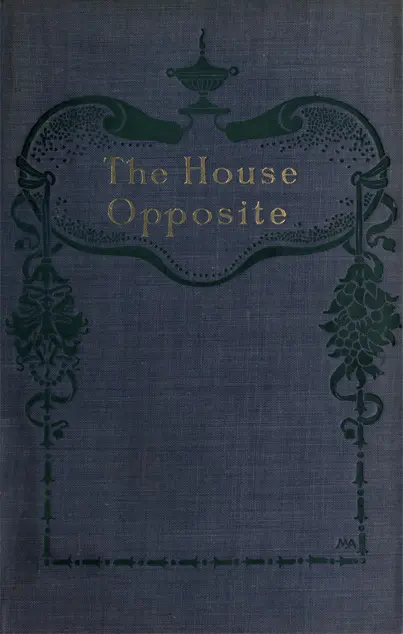
"The House Opposite: A Mystery" by Elizabeth Kent is a mystery novel written in the early 20th century. The story revolves around Dr. Charles Fortescue, who becomes embroiled in a perplexing murder investigation after witnessing peculiar events from his rooftop. The narrative captures a sense of intrigue and suspense as Dr. Fortescue grapples with his observations and connects them to the unfolding crime. At the start of the novel, the protagonist, Dr. Fortescue, seeks relief from the oppressive heat of New York City's summer by moving to his rooftop. There, he witnesses a commotion in the neighboring Rosemere apartment building, which leads him to suspect something sinister is occurring. As he observes various characters such as a mysterious woman and a distressed man, his curiosity intensifies. Soon after, he is drawn into the investigation of a murder when he is called to the scene, revealing that the victim is a man found dead in the building under suspicious circumstances. As the story expands, Dr. Fortescue uncovers connections between the dead man and residents of the Rosemere, particularly Mrs. Atkins and the enigmatic Miss May Derwent, heightening the intrigue surrounding the case.
Introduction adapted from the source catalogue; source summaries may be automatically generated.
Free to read · English · 62,803 words · No account needed
MAKE TIME FOR A GOOD BOOK
On by default. Untick to stop anonymous reading totals. Each page counts after 10 seconds in view. How this works.
Anonymous counting is on unless you have switched it off.
She stopped, and sank back exhausted.
"Go on," I begged; "what did you do then?"
"I knew that if Mr. Norman was in town at all, he would be at his father's house," May continued, more quietly.
"Hailing a cab, I drove directly there. You can imagine in what an overwrought state I was when I tell you that the idea that I was doing anything unusual never occurred to me. I rang the bell and asked for Mr. Stuart Norman without the least embarrassment. The butler's look of surprise and his evident unwillingness to admit me, recalled me a little to my senses. But even when I saw how my conduct must strike others, I did not turn back, and I finally persuaded the man to call his master. The latter hurried from the breakfast table to see who the mysterious and importunate female might be who had come knocking so early at his door. Notwithstanding my veil, he recognised me at once. Ushering me into a small reception room he closed the door behind him; then turning towards me he took me by the hand and, gently leading me to a sofa, begged me to tell him what had happened. I told my dreadful story as briefly as possible. You can imagine with what horror he listened. Strangely enough, I remained perfectly calm. I was astonished at my own callousness, but at the moment I felt as if all that had occurred was nothing but a hideous nightmare, from which I had happily awakened. When I had finished, Mr. Norman did not speak for some time, but paced up and down the room with ill-concealed agitation. Trying to appear calm, he again sat down beside me.
"'I have come to the conclusion that the only thing for you to do is to return at once to the Rosemere,' he said at last. This suggestion at once dispelled the numbness which had come over me, and the painful fluttering of my heart convinced me that the power of suffering had, alas, not left me. I first thought that he intended me to go back alone, but that I knew I could not do. He soon reassured me on that point, however, and promised that as long as I needed him, or wanted him, he would never desert me. He seemed to understand intuitively how I shrank from returning to the scene of the tragedy, and I felt sure he would not urge me to do so if he did not think it absolutely necessary. He pointed out that the body must be removed from our apartment as soon as possible. Where to put it was the question. We thought of various places, none of which seemed practicable, till I remembered the vacant suite on our landing. As soon as I told him of it, and that at present painters and paper-hangers were working there, he decided that we could never find a more convenient spot, or one where the discovery of the dead man was so little likely to compromise any one. How Mr. Norman was to get into our apartment was the next question. For obvious reasons he could not do so openly. At last, he hit on the idea of disguising himself as a tradesman. He suggested that we should both enter the building at the same time, I by the front, and he by the back door. I was then to let him in through the kitchen, which could easily be done without anybody's being the wiser. This seemed the most feasible plan, and I agreed to it. It would take him only a few minutes to dress, he assured me, but while I was waiting he begged me to have some breakfast. I told him that it would be impossible for me to eat, but he insisted. As it was most important that the servants should not recognise me, he took me to a quiet restaurant round the corner. There he ordered an ample breakfast, and stayed (notwithstanding my protests) till he satisfied himself that I had done full justice to it. He was gone an incredibly short time, and when he did return I had some difficulty in recognising him, so faultless, to my inexperienced eyes, did his get-up appear. He did not enter the restaurant, but lounged outside, chewing a straw with apparent carelessness. That straw was a very neat touch, for it permitted him to distort his mouth without exciting remark. A battered straw hat, drawn well over his eyes, a large apron, and a market-basket completed the transformation. Even if he had come face to face with a party of friends, I doubt if they would have known him. For who could suspect a man like Mr. Norman of masquerading as a tradesman? People would therefore be inclined to attribute any likeness they observed to an accidental resemblance."
Your reading position is saved on this browser. Take it to another device with a library code. Reading pages adapt to text, rather than matching a printed edition.
BEHIND THE BOOK
This eBook is for the use of anyone anywhere in the United States and most other parts of the world at no cost and with almost no restrictions whatsoever. You may copy it, give it away or re-use it under the terms of the Project Gutenberg License included with this eBook or online at www.gutenberg.org. If you are not located in the United States, you will have to check the laws of the country where you are located before using this eBook. Read the source licence.
The original source file, including credits and licence, is retained by this library. Request an original-format copy at no charge. Please include the book title and Project Gutenberg identifier #41525.
KEEP YOUR CURIOSITY GOING
Coulson Kernahan

Maurice Baring
Frances Wright
Cécile Tormay

Frederic Jesup Stimson

W. H. P. (William Henry Pope) Jarvis