THE CLASSIC COLLECTION✦A dead man’s diaryCLASSIC FREE BOOKS
A dead man’s diary
Coulson Kernahan
THE CLASSIC COLLECTION · 1902
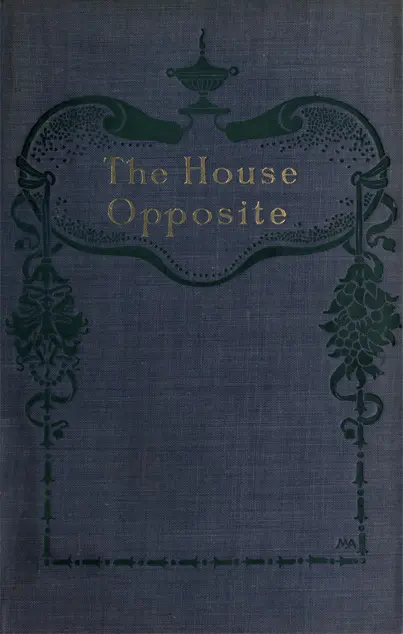
"The House Opposite: A Mystery" by Elizabeth Kent is a mystery novel written in the early 20th century. The story revolves around Dr. Charles Fortescue, who becomes embroiled in a perplexing murder investigation after witnessing peculiar events from his rooftop. The narrative captures a sense of intrigue and suspense as Dr. Fortescue grapples with his observations and connects them to the unfolding crime. At the start of the novel, the protagonist, Dr. Fortescue, seeks relief from the oppressive heat of New York City's summer by moving to his rooftop. There, he witnesses a commotion in the neighboring Rosemere apartment building, which leads him to suspect something sinister is occurring. As he observes various characters such as a mysterious woman and a distressed man, his curiosity intensifies. Soon after, he is drawn into the investigation of a murder when he is called to the scene, revealing that the victim is a man found dead in the building under suspicious circumstances. As the story expands, Dr. Fortescue uncovers connections between the dead man and residents of the Rosemere, particularly Mrs. Atkins and the enigmatic Miss May Derwent, heightening the intrigue surrounding the case.
Introduction adapted from the source catalogue; source summaries may be automatically generated.
Free to read · English · 62,803 words · No account needed
MAKE TIME FOR A GOOD BOOK
On by default. Untick to stop anonymous reading totals. Each page counts after 10 seconds in view. How this works.
Anonymous counting is on unless you have switched it off.
"In the middle of our room opposite the fire place, stands a large sofa. When his eyes fell upon that he paused a minute. 'Perhaps I'll go to bed,' I heard him say, and forthwith he proceeded to take off his coat and waistcoat. Meanwhile, I was cowering near the window. As he had apparently forgotten me, I began to hope that I might possibly succeed in creeping past him unobserved. But, unfortunately, as I was attempting to do so, my skirt caught in something, and I fell forward on my hands and knees. The noise attracted his attention, and he paused in his undressing to look at me. I sprang to my feet. We stared at each other for a few seconds, and I thought I saw a ray of comprehension come into his dull eyes. 'I don't think I ever met this lady before,' he mumbled.
"He tried to pull himself together, and made me an awkward bow. I stood perfectly still. The wretch smiled horridly at me. Of course, I now see that I ought to have humoured him, instead of which I was injudicious enough to meet his advances with a fierce scowl. That apparently infuriated the fellow, for he sprang towards me, cursing loudly. I had not thought him capable of such agility, so was unprepared for the attack. He caught my wrist. I tried to wrench it from him, but he was very strong, and I soon realised that I was quite powerless in his grasp. Yet I would not give in, but continued to struggle fiercely. Oh, it was too awful!"
The unfortunate girl paused a moment and covered her face with her
hands, as if she were trying to shut out the memory of that terrible
scene.
"At last the end came. He had got me into a corner. Escape was impossible. My back was against the wall, and in front of me towered the wretch, his hands on my shoulders, his poisoned breath blowing into my face. Now, remember, before you blame me for what followed, that I was perfectly desperate. As I glanced frantically around, hoping against hope to find some way out of my awful situation, my eyes fell upon a hat-pin, which lay on a table by my side, well within reach of my right hand. It was sticking in my hat, which I had carelessly thrown down there when I came in from dinner a few hours before. It may be that its design, which was that of a dagger, suggested my putting it to the use I did. I don't know. At any rate, I seized it, and managed to get it in between me and my assailant, with its sharp point pressing against his chest. By this time I had become convinced that the man was simply intoxicated, and, hoping to frighten him, I cried: 'Let me go. If you don't, I will kill you.' Yes, I said that; I acknowledge it. But I had no real intention of doing such a thing. I didn't even dream that I held in my hand a weapon. What happened then I don't quite know. Whether he tripped over something, or whether he was so drunk that he lost his balance, I can't tell. At all events, he fell heavily against me. If I had not been braced against the wall he certainly would have knocked me down. As it was, I was stunned for a minute. Recovering myself, I pushed him from me with all my strength. He reeled back, staggered a few steps, and then, to my surprise, fell flat upon the floor. As I stood staring at him, too frightened still to take advantage of this opportunity to escape, I heard a queer rattling in his throat. What could be the matter, I wondered, and what was that sticking out of his shirt, right over his heart? Could it be my hat-pin? I looked down at my hands; they were empty. Slowly the truth dawned upon me. I rushed to his side, looked into his glazing eyes, saw the purple fade from his face, and a greenish hue creep into its place. As the full horror of my position was borne in upon me, I thought I should go mad. I seized the pin and tried to drag it out, actuated by an unreasoning hope that if I could only extract it from the wound the man might even yet revive. But my hands must have been paralysed with fear, for, although I tugged and tugged, I failed to move it. At last, after an especially violent effort, I succeeded in pulling it out, but unfortunately in doing so the head broke off. I peered again at the man. Still no sign of life, but I could not, would not believe the worst. Overcoming my horror of the fellow, I bent down and shook his arm. I shall never forget the sensation it gave me to touch him. I could doubt the awful truth no longer: the man was dead, and I had killed him. Then for a time I lost consciousness. Unfortunately I am young and strong, and soon revived. When I did so I found myself lying on the floor not a foot away from that horrible thing that had so lately been a man. I feared him as much dead as alive, and, staggering to my feet, I fled from the room. Oh, the darkness, the frightful darkness which confronted me everywhere! In my terror of it I rushed hither and thither, leaving the electric light shining in my wake. I felt I must know, that I must be able to see, that he, who would never stir again, was not still following me. Stumbling up stairs in my haste, I locked myself into my bedroom. There I tried to think, but all I could do was to crouch, trembling, behind the door, listening for I knew not what. Several times I thought I heard footsteps stealing softly up the stairs.
Your reading position is saved on this browser. Take it to another device with a library code. Reading pages adapt to text, rather than matching a printed edition.
BEHIND THE BOOK
This eBook is for the use of anyone anywhere in the United States and most other parts of the world at no cost and with almost no restrictions whatsoever. You may copy it, give it away or re-use it under the terms of the Project Gutenberg License included with this eBook or online at www.gutenberg.org. If you are not located in the United States, you will have to check the laws of the country where you are located before using this eBook. Read the source licence.
The original source file, including credits and licence, is retained by this library. Request an original-format copy at no charge. Please include the book title and Project Gutenberg identifier #41525.
KEEP YOUR CURIOSITY GOING
Coulson Kernahan

Maurice Baring
Frances Wright
Cécile Tormay

Frederic Jesup Stimson

W. H. P. (William Henry Pope) Jarvis