THE CLASSIC COLLECTION✦A dead man’s diaryCLASSIC FREE BOOKS
A dead man’s diary
Coulson Kernahan
THE CLASSIC COLLECTION · 1902
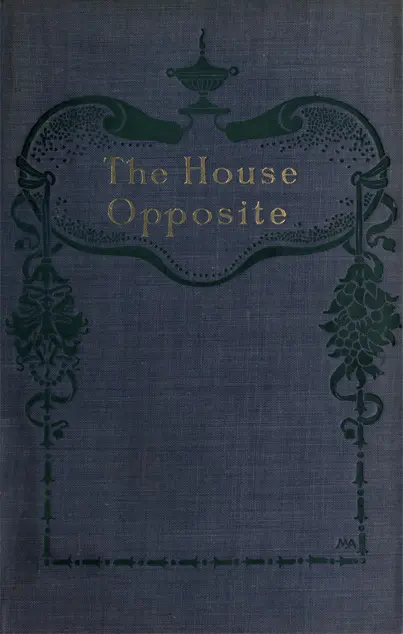
"The House Opposite: A Mystery" by Elizabeth Kent is a mystery novel written in the early 20th century. The story revolves around Dr. Charles Fortescue, who becomes embroiled in a perplexing murder investigation after witnessing peculiar events from his rooftop. The narrative captures a sense of intrigue and suspense as Dr. Fortescue grapples with his observations and connects them to the unfolding crime. At the start of the novel, the protagonist, Dr. Fortescue, seeks relief from the oppressive heat of New York City's summer by moving to his rooftop. There, he witnesses a commotion in the neighboring Rosemere apartment building, which leads him to suspect something sinister is occurring. As he observes various characters such as a mysterious woman and a distressed man, his curiosity intensifies. Soon after, he is drawn into the investigation of a murder when he is called to the scene, revealing that the victim is a man found dead in the building under suspicious circumstances. As the story expands, Dr. Fortescue uncovers connections between the dead man and residents of the Rosemere, particularly Mrs. Atkins and the enigmatic Miss May Derwent, heightening the intrigue surrounding the case.
Introduction adapted from the source catalogue; source summaries may be automatically generated.
Free to read · English · 62,803 words · No account needed
MAKE TIME FOR A GOOD BOOK
On by default. Untick to stop anonymous reading totals. Each page counts after 10 seconds in view. How this works.
Anonymous counting is on unless you have switched it off.
"Don't talk in this way," I commanded, forcibly possessing myself of her hands. "You are not going to die."
"Don't touch me," she entreated, tearing herself away from me. "You won't want to, when you know the truth. I have not only committed a dreadful crime, but have allowed an innocent person to suffer in my stead. I should have confessed to the detective yesterday that I knew Mrs. Atkins had not killed the man, because--because--I myself killed him."
I was so overcome with horror and surprise at hearing this confession, that for a moment I was paralysed.
"My poor darling," I exclaimed at last, "how did this accident occur?"
She had evidently expected me to express horror and indignation, and that I did not do so was such an unexpected relief, that the poor child burst into tears. This time she did not repulse me. When she had become a little calmer, she said:
"I am glad that there is one person at least who, hearing that admission, does not at once believe me guilty of a dreadful crime. Oh, I assure you, I swear to you, that I never meant to kill the--the--fellow." She shuddered.
"Of course you didn't. Tell me all about it, and let me see if I can't
help you in some way."
A faint gleam of hope shot across her face.
"It is a long story," she began. "You remember that I told the Coroner about a certain gentleman who called on me on that fatal Tuesday evening?"
"Yes."
"Well, that was all true. Mr. Greywood (for, of course, you now know that that was my visitor's name) and I quarrelled (no matter why), and we parted in anger. This is no news to you. What happened later is what I have tried so hard to conceal. Mr. Greywood had hardly left when I was startled by a violent ringing at the door-bell. Thinking that it was my late visitor who had returned, to apologise, probably, I hurried to the door, and incautiously opened it. In the dim light, the man before me resembled Mr. Greywood so closely that I did not doubt that it was he, and moved aside to allow him to enter. As he did so, he pushed roughly against me. I stared at him in astonishment, and to my horror, discovered that I was face to face with a perfect stranger. The fellow banged the door behind him, and stood with his back against it. He was mumbling something I couldn't catch, and his head rolled alarmingly from side to side. That the man was insane was the only thing that occurred to me, and as I realised that I was locked into an apartment with a lunatic, I became panic-stricken, and lost my head. Instead of making a dash for the upper floor, where I could either have barricaded myself into one of the bed rooms, or perhaps have managed to escape by the back stairs, I stupidly ran into the drawing-room, which is only shut off from the hall by portières, and has no other outlet. The brute, of course, followed me, and stood in the door way, barring my exit. I was caught like a rat in a trap. He lurched in my direction, muttering imprecations. His speech was so thick that I could only understand a word here and there. I made out, however, that he wished me to give him something that night, which, he said, I had promised to let him have the next day. As he staggered toward me, I uttered a piercing shriek, but even as I did so, I knew that there was little or no chance of anybody's hearing me. The building was almost empty, and the street at that hour practically deserted.
Your reading position is saved on this browser. Take it to another device with a library code. Reading pages adapt to text, rather than matching a printed edition.
BEHIND THE BOOK
This eBook is for the use of anyone anywhere in the United States and most other parts of the world at no cost and with almost no restrictions whatsoever. You may copy it, give it away or re-use it under the terms of the Project Gutenberg License included with this eBook or online at www.gutenberg.org. If you are not located in the United States, you will have to check the laws of the country where you are located before using this eBook. Read the source licence.
The original source file, including credits and licence, is retained by this library. Request an original-format copy at no charge. Please include the book title and Project Gutenberg identifier #41525.
KEEP YOUR CURIOSITY GOING
Coulson Kernahan

Maurice Baring
Frances Wright
Cécile Tormay

Frederic Jesup Stimson

W. H. P. (William Henry Pope) Jarvis