THE CLASSIC COLLECTION✦An outlaw’s diary: the CommuneCLASSIC FREE BOOKS
An outlaw’s diary: the Commune
Cécile Tormay
THE CLASSIC COLLECTION · 1893
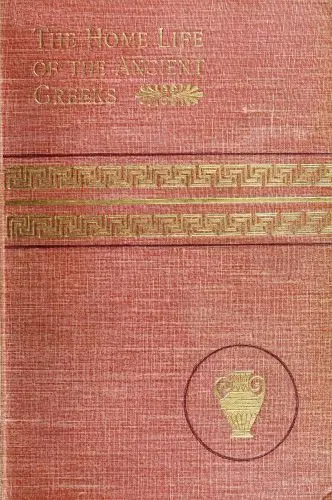
"The Home Life of the Ancient Greeks" by Hugo Blümner is a historical account written in the late 19th century. The book explores the domestic life, customs, and social conditions of ancient Greece, detailing various aspects such as clothing, family structure, education, and daily activities. Its focus is on how these cultural elements were interwoven with broader historical contexts and practices. At the start of the book, the translator provides a preface explaining the challenges of accurately depicting ancient Greek life, due to limited and sometimes biased sources. The introduction sets the tone for the chapters that follow, which are designed to analyze the different dimensions of Greek domestic life. The first chapter on costume elaborates on the significance of clothing in understanding daily life and provides detailed descriptions of traditional garments for both men and women, noting similarities and differences in styles, materials, and cultural influences throughout various periods of Greek history. The author emphasizes that clothing not only reflects personal identity but also societal norms and values within ancient Greek culture.
Introduction adapted from the source catalogue; source summaries may be automatically generated.
Free to read · English · 134,781 words · No account needed
MAKE TIME FOR A GOOD BOOK
On by default. Untick to stop anonymous reading totals. Each page counts after 10 seconds in view. How this works.
Anonymous counting is on unless you have switched it off.
Women, Dress of, 20-49;
Head-coverings of, 60-63;
Head-dress of, 74-77;
suckling their children, 81;
their part in the Amphidromia, 83, 84;
purification after childbirth, 84;
amusing their children, 88;
their high reputation in Sparta, 132;
their position in relation to men and in the household, 145;
their important position in heroic times, 145;
their household duties, 146;
as wives, 146-149;
their apartments, 150;
water from the wells, 151;
attended by slaves, 151, 182;
their seclusion, 151;
their few public appearances, 151, 152;
their weaving and spinning, 152-154;
Vase painting representations of, 155, 164, 167;
washing clothes, 156, 157;
at their toilet, 157, 169;
Baths for, 159, 162;
anointing the body, 162;
Maids of, 162;
rougeing, dyeing the hair, &c., 165, 166;
Inferiority of the Athenian to the Spartan, 170;
addicted to intemperance, 170;
dining, 178, 203;
sitting at windows, 182;
at funerals, 245, 246, 251;
at a sacrificial ceremony, 338;
forbidden to witness the Olympic games, 366;
at Eleusinian festivals, 380;
at the festival of Demeter, 382;
at night celebrations of Dionysus, 390;
at the theatre, 447;
as slaves, 521, 523
Woollen clothing, 11, 47, 497
Work, how regarded by Doric and other races, 490;
Hesiod’s opinion of, 490;
encouraged by the tyrants, 490;
Opinion of Socrates of, 491;
Depreciation of, 499, 500
Workmen, Dress of, 12, 19, 188;
travelling, 198;
Citizens’ contempt for, 498;
Hired, 506;
Wages of, 508
Workshops, 190, 192, 502-506
Wreaths, given to guests at a symposium, 209;
on the dead, 245;
on tombs, 262;
of priests, 327;
at Olympic games, 361, 362
Wrestling, Technical expressions of, 284;
Preparations for, 284;
The process of cleansing after, 285;
Two principal methods of, 285;
represented in the Florentine marble group, 286;
Tricks or feints in, 288;
Superintendents of, 288, 289;
its thorough development into an art, 290;
at Olympia, 353
Wrestling school, The, 115;
its management, 116;
Method and object of instruction in, 116, 282;
of Olympia, 121;
of Ephesus and Alexandria Troas, 121
Xenophon’s Oikonomikos, Allusion to, 130, 166;
description of symposia, 214, 217, 220
Youths, Dress of, 18;
Hair of, 69;
Beards of, 74
(See, also, Boys)
Zeus, as represented in works of art, 19;
Beard of, 73;
witness to the oath taken by ephebi, 118;
invoked at weddings, 137;
protector of strangers, 199;
statue by Pheidias, 328;
Oracle of, 344;
Sacrifice at Olympic festival to, 359;
Appeal from olive-growers to, 495
Zeus Ammon, Oracle of, 345
Zeus Herkeios, Altar to, 181, 358
Zeus Moiragetes, Prayer to, 360
Zeus-Nemeios, Sanctuary of, 371
Zeus Soter, Libations to, 212
Zeus Trophonius, Oracle of, 345
[A] Translated by S. C. Calverley.
[B] Translated by J. Hookham Frere.
[C] Translated by S. C. Calverley.
[D] Nissen.--“Pompeianische Studien.”
[E] Callistratus, translated by Elton.
[F] Translated by T. J. Arnold.
[G] Compare an essay by Raoul Lemaître, “Sur la disposition des rameurs sur la trière antique,” in the “Revue Archéologique” for 1883, pp. 89 and fol. His conclusions, however, differ from Graser’s. The question of the arrangement of oars is still an open one.
Your reading position is saved on this browser. Take it to another device with a library code. Reading pages adapt to text, rather than matching a printed edition.
BEHIND THE BOOK
This eBook is for the use of anyone anywhere in the United States and most other parts of the world at no cost and with almost no restrictions whatsoever. You may copy it, give it away or re-use it under the terms of the Project Gutenberg License included with this eBook or online at www.gutenberg.org. If you are not located in the United States, you will have to check the laws of the country where you are located before using this eBook. Read the source licence.
The original source file, including credits and licence, is retained by this library. Request an original-format copy at no charge. Please include the book title and Project Gutenberg identifier #61689.
KEEP YOUR CURIOSITY GOING
Cécile Tormay

Moritz Busch
John L. Ransom
Frances Wright
Cécile Tormay

Mabel Potter Daggett