THE CLASSIC COLLECTION✦An outlaw’s diary: the CommuneCLASSIC FREE BOOKS
An outlaw’s diary: the Commune
Cécile Tormay
THE CLASSIC COLLECTION · 1893
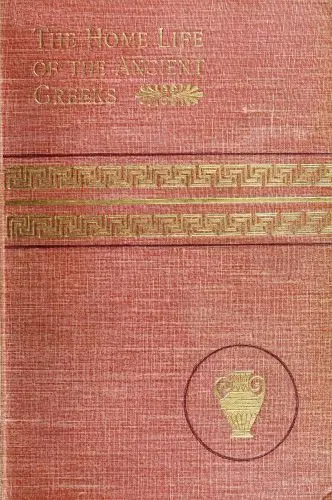
"The Home Life of the Ancient Greeks" by Hugo Blümner is a historical account written in the late 19th century. The book explores the domestic life, customs, and social conditions of ancient Greece, detailing various aspects such as clothing, family structure, education, and daily activities. Its focus is on how these cultural elements were interwoven with broader historical contexts and practices. At the start of the book, the translator provides a preface explaining the challenges of accurately depicting ancient Greek life, due to limited and sometimes biased sources. The introduction sets the tone for the chapters that follow, which are designed to analyze the different dimensions of Greek domestic life. The first chapter on costume elaborates on the significance of clothing in understanding daily life and provides detailed descriptions of traditional garments for both men and women, noting similarities and differences in styles, materials, and cultural influences throughout various periods of Greek history. The author emphasizes that clothing not only reflects personal identity but also societal norms and values within ancient Greek culture.
Introduction adapted from the source catalogue; source summaries may be automatically generated.
Free to read · English · 134,781 words · No account needed
MAKE TIME FOR A GOOD BOOK
On by default. Untick to stop anonymous reading totals. Each page counts after 10 seconds in view. How this works.
Anonymous counting is on unless you have switched it off.
Theocritus, Allusions to women’s dress by, 43;
Alcmene’s song to her children in, 85;
Epithalamium of Helen in, 141;
his allusion to the women at the Festival of Adonis, 152, 390
Theognis, in Attic schools, 110;
Song by, 215
Thermae, The, of the Roman Empire, 192
Thesmophoria, The, 151, 382, 383
Thesmophoriazusae, The, of Aristophanes, 170
Thessaly, and the origination of the chlamys, 17;
Luxury in, 206;
Slingers of, 478;
Horse-rearing in, 496
“Thetes,” The, 456
Tholia, The, 61
Tholos buildings, 253
Threshing, 493
Throwing the javelin, 278, 279, 282;
quoits, 121, 275, 277, 278;
the spear, 121, 124, 281, 282
Thucydides, his allusion to male dress, 12;
allusion to dressing the hair, 68
Thymele, The, 403
Time, Measurement of, 183
Tolls, 201, 502
Tombs, 254;
Inscriptions and designs on, 258-262
Torch-race, The, 274, 275, 376
Torches, Bridal, 139, 140
Tortoise, The, as a symbol of domestic life, 151;
Lyre of Hermes constructed out of a, 307
Torture of slaves, 527
Torturers, 525
Towns, Life in, 177
“Towns, Game of,” 223
Toys, 89-93
Trades (See Handicrafts, &c.)
Tradesmen, Contempt for, 508, 509;
Dishonesty of, 510
Tragedies, 411-414, 430
Trainers of youth in Sparta, 99
Travelling, 197-201
Tribes, at Athens, 143;
of Greece in heroic period, 451;
in later centuries, 453, 454
Trigonon, The, 313
Trousers, 20
Trumpets, 320
Tumulus, 253
Tunics, 49
Tyndareus, The chiton of, 11
Umpires at Olympic games, 358, 359
Urns, 255
Usury, 517
Vase painter, Workshop of a, 506
Vase paintings, The chiton in, 4;
Representations of daily life in, 19;
Female dress in, 22, 28, 30;
Drapery in, 33, 34;
Coloured patterns in, 45;
Ephebi racing on horseback in, 125;
Bridal procession in, 144;
Representations of women in, 153-159, 164, 167;
Drinking scenes in, 230;
Charioteers in, 451
Vaults for the dead, 253, 254
Vegetables, 207, 208
Vines, 494
Visiting, 194
Vitruvius, his description of a gymnasium, 120
Wail, Funeral, 248
Walking-sticks, 63, 64
War, Authorities on the subject of, 450;
Part taken by nobles in, 451;
Charioteers in, 451, 452;
Arms used in, 452, 460-480;
Cavalry in, 452, 479;
Infantry in, 452;
The closed phalanx in, 452;
Captives taken in, 452;
Modes in heroic age of, 452;
regarded as a festival, 455;
Sacrifice before entering upon, 456;
Sieges, 480, 481
Washing clothes, 156, 157;
at wells, 159
Water, Holy, 137;
sprinkled after death, 244, 255;
in the temples, 329;
its use at the time of sacrifice, 337
Water clocks, 185-187
Weaning, 85
Weaving, 130, 152
Wedding banquets, 138
(See, also, Marriage)
Weights and measures, False, 510
Wind instruments, 314-320
Wine, forbidden to women, 170;
Drinking, 178, 202, 209;
mixed with water, 210;
Varieties of, 210;
used in the game of cottabus, 221;
offered in sacrifice to gods, 335;
at the Anthesterian festival, 385
Witchcraft, Protection from, 331
Witches, 88
Wives, their admission among the clansmen, 142;
their honourable position at Sparta, 146;
their subordinate position among the Athenians, 147;
Infidelity of, 148;
of poorer citizens, 150;
Advice for, 166, 167
Your reading position is saved on this browser. Take it to another device with a library code. Reading pages adapt to text, rather than matching a printed edition.
BEHIND THE BOOK
This eBook is for the use of anyone anywhere in the United States and most other parts of the world at no cost and with almost no restrictions whatsoever. You may copy it, give it away or re-use it under the terms of the Project Gutenberg License included with this eBook or online at www.gutenberg.org. If you are not located in the United States, you will have to check the laws of the country where you are located before using this eBook. Read the source licence.
The original source file, including credits and licence, is retained by this library. Request an original-format copy at no charge. Please include the book title and Project Gutenberg identifier #61689.
KEEP YOUR CURIOSITY GOING
Cécile Tormay

Moritz Busch
John L. Ransom
Frances Wright
Cécile Tormay

Mabel Potter Daggett