THE CLASSIC COLLECTION✦Ruben and Ivy SênCLASSIC FREE BOOKS
Ruben and Ivy Sên
Louise Jordan Miln
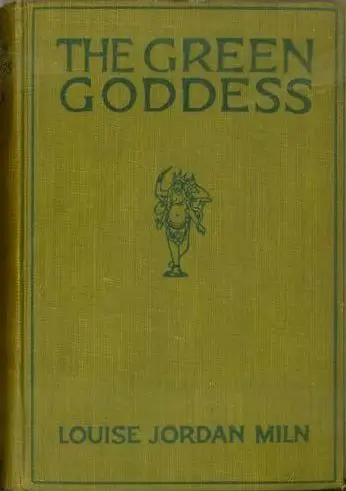
THE CLASSIC COLLECTION · 1922
"The Green Goddess" by Louise Jordan Miln is a novel written in the early 20th century. The story revolves around the Reverend Philip Reynolds, a devoted father and vicar grappling with profound loss as he prepares to marry off his beloved daughter, Lucilla. Set against a backdrop of pastoral life and the struggles of human emotion, the narrative explores themes of love, faith, and the complexities of relationships. The opening of the book introduces the character of Philip Reynolds, highlighting his deep love for his deceased wife, Helen, their son, Jack, and his living daughter, Lucilla. As the vicar reflects on his past, the reader learns about his joyful life filled with books, gardening, and a close relationship with his daughter, who is about to embark on a new chapter by marrying Captain Crespin. The narrative poignantly captures the quiet yet profound changes in their lives, as Philip struggles to maintain his sunny facade despite the impending loss of his daughter, underscoring the themes of love and the bittersweet nature of letting go.
Introduction adapted from the source catalogue; source summaries may be automatically generated.
Free to read · English · 88,728 words · No account needed
MAKE TIME FOR A GOOD BOOK
On by default. Untick to stop anonymous reading totals. Each page counts after 10 seconds in view. How this works.
Anonymous counting is on unless you have switched it off.
They got the dying man to the couch, half dragging, half carrying him there—he could not move—and as they passed him, the Raja drew courteously back from their way.
They laid him down—very carefully. And he smiled at them as he groaned.
Traherne looked up, as he knelt holding him still, and ordered,
“Brandy!”
Lucilla went to the tantalus, filled a glass, and brought it back; she held it towards Traherne, then drew it back, half-knelt, half-sat on the couch where her husband lay; and it was she who held his last glass to Antony Crespin’s gray, stiffening lips.
The Raja turned away quietly, and left them, motioning the guards back to the corridor door. He himself strolled slowly to the wireless table, saw the draft message, written in a woman’s hand, still lying there, took it up and read it.
“Antony!” the wife sobbed.
He smiled—and a man’s love lit his filming eyes. Then they sought Traherne’s. They gave each other a long, level look.
“Carry on!” Crespin said. Traherne nodded, tried to speak, choked, then mastering himself with difficulty, muttered brokenly, “Well played, sir.”
The death-rattle sounded, the hand Lucilla held was more lifeless and colder, but it gripped hers yet. “Give my love,” he whispered her, “to”—the rattle again—“the kiddies. Lu—will you”—again!—“kiss them—for me?” She nodded. She could not speak. “Lu—Lu—Lu—” his voice trailed off, and died in his rattling throat.
Rukh stood in the folding-door’s opening and held out towards Crespin the paper on which their message was written. “How much of this did you get through?” he asked in a clear, vibrant voice.
“Too late; he’ll not speak again,” Dr. Traherne thought. “You’ll get nothing from—that”—for the form they held was cold and still.
But the physician was wrong. It quivered once more—the cold thing they held—the ice-like hand clung once more to the woman’s fingers—Major Crespin raised himself a little, something very human, alive, hate and baffled defeat, gleamed through his dead eyes.
“Damn you”—he said clearly and bitterly—acknowledging defeat—“damn
you—none!”
Antony Crespin had gone. His corpse slithered back in their arms.
“Antony!”
But she knew that he would not answer her again.
She drew his head to her breast—and Traherne rose, and left them
together.
“All over, eh?” Rukh asked him quietly.
Dr. Traherne nodded.
A rougher noise muffled the woman’s quiet sobbing. Native soldiers burst through the corridor door, and rushed pell-mell to the Raja. One spoke to him wildly, two, not waiting the order, rushed on Traherne.
Your reading position is saved on this browser. Take it to another device with a library code. Reading pages adapt to text, rather than matching a printed edition.
Louise Jordan Miln
Louise Jordan Miln & Harold Owen & Harry M. Vernon
William Archer
Louise Jordan Miln
BEHIND THE BOOK
This eBook is for the use of anyone anywhere in the United States and most other parts of the world at no cost and with almost no restrictions whatsoever. You may copy it, give it away or re-use it under the terms of the Project Gutenberg License included with this eBook or online at www.gutenberg.org. If you are not located in the United States, you will have to check the laws of the country where you are located before using this eBook. Read the source licence.
The original source file, including credits and licence, is retained by this library. Request an original-format copy at no charge. Please include the book title and Project Gutenberg identifier #48112.
KEEP YOUR CURIOSITY GOING
Coulson Kernahan

Maurice Baring
Frances Wright
Cécile Tormay

Frederic Jesup Stimson

W. H. P. (William Henry Pope) Jarvis