THE CLASSIC COLLECTION✦Ruben and Ivy SênCLASSIC FREE BOOKS
Ruben and Ivy Sên
Louise Jordan Miln
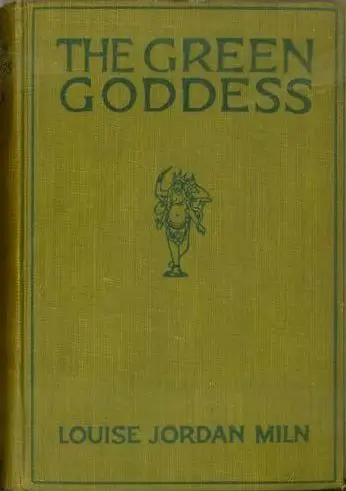
THE CLASSIC COLLECTION · 1922
"The Green Goddess" by Louise Jordan Miln is a novel written in the early 20th century. The story revolves around the Reverend Philip Reynolds, a devoted father and vicar grappling with profound loss as he prepares to marry off his beloved daughter, Lucilla. Set against a backdrop of pastoral life and the struggles of human emotion, the narrative explores themes of love, faith, and the complexities of relationships. The opening of the book introduces the character of Philip Reynolds, highlighting his deep love for his deceased wife, Helen, their son, Jack, and his living daughter, Lucilla. As the vicar reflects on his past, the reader learns about his joyful life filled with books, gardening, and a close relationship with his daughter, who is about to embark on a new chapter by marrying Captain Crespin. The narrative poignantly captures the quiet yet profound changes in their lives, as Philip struggles to maintain his sunny facade despite the impending loss of his daughter, underscoring the themes of love and the bittersweet nature of letting go.
Introduction adapted from the source catalogue; source summaries may be automatically generated.
Free to read · English · 88,728 words · No account needed
MAKE TIME FOR A GOOD BOOK
On by default. Untick to stop anonymous reading totals. Each page counts after 10 seconds in view. How this works.
Anonymous counting is on unless you have switched it off.
“Yes, yes, Lu,” he said tenderly, “we’ll think of something—”
“There’s that fellow Watkins,” Traherne suggested desperately; “we might
bribe him—”
“Oh,” Lucilla gasped, “offer him every penny we have in the world!”
“I’m afraid he’s a malicious scoundrel,” Traherne reflected aloud, dismally. “He must have known what was hanging over our heads, and, looking back, I seem to see him gloating over it.”
“But, he is English,” Lucilla said fiercely.
“Yes,” Traherne said dully, “he is English.”
“And a damneder cur than the ‘master’ whose feet he washes, if you ask me,” Crespin muttered gloomily.
“Still—still—” his wife persisted, “perhaps he can be bought. Antony! Think of the children! Oh, do let us try!”
“But even if he would,” Crespin told her gently, “he couldn’t guide us through the woods.”
“Oh,” she answered passionately, “he could hire some one else!”
“I don’t believe,” Traherne said thoughtfully, “we can possibly be so far from the frontier as he makes out.”
“How far did he say?” Lucilla exclaimed eagerly.
“Three weeks’ journey,” Traherne told her. “Yet they know all about things that happened less than a week ago.”
Crespin bent down, and picked up thoughtfully the revolver he’d thrown down in his rage. At least it would serve to brain one native, he reflected.
As he slipped it back in his belt, all the electric lights in the room went down suddenly, and as they did, a hissing and chittering sound buzzed faintly out unmistakably somewhere beyond the room.
“What is that?” Lucilla whispered, startled. “What an odd sound!”
“God!” Antony Crespin muttered hoarsely—a strange, eager look on his
face.
“Major! Do you hear that!” Traherne cried.
“Do I hear it?” Crespin echoed exultantly. “I should say so!” and he sprang to his feet, listening, his head thrown back, his eyes glowing, and fixed on the ceiling.
“Wireless!” Traherne exclaimed.
“Wireless, by Jupiter!” Crespin swayed in his intense excitement—his
voice danced.
“They’re sending out a message!”
“That accounts for it,” Traherne said.
“They’re in wireless communication with India!”
“Fools, not to have thought of it,” Crespin muttered. “He would be!”
“Antony knows all about wireless,” Lucilla panted, speaking to Traherne.
“Ought to!” the Major said grimly. “I should rather think so! Wasn’t it my job all through the War! If I could hear more distinctly now—and if they’re transmitting it clearly—I could read their message.”
“That may be our salvation!” Traherne said in a low, strained voice.
Your reading position is saved on this browser. Take it to another device with a library code. Reading pages adapt to text, rather than matching a printed edition.
Louise Jordan Miln
Louise Jordan Miln & Harold Owen & Harry M. Vernon
William Archer
Louise Jordan Miln
BEHIND THE BOOK
This eBook is for the use of anyone anywhere in the United States and most other parts of the world at no cost and with almost no restrictions whatsoever. You may copy it, give it away or re-use it under the terms of the Project Gutenberg License included with this eBook or online at www.gutenberg.org. If you are not located in the United States, you will have to check the laws of the country where you are located before using this eBook. Read the source licence.
The original source file, including credits and licence, is retained by this library. Request an original-format copy at no charge. Please include the book title and Project Gutenberg identifier #48112.
KEEP YOUR CURIOSITY GOING
Coulson Kernahan

Maurice Baring
Frances Wright
Cécile Tormay

Frederic Jesup Stimson

W. H. P. (William Henry Pope) Jarvis