THE CLASSIC COLLECTION✦An outlaw’s diary: the CommuneCLASSIC FREE BOOKS
An outlaw’s diary: the Commune
Cécile Tormay
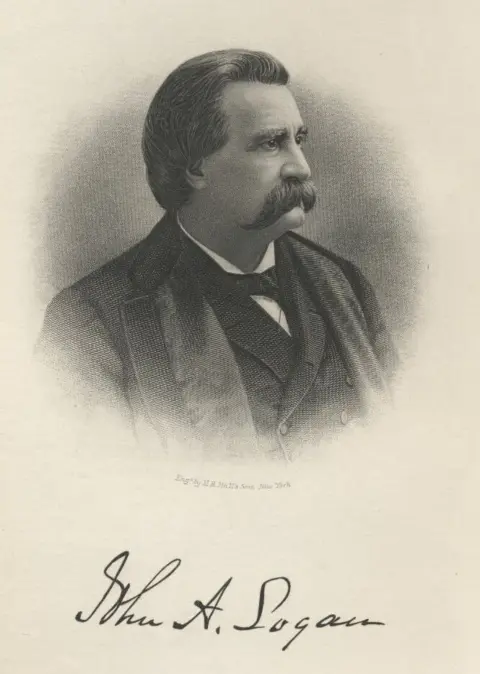
THE CLASSIC COLLECTION · 1886
"The Great Conspiracy, Complete" by John Alexander Logan is a historical account written during the late 19th century that delves into the origins and development of what the author refers to as the Great Conspiracy surrounding the American Civil War and its contributing factors. The book examines the historical context of slavery, sectional tensions, and the political maneuverings that fueled the conflict, aiming for historical accuracy and objectivity in presenting the facts. The opening of the work sets a foundation for understanding the interwoven history of American slavery and its eventual influence on the civil strife that ensued. Logan introduces the evolution of the slavery issue from the early days of the republic, highlighting the complex attitudes toward slavery among the Founding Fathers and the conflicts that arose during the formation of the Constitution. He outlines key events leading up to the Civil War, tracing the origins of sectionalism, the influence of economic factors, and the political discourses that inevitably led the nation to civil war. Logan's nuanced portrayals of both pro- and anti-slavery sentiments, along with his detailed examination of legislative actions like the Missouri Compromise, underscore the depth of the national crisis that culminated in the conflict.
Introduction adapted from the source catalogue; source summaries may be automatically generated.
Free to read · English · 237,116 words · No account needed
MAKE TIME FOR A GOOD BOOK
On by default. Untick to stop anonymous reading totals. Each page counts after 10 seconds in view. How this works.
Anonymous counting is on unless you have switched it off.
That settles the business. "I will go," responds Griffin; "but mark my words, they will not support us!"
Griffin's Battery, indeed, starts first, but, owing to the mistake of one of his officers, it has to be countermarched, so that Ricketts's is thrown to the front, and, as we have seen, first reaches the crest of the Henry House hill.
Griffin, as he comes up with his guns, goes into battery on the left of Ricketts, and at once opens briskly on the Enemy. One of Griffin's guns has a ball lodged in the bore, which cannot be got in or out. His other five guns, with the six guns of Ricketts, make eleven pieces, which are now side by side-all of them driving away at the Enemy's (Stonewall Jackson's) strong batteries, not more than 300 yards away.
They have been at it half an hour perhaps, when Griffin moves two of his pieces to the right of Ricketts, and commences firing with them. He has hardly been there five minutes, when a Rebel regiment coming out of the woods at Griffin's right front, gets over a rail fence, its Colonel steps out between his regiment (now standing up to the knees in rank grass) and the battery, and commences a speech to his men!
Griffin orders one of his officers to load with canister, and let drive at them. The guns are loaded, and ready to fire, when up gallops Barry, exclaiming: "Captain, don't fire there; those are your battery-supports!"
At this supreme moment, Reynolds's gorgeous looking Marines are sitting down in close column, on the ground, to the left of the Union batteries. The showy 11th New York "Fire Zouaves" are a little to the rear of the right of the guns. The gallant 14th New York Chasseurs, in their dust-covered red uniforms, who had followed Griffin's Battery, at some distance, have, only a little while since, pushed finely up, from the ravine at the rear of our batteries, into the woods, to the right of Griffin and Ricketts, at a double-quick. To the left of the batteries, close to the battalion of Marines, Heintzelman bestrides his horse, near some of his own Division.
To Major Barry's startling declaration, Captain Griffin excitedly
shouts: "They are Confederates! Sure as the world, they are
Confederates!"
But Barry thinks he knows better, and hastily responds: "I know they are
your battery-support."
Griffin spurs toward his pieces, countermands his previous order, and firing is resumed in the old direction.
Andrew Porter, has just ridden up to Heintzelman's side, and now catches sight of the Rebel regiment. "What troops are those?" he asks of General Hientzelman, pointing in their direction.
Your reading position is saved on this browser. Take it to another device with a library code. Reading pages adapt to text, rather than matching a printed edition.
BEHIND THE BOOK
This eBook is for the use of anyone anywhere in the United States and most other parts of the world at no cost and with almost no restrictions whatsoever. You may copy it, give it away or re-use it under the terms of the Project Gutenberg License included with this eBook or online at www.gutenberg.org. If you are not located in the United States, you will have to check the laws of the country where you are located before using this eBook. Read the source licence.
The original source file, including credits and licence, is retained by this library. Request an original-format copy at no charge. Please include the book title and Project Gutenberg identifier #7140.
KEEP YOUR CURIOSITY GOING
Cécile Tormay

Moritz Busch
John L. Ransom
Frances Wright
Cécile Tormay

Mabel Potter Daggett