THE CLASSIC COLLECTION✦An outlaw’s diary: the CommuneCLASSIC FREE BOOKS
An outlaw’s diary: the Commune
Cécile Tormay
THE CLASSIC COLLECTION · 1886
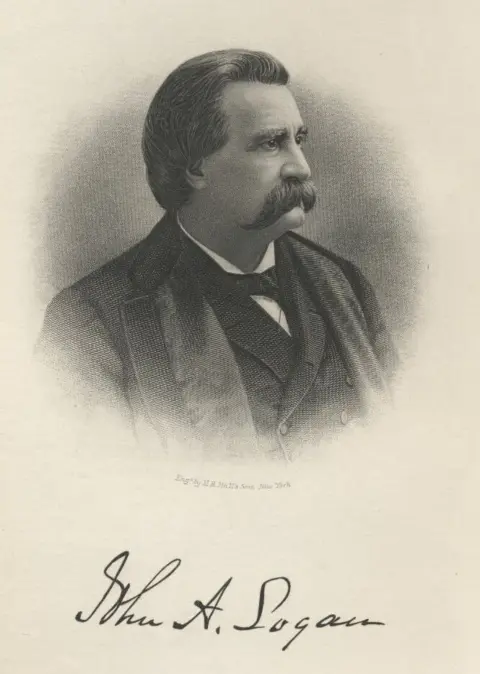
"The Great Conspiracy, Complete" by John Alexander Logan is a historical account written during the late 19th century that delves into the origins and development of what the author refers to as the Great Conspiracy surrounding the American Civil War and its contributing factors. The book examines the historical context of slavery, sectional tensions, and the political maneuverings that fueled the conflict, aiming for historical accuracy and objectivity in presenting the facts. The opening of the work sets a foundation for understanding the interwoven history of American slavery and its eventual influence on the civil strife that ensued. Logan introduces the evolution of the slavery issue from the early days of the republic, highlighting the complex attitudes toward slavery among the Founding Fathers and the conflicts that arose during the formation of the Constitution. He outlines key events leading up to the Civil War, tracing the origins of sectionalism, the influence of economic factors, and the political discourses that inevitably led the nation to civil war. Logan's nuanced portrayals of both pro- and anti-slavery sentiments, along with his detailed examination of legislative actions like the Missouri Compromise, underscore the depth of the national crisis that culminated in the conflict.
Introduction adapted from the source catalogue; source summaries may be automatically generated.
Free to read · English · 237,116 words · No account needed
MAKE TIME FOR A GOOD BOOK
On by default. Untick to stop anonymous reading totals. Each page counts after 10 seconds in view. How this works.
Anonymous counting is on unless you have switched it off.
Ricketts considers this a perilous job--but proceeds to execute the order as to his own battery. A small ravine is in his front. With Ricketts gallantly leading, the battery dashes across the ravine at full gallop, breaking one wheel as it goes, which is at once replaced. A fence lies across the way. The cannoniers demolish it. The battery ascends the hill near the Henry House, which is full of the Enemy's sharpshooters.
[For this, and what immediately follows, see the testimony of
Ricketts and others, before the Committee on the Conduct of the
War.]
Soon as Ricketts gets his guns in battery, his men and horses begin to fall, under the fire of these sharpshooters. He turns his guns upon the Henry House,--and "literally riddles it." Amid the moans of the wounded, the death scream of a woman is heard! The Enemy had permitted her to remain in her doomed house!
But the execution is not all on one side, by any means. Ricketts is in a very hot place--the hottest, he afterward declares, that he has ever seen in his life--and he has seen fighting before this.
The Enemy is behind the woods, at the front and right of Ricketts's Battery. This, with the added advantage of the natural slope of the ground, enables him to deliver upon the brave Union artillerists a concentrated fire, which is terribly destructive, and disables so many of Rickett's horses that he cannot move, if he would. Rickett's own guns, however, are so admirably served, that a smooth-bore battery of the Enemy, which has been stubbornly opposing him, is driven back, despite its heavy supports.
And Griffin's Battery now comes rapidly up into position on the left of, and in line with, Ricketts. For Griffin also has been ordered from the Dogan House hill, to this new, and dangerously exposed, position.
But when Major Barry, General McDowell's Chief of Artillery, brings him the order, Griffin hesitates--for he has no Infantry support.
"The Fire Zouaves--[The 11th New York]--will support you," says Barry, "They are just ready to follow you at the double-quick!"
"Then why not let them go and get in position on the hill," says Griffin; "then, let Ricketts's and my batteries come into battery behind; and then, let them (the Zouaves) fall back?"
Griffin advises, also, as a better position for his own battery, a hill 500 yards in the rear of the Henry House hill. But advice is thrown away. His artillery-chief is inflexible.
"I tell you," says Griffin again, "the Fire Zouaves won't support us."
"They will," replies Barry. "At any rate it is General McDowell's order
to go there!"
Your reading position is saved on this browser. Take it to another device with a library code. Reading pages adapt to text, rather than matching a printed edition.
BEHIND THE BOOK
This eBook is for the use of anyone anywhere in the United States and most other parts of the world at no cost and with almost no restrictions whatsoever. You may copy it, give it away or re-use it under the terms of the Project Gutenberg License included with this eBook or online at www.gutenberg.org. If you are not located in the United States, you will have to check the laws of the country where you are located before using this eBook. Read the source licence.
The original source file, including credits and licence, is retained by this library. Request an original-format copy at no charge. Please include the book title and Project Gutenberg identifier #7140.
KEEP YOUR CURIOSITY GOING
Cécile Tormay

Moritz Busch
John L. Ransom
Frances Wright
Cécile Tormay

Mabel Potter Daggett