THE CLASSIC COLLECTION✦An outlaw’s diary: the CommuneCLASSIC FREE BOOKS
An outlaw’s diary: the Commune
Cécile Tormay
THE CLASSIC COLLECTION · 1886
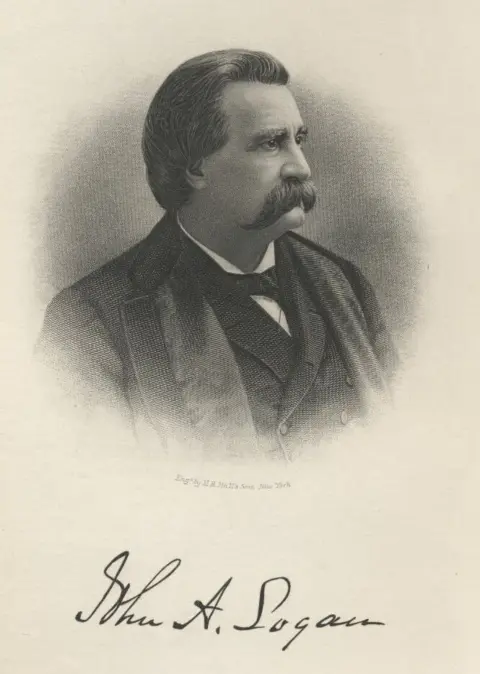
"The Great Conspiracy, Complete" by John Alexander Logan is a historical account written during the late 19th century that delves into the origins and development of what the author refers to as the Great Conspiracy surrounding the American Civil War and its contributing factors. The book examines the historical context of slavery, sectional tensions, and the political maneuverings that fueled the conflict, aiming for historical accuracy and objectivity in presenting the facts. The opening of the work sets a foundation for understanding the interwoven history of American slavery and its eventual influence on the civil strife that ensued. Logan introduces the evolution of the slavery issue from the early days of the republic, highlighting the complex attitudes toward slavery among the Founding Fathers and the conflicts that arose during the formation of the Constitution. He outlines key events leading up to the Civil War, tracing the origins of sectionalism, the influence of economic factors, and the political discourses that inevitably led the nation to civil war. Logan's nuanced portrayals of both pro- and anti-slavery sentiments, along with his detailed examination of legislative actions like the Missouri Compromise, underscore the depth of the national crisis that culminated in the conflict.
Introduction adapted from the source catalogue; source summaries may be automatically generated.
Free to read · English · 237,116 words · No account needed
MAKE TIME FOR A GOOD BOOK
On by default. Untick to stop anonymous reading totals. Each page counts after 10 seconds in view. How this works.
Anonymous counting is on unless you have switched it off.
We have seen how Fort Sumter fell; how the patriotic North responded to President Lincoln's Call, for 75,000 three-months volunteers, with such enthusiasm that, had there been a sufficiency of arms and accoutrements, he might have had, within three months of that Call, an Army of 500,000 men in the field; how he had called for 42,000 three-years volunteers early in May, besides swelling what little there was of a regular Army by ten full regiments; and how a strict blockade of the entire Southern Coast-line had not only been declared, but was now enforced and respected.
General Butler, promoted Major-General for his Military successes at Annapolis and Baltimore, was now in command of Fortress Monroe and vicinity, with some 12,000 volunteers under him, confronted, on the Peninsula, by a nearly equal number of Rebel troops, under Generals Huger and Magruder--General Banks, with less than 10,000 Union troops, occupying Baltimore, and its vicinage.
General Patterson, with some 20,000 Union troops--mostly Pennsylvania militia--was at Chambersburg, Pennsylvania, with about an equal number of the Enemy, under General Joseph E. Johnston, at Harper's Ferry, on the Potomac, watching him.
Some 50,000 Union troops were in camp, in and about Washington, on the Virginia side, under the immediate command of Generals McDowell and Mansfield--Lieutenant General Scott, at Washington, being in Chief-command of the Union Armies--and, confronting these Union forces, in Virginia, near the National Capital, were some 30,000 Rebel troops under the command of General Beauregard, whose success in securing the evacuation of Fort Sumter by its little garrison of half-starved Union soldiers, had magnified him, in the eyes of the rebellious South, into the proportions of a Military genius of the first order.
There had been no fighting, nor movements, worthy of special note, until June 7th, when General Patterson advanced from Chambersburg, Pennsylvania, to Hagerstown, Maryland. General Johnston at once evacuated Harper's Ferry, and retreated upon Winchester, Virginia.
General McClellan, in command of the Department of the Ohio, had, however, crossed the Ohio river, and by the 4th of July, being at Grafton, West Virginia, with his small Army of Union troops, to which a greatly inferior Rebel force was opposed, commenced that successful advance against it, which led, after Bull Run, to his being placed at the head of all the Armies of the United States.
Subsequently Patterson crossed the Potomac, and after trifling away over one month's time, at last, on the 15th of July, got within nine miles of Winchester and Johnston's Army. Barring a spiritless reconnaissance, Patterson--who was a fervent Breckinridge-Democrat in politics, and whose Military judgment, as we shall see, was greatly influenced, if not entirely controlled, by his Chief of staff, Fitz John Porter--never got any nearer to the Enemy!
Your reading position is saved on this browser. Take it to another device with a library code. Reading pages adapt to text, rather than matching a printed edition.
BEHIND THE BOOK
This eBook is for the use of anyone anywhere in the United States and most other parts of the world at no cost and with almost no restrictions whatsoever. You may copy it, give it away or re-use it under the terms of the Project Gutenberg License included with this eBook or online at www.gutenberg.org. If you are not located in the United States, you will have to check the laws of the country where you are located before using this eBook. Read the source licence.
The original source file, including credits and licence, is retained by this library. Request an original-format copy at no charge. Please include the book title and Project Gutenberg identifier #7140.
KEEP YOUR CURIOSITY GOING
Cécile Tormay

Moritz Busch
John L. Ransom
Frances Wright
Cécile Tormay

Mabel Potter Daggett