THE CLASSIC COLLECTION✦Froth: A NovelCLASSIC FREE BOOKS
Froth: A Novel
Armando Palacio Valdés
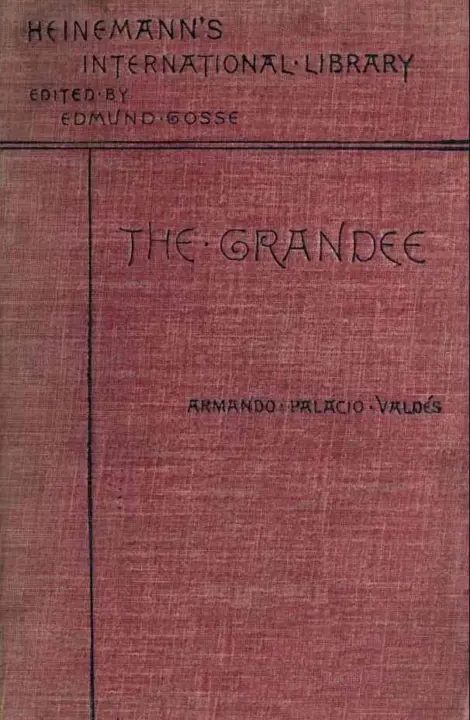
THE CLASSIC COLLECTION · 1894
"The Grandee" by Armando Palacio Valdés is a novel written in the late 19th century. The story is set in a provincial city in Spain, focusing on the life and dynamics within a noble household, particularly that of the protagonist Don Pedro Quiñones de Leon, an aging grandee struggling with his sense of dignity in a changing society. The narrative explores themes of societal hierarchy, pride, and personal turmoil against the backdrop of local customs and the intricacies of family relationships. At the start of "The Grandee," the atmospheric setting of Lancia is established through a wintry night, with elements that reflect the town's old-world charm and the quirks of its inhabitants. We meet Don Pedro Quiñones, who navigates the challenges of his aristocratic status despite facing paralysis and the burden of maintaining respectability. His interactions with guests during a social gathering reveal a tapestry of relationships intertwined with humor, social expectations, and unfulfilled desires, setting the stage for deeper explorations of the characters' motivations and conflicts as the story unfolds. The text hints at underlying tensions, notably regarding Don Pedro's strained marriage to Amalia, and foreshadows the complexities and darker themes that will be explored further in the narrative.
Introduction adapted from the source catalogue; source summaries may be automatically generated.
Free to read · English · 95,134 words · No account needed
MAKE TIME FOR A GOOD BOOK
On by default. Untick to stop anonymous reading totals. Each page counts after 10 seconds in view. How this works.
Anonymous counting is on unless you have switched it off.
"It was in Nuncia's room, my dear; but it did not do there, because it came in the way of the bed, and so we put it here."
"It was given to Carmela when papa was alive," said Nuncita, "by a painter from Madrid who spent a few days here."
"Were you young then?" asked Paco, gravely, turning to Carmelita.
"Yes, very young."
"Was the painter famous?"
"Very."
"Then I know who it was. It was Murillo."
"No; I don't think that was his name."
"Then it was Velasquez."
"That name sounds more like it. He was a young man, very short, and very gallant. Was he not, Nuncia?"
"Did he not address some soft words to you?"
Nuncita lowered her eyes and blushed.
"Who would recollect these things now?"
"He was very much in love," continued Carmelita; "and at the same time he was most well-bred and clever."
"Of an amorous disposition, did you say? It can be no other than
Velasquez."
"He was not named Velasquez, he was called Gonzalez," interposed
Nuncita, timidly.
And after this remark she blushed again.
"That's it! Gonzalez!" exclaimed her sister, recollecting.
"Well, it is all the same; he would be a contemporary of his--of the great race of painters of the seventeenth century," remarked Paco, not the least put out by the laughter of the guests, who were astonished at the innocence of the poor women.
"How did he make love to thee?" he continued, with a caressing touch of Nuncita's cheek. "It seems to me you were very coquettish, eh, Carmela?"
This remark was provocative of a smile from the company.
"Carmela, por Dios! and are these gentlemen going to make believe I was a coquette?" exclaimed the "child" in real concern.
"They would only believe the truth, girl," said Paco. "Now, don't you recollect you lent a willing ear to the ecclesiastical attorney, called Don Maximo, and no sooner had he left the house than you were talking on the balcony with Lieutenant Paniagua?"
Nuncita smiled with pleasure at the recollection of those times, and replied as she lowered her eyes with gracious timidity:
"Don Maximo came to the house every day, but it was never a question of
love."
"Neither a courtship nor a refusal?" asked Paco. "Then confess that the one you really liked was the lieutenant, and done with it."
"What! you were in love with a soldier?" asked Emilita, with pleasant volubility, as she cast a teasing glance at Nunez. "Then you must have had bad taste."
Your reading position is saved on this browser. Take it to another device with a library code. Reading pages adapt to text, rather than matching a printed edition.
Armando Palacio Valdés
Armando Palacio Valdés
Armando Palacio Valdés
Armando Palacio Valdés
BEHIND THE BOOK
This eBook is for the use of anyone anywhere in the United States and most other parts of the world at no cost and with almost no restrictions whatsoever. You may copy it, give it away or re-use it under the terms of the Project Gutenberg License included with this eBook or online at www.gutenberg.org. If you are not located in the United States, you will have to check the laws of the country where you are located before using this eBook. Read the source licence.
The original source file, including credits and licence, is retained by this library. Request an original-format copy at no charge. Please include the book title and Project Gutenberg identifier #31056.
KEEP YOUR CURIOSITY GOING
Coulson Kernahan

Maurice Baring
Frances Wright
Cécile Tormay

Frederic Jesup Stimson

W. H. P. (William Henry Pope) Jarvis