THE CLASSIC COLLECTION✦Froth: A NovelCLASSIC FREE BOOKS
Froth: A Novel
Armando Palacio Valdés
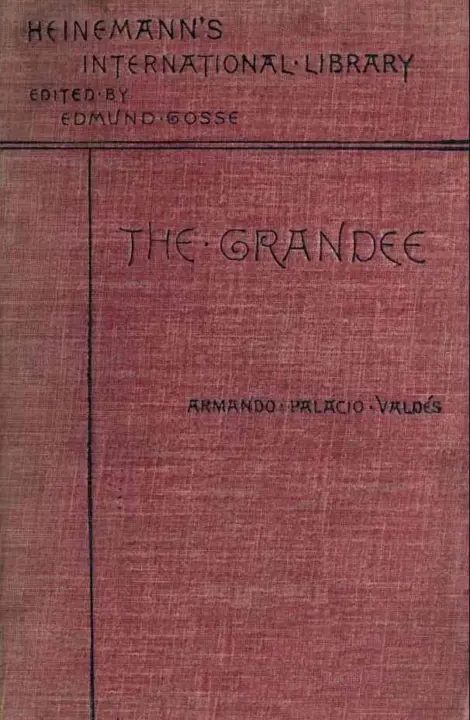
THE CLASSIC COLLECTION · 1894
"The Grandee" by Armando Palacio Valdés is a novel written in the late 19th century. The story is set in a provincial city in Spain, focusing on the life and dynamics within a noble household, particularly that of the protagonist Don Pedro Quiñones de Leon, an aging grandee struggling with his sense of dignity in a changing society. The narrative explores themes of societal hierarchy, pride, and personal turmoil against the backdrop of local customs and the intricacies of family relationships. At the start of "The Grandee," the atmospheric setting of Lancia is established through a wintry night, with elements that reflect the town's old-world charm and the quirks of its inhabitants. We meet Don Pedro Quiñones, who navigates the challenges of his aristocratic status despite facing paralysis and the burden of maintaining respectability. His interactions with guests during a social gathering reveal a tapestry of relationships intertwined with humor, social expectations, and unfulfilled desires, setting the stage for deeper explorations of the characters' motivations and conflicts as the story unfolds. The text hints at underlying tensions, notably regarding Don Pedro's strained marriage to Amalia, and foreshadows the complexities and darker themes that will be explored further in the narrative.
Introduction adapted from the source catalogue; source summaries may be automatically generated.
Free to read · English · 95,134 words · No account needed
MAKE TIME FOR A GOOD BOOK
On by default. Untick to stop anonymous reading totals. Each page counts after 10 seconds in view. How this works.
Anonymous counting is on unless you have switched it off.
The next morning Paula, by command of the senora, took the child off to the ironing-room, sat her in a high chair, and asked a young girl, who was working at the window, for some scissors.
"What are you going to do?" Josefina asked.
"Cut your hair."
"Why? I don't want my hair cut."
Whereupon she got down from the chair with determination, but Paula turned back and put her up again.
"Be quiet," she said severely.
"I don't want to, I don't want to," she doggedly returned.
"It is certainly a shame to cut such beautiful hair," said one of the
girls who was ironing.
"What do you mean, child? An order is an order."
And taking hold of one of the precious curls of hair, she cut it off
with the scissors.
"Leave go, Paula!" cried the child, "I am going to tell godmother."
"Yes, precious, go and tell your godmother, indeed? All right, you shall tell her when it is done."
And paying no further heed to her protestations, and letting the words fall on deaf ears, she went on with the task quite undisturbed. But the child got down again, angry and furious. Then Paula called the sempstress Concha to her assistance, and she held her down on the chair until she was despoiled of every one of her curls, after which they arranged what was left as best they could.
"What a pity!" said the laundress again.
"It is not so bad, child," returned Paula, combing it with admiration.
At that moment the senora appeared at the door of the room.
"Godmother! come godmother! Look, Paula and Concha have cut my hair."
Amalia advanced some steps, avoiding the child's gaze, fixed her stern eyes upon her head and said in an imperious and cold tone:
"That is not right. Shave it off."
And she went away with a frowning brow, whilst Josefina, astonished, followed her with her eyes. Never had she seen her godmother so cold and stern. She was sad and thoughtful, and remained thus without making the slightest movement, until Paula had accomplished her task.
The little head was soon as smooth as a melon. The servants shouted with
laughter.
"Child of my soul! what have they been doing to you?" exclaimed Maria, the ironer, with a tone of regret, although she could not repress a smile.
"Don't say that, woman," retorted Concha with a shade of bitterness. "Yes, she does look ridiculous."
She was a woman of five-and-twenty or more, extremely small, almost as small as Josefina, with sharp, keen eyes, and all the servants were afraid of her.
Paula laughed too and passed her hand over the little creature's head.
Your reading position is saved on this browser. Take it to another device with a library code. Reading pages adapt to text, rather than matching a printed edition.
Armando Palacio Valdés

Armando Palacio Valdés

Armando Palacio Valdés

Armando Palacio Valdés
BEHIND THE BOOK
This eBook is for the use of anyone anywhere in the United States and most other parts of the world at no cost and with almost no restrictions whatsoever. You may copy it, give it away or re-use it under the terms of the Project Gutenberg License included with this eBook or online at www.gutenberg.org. If you are not located in the United States, you will have to check the laws of the country where you are located before using this eBook. Read the source licence.
The original source file, including credits and licence, is retained by this library. Request an original-format copy at no charge. Please include the book title and Project Gutenberg identifier #31056.
KEEP YOUR CURIOSITY GOING
Coulson Kernahan

Maurice Baring
Frances Wright
Cécile Tormay

Frederic Jesup Stimson

W. H. P. (William Henry Pope) Jarvis