
Lucinda
Anthony Hope
THE CLASSIC COLLECTION · 1894
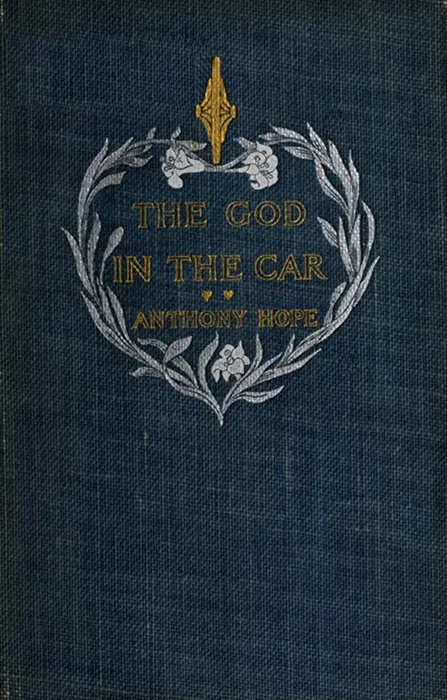
"The God in the Car: A Novel" by Anthony Hope is a fictional work written in the late 19th century. The story appears to delve into the lives of several socialites navigating relationships and business affairs, with a central character named Willie Ruston who is involved in a new venture concerning the African territory of Omofaga. The narrative seems to oscillate between personal dynamics and the challenging financial schemes of that era, including the challenges posed by competing interests. The opening of the novel introduces a lively social gathering where Miss Ferrars is seeking to identify a man of intrigue, Foster Belford, while exchanging witty banter with Lord Semingham. Social hierarchies and the dynamics of friendship and flirtation are caricatured through the conversations, particularly spotlighting the character of Mrs. Dennison, who is depicted as thoughtful and somewhat troubled by her past connections, especially with Ruston. As the characters engage in discussions about business and memories, the tone hints at underlying tensions tying their personal lives to the larger economic ambitions surrounding Ruston’s endeavors in Omofaga, setting the stage for further clashes between social expectation and personal ambition.
Introduction adapted from the source catalogue; source summaries may be automatically generated.
Free to read · English · 69,737 words · No account needed
MAKE TIME FOR A GOOD BOOK
On by default. Untick to stop anonymous reading totals. Each page counts after 10 seconds in view. How this works.
Anonymous counting is on unless you have switched it off.
"I should have made it all brown," said Adela, and the Baron gave an
appreciative chuckle.
"And what are these little red crosses?" asked Mrs. Dennison, laying the tip of her finger on one.
"Eh? What, those? Oh, let me see. Here, just hold it while I look at Carlin's letter. He explains it all," and Lord Semingham began to fumble in his breast-pocket.
"Dear me," said Bessie Semingham, in a tone of delicate pleasure, "they
look like tombstones."
"Hush, hush, my dear lady," cried the old Baron; "what a bad omen!"
"Tombstones," echoed Maggie Dennison thoughtfully. "So they do--just
like tombstones."
A pause fell on the group. Adela broke it.
"Well, Director, have you found your directions?" she asked briskly.
"It was a momentary lapse of memory," said Semingham with dignity.
"Those--er--little----"
"No, not tombstones," interrupted the Baron earnestly.
"Little--er--signposts are, of course, the forts belonging to the Company. What else should they be?"
"Oh, forts," murmured everybody.
"They are," continued Lord Semingham apologetically, "in the nature of a prophecy at present, as I understand."
"A very bad prophecy, according to Bessie," said Mrs. Dennison.
"I hope," said the Baron, shaking his head, "that the official name is more correct than Lady Semingham's."
"So do I," said Marjory; and added, before she could think not to add, and with unlucky haste, "my brother's going out, you know."
Mrs. Dennison looked at her. Then she crossed over to her, saying to
Adela,
"You never let me have a word with my own guest, except at breakfast and bedtime. Come and walk up and down with me, Marjory."
Marjory obeyed; the group began to scatter.
"But didn't they look like tombstones, Baron?" said Bessie Semingham again, as she sat down and made room for the old man beside her. When she had an idea she liked it very much. He began to be voluble in his reproof of her gloomy fancies; but she merely laughed in glee at her ingenuity.
Adela, by a gesture, brought Semingham to her side and walked a few
paces off with him.
"Will you go with me to the post-office?" she said abruptly.
"By all means," he answered, feeling for his glass.
"Oh, you needn't get your glass to spy at me with."
"Dear, dear, you use one yourself!"
"I'll tell you myself why I'm going. You're going to send a telegram."
"Am I?"
"Yes; to invite someone to stay with you. Lord Semingham, when you find a woman relies on a man--on one man only--in trouble, what do you think?"
She asked the question in a level voice, looking straight before her.
"That she's fond of him."
"And does he--the man--think the same?"
Your reading position is saved on this browser. Take it to another device with a library code. Reading pages adapt to text, rather than matching a printed edition.
Anthony Hope

Anthony Hope

Anthony Hope

Anthony Hope
BEHIND THE BOOK
This eBook is for the use of anyone anywhere in the United States and most other parts of the world at no cost and with almost no restrictions whatsoever. You may copy it, give it away or re-use it under the terms of the Project Gutenberg License included with this eBook or online at www.gutenberg.org. If you are not located in the United States, you will have to check the laws of the country where you are located before using this eBook. Read the source licence.
The original source file, including credits and licence, is retained by this library. Request an original-format copy at no charge. Please include the book title and Project Gutenberg identifier #40583.
KEEP YOUR CURIOSITY GOING
Coulson Kernahan

Maurice Baring
Frances Wright
Cécile Tormay

Frederic Jesup Stimson

W. H. P. (William Henry Pope) Jarvis