
Lucinda
Anthony Hope
THE CLASSIC COLLECTION · 1894
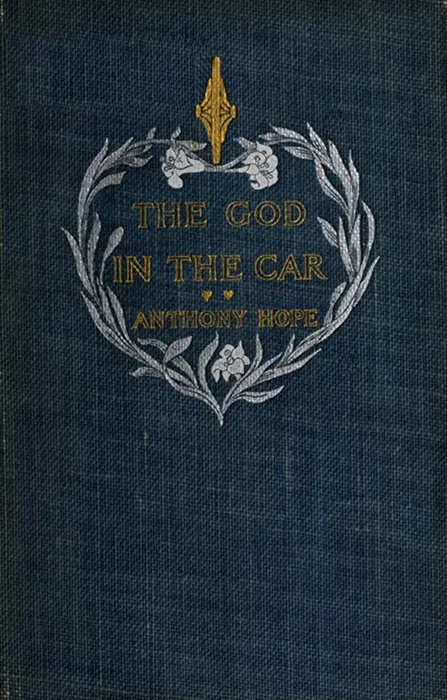
"The God in the Car: A Novel" by Anthony Hope is a fictional work written in the late 19th century. The story appears to delve into the lives of several socialites navigating relationships and business affairs, with a central character named Willie Ruston who is involved in a new venture concerning the African territory of Omofaga. The narrative seems to oscillate between personal dynamics and the challenging financial schemes of that era, including the challenges posed by competing interests. The opening of the novel introduces a lively social gathering where Miss Ferrars is seeking to identify a man of intrigue, Foster Belford, while exchanging witty banter with Lord Semingham. Social hierarchies and the dynamics of friendship and flirtation are caricatured through the conversations, particularly spotlighting the character of Mrs. Dennison, who is depicted as thoughtful and somewhat troubled by her past connections, especially with Ruston. As the characters engage in discussions about business and memories, the tone hints at underlying tensions tying their personal lives to the larger economic ambitions surrounding Ruston’s endeavors in Omofaga, setting the stage for further clashes between social expectation and personal ambition.
Introduction adapted from the source catalogue; source summaries may be automatically generated.
Free to read · English · 69,737 words · No account needed
MAKE TIME FOR A GOOD BOOK
On by default. Untick to stop anonymous reading totals. Each page counts after 10 seconds in view. How this works.
Anonymous counting is on unless you have switched it off.
"Yes, he does. At least, he is afraid of it."
"How do you know?"
"I tell you, we have talked. And I saw. He almost cried that he couldn't go to Dieppe, and that somebody else----"
Tom suddenly turned upon her.
"Who began the talk?" he demanded.
"What do you say?"
"Who began?"
"Oh, what nonsense! Who does begin to talk? How do I know? It came, Mr.
Loring."
Tom said nothing.
"You look as if you didn't believe me," she remarked, pouting.
"I don't. He's the most unsuspicious fellow alive."
"Well, if you like, I began. I'm not ashamed. But I said very little. When he asked me if I thought it good that she and--the other--should be together out there and he here--well, was I to say yes?"
"I think," observed Tom, in quiet and deliberate tones, "that it's a great pity that some women can't be gagged."
"They can, but only with kisses," said Mrs. Cormack, not at all offended. "Oh, don't be frightened. I do not wish to be gagged at all. If I did--there is more than one man in the world."
Tom despised and half-hated her; but he liked her good-nature, and, in his heart, admired her for not flinching. Her shamelessness was crossed with courage.
"So you've made him miserable?"
"Well, I might say, I, a wicked Frenchwoman, that it is better to be deceived than to be wretched. But you, an Englishman----! Oh, never, Mr. Loring!"
Tom sat silent a little while.
"I don't know what to do," he said, half in reverie.
"Who thought you would?" asked Mrs. Cormack, unkindly.
"I believe it's all a mare's nest."
"That means a mistake, a delusion?"
"It does."
"Then I don't think you do believe it. And, if you do, you are wrong. It is not all a--a mare's nest."
She pronounced the word with unfamiliar delicateness.
Tom knew that he did not believe that it was all a mare's nest. He would have given everything in the world--save one thing--and that, he thought, he had not got--to believe it.
"Then, if you believed it, why didn't you do something?" he asked rather
fiercely.
"What have you all done? I, at least, warned him. Yes, since you insist, I hinted it. But you--you ran away; and your Adela Ferrars, she looks prim and pained, oh! and shocked, and doesn't come so much."
It was a queer source to learn lessons from, and Tom was no less surprised than Adela had been a day or two before at Dieppe.
"What should you do?" he asked, in new-born humility.
"I? Nothing. What is it to me?"
"What should you do, if you were me?"
Your reading position is saved on this browser. Take it to another device with a library code. Reading pages adapt to text, rather than matching a printed edition.
Anthony Hope

Anthony Hope

Anthony Hope

Anthony Hope
BEHIND THE BOOK
This eBook is for the use of anyone anywhere in the United States and most other parts of the world at no cost and with almost no restrictions whatsoever. You may copy it, give it away or re-use it under the terms of the Project Gutenberg License included with this eBook or online at www.gutenberg.org. If you are not located in the United States, you will have to check the laws of the country where you are located before using this eBook. Read the source licence.
The original source file, including credits and licence, is retained by this library. Request an original-format copy at no charge. Please include the book title and Project Gutenberg identifier #40583.
KEEP YOUR CURIOSITY GOING
Coulson Kernahan

Maurice Baring
Frances Wright
Cécile Tormay

Frederic Jesup Stimson

W. H. P. (William Henry Pope) Jarvis