
Lucinda
Anthony Hope
THE CLASSIC COLLECTION · 1894
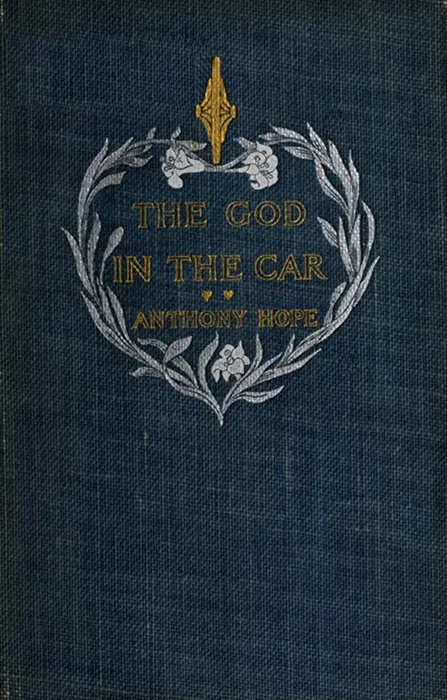
"The God in the Car: A Novel" by Anthony Hope is a fictional work written in the late 19th century. The story appears to delve into the lives of several socialites navigating relationships and business affairs, with a central character named Willie Ruston who is involved in a new venture concerning the African territory of Omofaga. The narrative seems to oscillate between personal dynamics and the challenging financial schemes of that era, including the challenges posed by competing interests. The opening of the novel introduces a lively social gathering where Miss Ferrars is seeking to identify a man of intrigue, Foster Belford, while exchanging witty banter with Lord Semingham. Social hierarchies and the dynamics of friendship and flirtation are caricatured through the conversations, particularly spotlighting the character of Mrs. Dennison, who is depicted as thoughtful and somewhat troubled by her past connections, especially with Ruston. As the characters engage in discussions about business and memories, the tone hints at underlying tensions tying their personal lives to the larger economic ambitions surrounding Ruston’s endeavors in Omofaga, setting the stage for further clashes between social expectation and personal ambition.
Introduction adapted from the source catalogue; source summaries may be automatically generated.
Free to read · English · 69,737 words · No account needed
MAKE TIME FOR A GOOD BOOK
On by default. Untick to stop anonymous reading totals. Each page counts after 10 seconds in view. How this works.
Anonymous counting is on unless you have switched it off.
"Mamma doesn't," laughed Marjory. "She's so angry with him carrying off Walter. As if it wasn't a grand thing for Walter! So she's quite turned round about him."
"He's not staying in--with you, I suppose?"
"Oh, no. Though I don't see why he shouldn't. Conventions are so stupid, aren't they? Mrs. Dennison's there," and Marjory looked up with an appeal to calm reason as personified in Adela.
At another time, nineteen's view of twenty-nine--Marjory's conception of Maggie Dennison as a sufficing chaperon--would have amused Adela. But she was past amusement. Her patience snapped, as it were, in two. She turned almost fiercely on her companion, forgetting all prudence in her irritation.
"For heaven's sake, child, what do you mean? Do you think he's coming to
see you?"
Marjory drew her arm out from Adela's, and retreated a step from her.
"Adela! I never thought----" She did not end, conscious, perhaps, that her flushed face gave her words the lie. Adela swept on.
"You! He's not coming to see you. I don't believe he's coming to see anyone--no, not even Maggie--I mean no one, at all."
The girl's look marked the fatal slip.
"Oh!" she gasped, just audibly.
"I don't believe he cares that for any of us--for anyone alive. Marjory, I didn't mean what I said about Maggie, I didn't indeed. Don't look like that. Oh, what a stupid girl you are!" and she ended with a half-hysterical laugh.
For some moments they stood facing one another, saying nothing. The meaning of Adela's words was sinking into Marjory's mind.
"Let's walk on. People will wonder," said she at last; and she enlaced Adela's arm again. After another long pause, during which her face expressed the turmoil of her thoughts, she whispered,
"Adela, is that why Mr. Loring went away?"
"I don't know why he went away."
"You think me a child, so you say you don't mean it now. You do mean it, you know. You wouldn't say a thing like that for nothing. Tell me what you do mean, Adela." It was almost an order. Adela suddenly realised that she had struck down to a force and a character. "Tell me exactly what you mean," insisted Marjory; "you ought to tell me, Adela."
Adela found herself obeying.
"I don't know about him; but I'm afraid of her," she stammered, as if confessing a shameful deed of her own. A moment later she broke into entreaty. "Go away, dear. Don't get mixed up in it. Don't have anything to do with him."
"Do you go away when your friends are in trouble or in danger?"
Your reading position is saved on this browser. Take it to another device with a library code. Reading pages adapt to text, rather than matching a printed edition.
Anthony Hope

Anthony Hope

Anthony Hope

Anthony Hope
BEHIND THE BOOK
This eBook is for the use of anyone anywhere in the United States and most other parts of the world at no cost and with almost no restrictions whatsoever. You may copy it, give it away or re-use it under the terms of the Project Gutenberg License included with this eBook or online at www.gutenberg.org. If you are not located in the United States, you will have to check the laws of the country where you are located before using this eBook. Read the source licence.
The original source file, including credits and licence, is retained by this library. Request an original-format copy at no charge. Please include the book title and Project Gutenberg identifier #40583.
KEEP YOUR CURIOSITY GOING
Coulson Kernahan

Maurice Baring
Frances Wright
Cécile Tormay

Frederic Jesup Stimson

W. H. P. (William Henry Pope) Jarvis