
Lucinda
Anthony Hope
THE CLASSIC COLLECTION · 1894
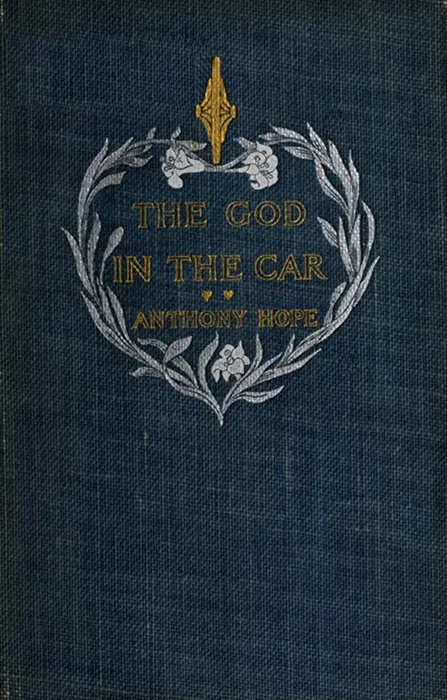
"The God in the Car: A Novel" by Anthony Hope is a fictional work written in the late 19th century. The story appears to delve into the lives of several socialites navigating relationships and business affairs, with a central character named Willie Ruston who is involved in a new venture concerning the African territory of Omofaga. The narrative seems to oscillate between personal dynamics and the challenging financial schemes of that era, including the challenges posed by competing interests. The opening of the novel introduces a lively social gathering where Miss Ferrars is seeking to identify a man of intrigue, Foster Belford, while exchanging witty banter with Lord Semingham. Social hierarchies and the dynamics of friendship and flirtation are caricatured through the conversations, particularly spotlighting the character of Mrs. Dennison, who is depicted as thoughtful and somewhat troubled by her past connections, especially with Ruston. As the characters engage in discussions about business and memories, the tone hints at underlying tensions tying their personal lives to the larger economic ambitions surrounding Ruston’s endeavors in Omofaga, setting the stage for further clashes between social expectation and personal ambition.
Introduction adapted from the source catalogue; source summaries may be automatically generated.
Free to read · English · 69,737 words · No account needed
MAKE TIME FOR A GOOD BOOK
On by default. Untick to stop anonymous reading totals. Each page counts after 10 seconds in view. How this works.
Anonymous counting is on unless you have switched it off.
He bent over his sculls, and Adela looked at him with a doubtful little smile. She thought Tom Loring, on the whole, the best man she knew, the truest and loyalest; but, these qualities are not everything, and it seemed as if he meant to be secretary to Harry Dennison all his life. Of course he had no money, there was that excuse; but to some men want of money is a reason, not for doing nothing, but for attempting everything; it had struck Willie Ruston in that light. Therefore she was at times angry with Tom--and all the more angry the more she admired him.
"You do me the honour to be anxious on my account?" she asked very
stiffly.
"He asked me how much money you had the other day."
"Oh, you're insufferable; you really are. Do you always tell women that men care only for their money?"
"It's not a bad thing to tell them when it's true."
"I call this the very vulgarest dispute I was ever entrapped into."
"It's not my fault. It's----Hullo!"
His attention was arrested by Lady Valentine's footman, who stood on the bank, calling "Mr. Loring, sir," and holding up a telegram.
"Thank goodness, we're interrupted," said Adela. "Row ashore, Mr.
Loring."
Loring obeyed, and took his despatch. It was from Harry Dennison, and he
read it aloud.
"Can you come up? News from Frankfort."
"I must go," said Tom.
"Oh, yes. If you're not there, Mr. Ruston will do something dreadful, won't he? I should like to come too. News from Frankfort would be more interesting than views from Mr. Belford."
They parted without any approach towards a reconciliation. Tom was hopelessly sulky, Adela persistently flippant. The shadow of Omofaga lay heavy on Lady Valentine's party, and still shrouded Tom Loring on his way to town.
The important despatch from Frankfort had come in cipher, and when Tom arrived in Curzon Street, he found Mr. Carlin, who had been sent for to read it, just leaving the house. The men nodded to one another, and Carlin hastily exclaimed,
"You must reassure Dennison! You can do it!" and leapt into a hansom.
Tom smiled. If the progress of Omofaga depended on encouragement from him, Omofaga would remain in primitive barbarism, though missionaries fell thick as the leaves in autumn.
Harry Dennison was walking up and down the library; his hair was roughened and his appearance indicative of much unrest; his wife sat in an armchair, looking at him and listening to Lord Semingham, who, poising a cigarette between his fingers, was putting, or trying to put, a meaning to Ruston's message.
Your reading position is saved on this browser. Take it to another device with a library code. Reading pages adapt to text, rather than matching a printed edition.
Anthony Hope

Anthony Hope

Anthony Hope

Anthony Hope
BEHIND THE BOOK
This eBook is for the use of anyone anywhere in the United States and most other parts of the world at no cost and with almost no restrictions whatsoever. You may copy it, give it away or re-use it under the terms of the Project Gutenberg License included with this eBook or online at www.gutenberg.org. If you are not located in the United States, you will have to check the laws of the country where you are located before using this eBook. Read the source licence.
The original source file, including credits and licence, is retained by this library. Request an original-format copy at no charge. Please include the book title and Project Gutenberg identifier #40583.
KEEP YOUR CURIOSITY GOING
Coulson Kernahan

Maurice Baring
Frances Wright
Cécile Tormay

Frederic Jesup Stimson

W. H. P. (William Henry Pope) Jarvis