
Lucinda
Anthony Hope
THE CLASSIC COLLECTION · 1894
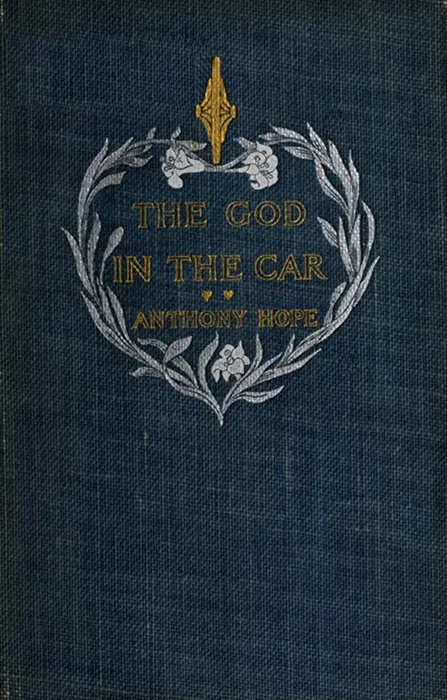
"The God in the Car: A Novel" by Anthony Hope is a fictional work written in the late 19th century. The story appears to delve into the lives of several socialites navigating relationships and business affairs, with a central character named Willie Ruston who is involved in a new venture concerning the African territory of Omofaga. The narrative seems to oscillate between personal dynamics and the challenging financial schemes of that era, including the challenges posed by competing interests. The opening of the novel introduces a lively social gathering where Miss Ferrars is seeking to identify a man of intrigue, Foster Belford, while exchanging witty banter with Lord Semingham. Social hierarchies and the dynamics of friendship and flirtation are caricatured through the conversations, particularly spotlighting the character of Mrs. Dennison, who is depicted as thoughtful and somewhat troubled by her past connections, especially with Ruston. As the characters engage in discussions about business and memories, the tone hints at underlying tensions tying their personal lives to the larger economic ambitions surrounding Ruston’s endeavors in Omofaga, setting the stage for further clashes between social expectation and personal ambition.
Introduction adapted from the source catalogue; source summaries may be automatically generated.
Free to read · English · 69,737 words · No account needed
MAKE TIME FOR A GOOD BOOK
On by default. Untick to stop anonymous reading totals. Each page counts after 10 seconds in view. How this works.
Anonymous counting is on unless you have switched it off.
"I'm a woman," she answered. "If I were a man----"
"You'd be the prophet, not the disciple, eh?"
She looked at him, and then across to the couple by the window.
"To do Belford justice," remarked Semingham, reading her glance, "he never admits that he isn't a great man--though surely he must know it."
"Is it better to know it, or not to know it?" she asked, restlessly fingering the teapot and cups which had been placed before her. "I sometimes think that if you resolutely refuse to know it, you can alter it."
Belford's name had been the only name mentioned in the conversation; yet Semingham knew that she was not thinking of Belford nor of him.
"I knew it about myself very soon," he said. "It makes a man better to
know it, Mrs. Dennison."
"Oh, yes--better," she answered impatiently.
The two men came and joined them. Belford accepted a cup of tea, and, as he took it, he said to Harry, continuing their conversation,
"Of course, I know his value; but, after all, we must judge for
ourselves."
"Of course," acquiesced Harry, handing him bread-and-butter.
"We are the masters," pursued Belford.
Mrs. Dennison glanced at him, and a smile so full of meaning--of meaning which it was as well Mr. Belford should not see--appeared on her face, that Lord Semingham deftly interposed his person between them, and said, with apparent seriousness,
"Oh, he mustn't think he can do just what he likes with us."
"I am entirely of your opinion," said Belford, with a weighty nod.
After tea, Lord Semingham walked slowly back to his own house. He had a trick of stopping still, when he fell into thought, and he was motionless on the pavement of Piccadilly more than once on his way home. The last time he paused for nearly three minutes, till an acquaintance, passing by, clapped him on the back, and inquired what occupied his mind.
"I was thinking," said Semingham, laying his forefinger on his friend's arm, "that if you take what a clever man really is, and add to it what a clever woman who is interested in him thinks he is, you get a most astonishing person."
The friend stared. The speculation seemed hardly pressing enough to excuse a man for blocking the pavement of Piccadilly.
"If, on the other hand," pursued Semingham, "you take what an ordinary man isn't, and add all that a clever woman thinks he isn't, you get----"
"Hadn't we better go on, old fellow?" asked the friend.
"No, I think we'd better not," said Semingham, starting to walk again.
Your reading position is saved on this browser. Take it to another device with a library code. Reading pages adapt to text, rather than matching a printed edition.
Anthony Hope

Anthony Hope

Anthony Hope

Anthony Hope
BEHIND THE BOOK
This eBook is for the use of anyone anywhere in the United States and most other parts of the world at no cost and with almost no restrictions whatsoever. You may copy it, give it away or re-use it under the terms of the Project Gutenberg License included with this eBook or online at www.gutenberg.org. If you are not located in the United States, you will have to check the laws of the country where you are located before using this eBook. Read the source licence.
The original source file, including credits and licence, is retained by this library. Request an original-format copy at no charge. Please include the book title and Project Gutenberg identifier #40583.
KEEP YOUR CURIOSITY GOING
Coulson Kernahan

Maurice Baring
Frances Wright
Cécile Tormay

Frederic Jesup Stimson

W. H. P. (William Henry Pope) Jarvis