
Lucinda
Anthony Hope
THE CLASSIC COLLECTION · 1894
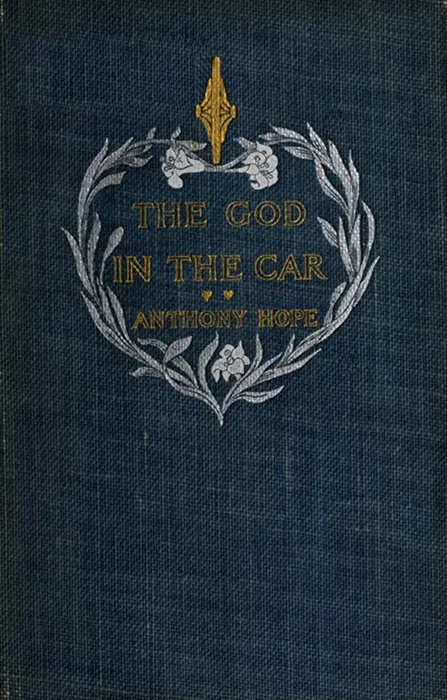
"The God in the Car: A Novel" by Anthony Hope is a fictional work written in the late 19th century. The story appears to delve into the lives of several socialites navigating relationships and business affairs, with a central character named Willie Ruston who is involved in a new venture concerning the African territory of Omofaga. The narrative seems to oscillate between personal dynamics and the challenging financial schemes of that era, including the challenges posed by competing interests. The opening of the novel introduces a lively social gathering where Miss Ferrars is seeking to identify a man of intrigue, Foster Belford, while exchanging witty banter with Lord Semingham. Social hierarchies and the dynamics of friendship and flirtation are caricatured through the conversations, particularly spotlighting the character of Mrs. Dennison, who is depicted as thoughtful and somewhat troubled by her past connections, especially with Ruston. As the characters engage in discussions about business and memories, the tone hints at underlying tensions tying their personal lives to the larger economic ambitions surrounding Ruston’s endeavors in Omofaga, setting the stage for further clashes between social expectation and personal ambition.
Introduction adapted from the source catalogue; source summaries may be automatically generated.
Free to read · English · 69,737 words · No account needed
MAKE TIME FOR A GOOD BOOK
On by default. Untick to stop anonymous reading totals. Each page counts after 10 seconds in view. How this works.
Anonymous counting is on unless you have switched it off.
Seeing that what Sir Walter wanted was an unfavourable opinion of Ruston, he could not have done better than consult his respected friend. Juggernaut--Adela Ferrars was pleased with the nickname, and it began to be repeated--had been crushing Evan in one or two little ways lately, and he did it with an unconsciousness that increased the brutality. Besides displacing him from the position he wished to occupy at more than one social gathering, Ruston, being in the Lobby of the House one day (perhaps on Omofaga business), had likened the pretty (it was his epithet) young member, as he sped with a glass of water to his party leader, to Ganymede in a frock coat--a description, Evan felt, injurious to a serious politician.
"A gentleman?" he said, in reply to young Sir Walter's inquiry. "Well, everybody's a gentleman now, so I suppose Ruston is."
"I call him an unmannerly brute," observed Walter, "and I can't think why mother and Marjory are so civil to him."
Evan shook his head mournfully.
"You meet the fellow everywhere," he sighed.
"Such an ugly mug as he's got too," pursued young Sir Walter. "But Marjory says it's full of character."
"Character! I should think so. Enough to hang him on sight," said Evan
bitterly.
"He's been a lot to our place. Marjory seems to like him. I say, Haselden, do you remember what you spoke of after dinner at the Savoy the other day?"
Evan nodded, looking rather embarrassed; indeed he blushed, and little as he liked doing that, it became him very well.
"Did you mean it? Because, you know, I should like it awfully."
"Thanks, Val, old man. Oh, rather, I meant it."
Young Sir Walter lowered his voice and looked cautiously round--they were in the club smoking-room.
"Because I thought, you know, that you were rather--you know--Adela
Ferrars?"
"Nothing in that, only pour passer le temps," Evan assured him with that superb man-of-the-worldliness.
It was a pity that Adela could not hear him. But there was more to
follow.
"The truth is," resumed Evan--"and, of course, I rely on your discretion, Val--I thought there might be a--an obstacle."
Young Sir Walter looked knowing.
"When you were good enough to suggest what you did--about your sister--I doubted for a moment how such a thing would be received by--well, at a certain house."
"Oh!"
"I shouldn't wonder if you could guess."
"N--no, I don't think so."
"Well, it doesn't matter where."
"Oh, but I say, you might as well tell me. Hang it, I've learnt to hold
my tongue."
"You hadn't noticed it? That's all right. I'm glad to hear it," said Evan, whose satisfaction was not conspicuous in his tone.
Your reading position is saved on this browser. Take it to another device with a library code. Reading pages adapt to text, rather than matching a printed edition.
Anthony Hope

Anthony Hope

Anthony Hope

Anthony Hope
BEHIND THE BOOK
This eBook is for the use of anyone anywhere in the United States and most other parts of the world at no cost and with almost no restrictions whatsoever. You may copy it, give it away or re-use it under the terms of the Project Gutenberg License included with this eBook or online at www.gutenberg.org. If you are not located in the United States, you will have to check the laws of the country where you are located before using this eBook. Read the source licence.
The original source file, including credits and licence, is retained by this library. Request an original-format copy at no charge. Please include the book title and Project Gutenberg identifier #40583.
KEEP YOUR CURIOSITY GOING
Coulson Kernahan

Maurice Baring
Frances Wright
Cécile Tormay

Frederic Jesup Stimson

W. H. P. (William Henry Pope) Jarvis