
Lucinda
Anthony Hope
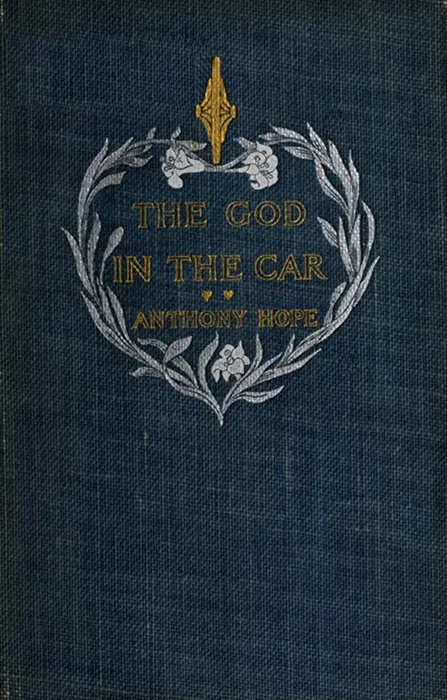
THE CLASSIC COLLECTION · 1894
"The God in the Car: A Novel" by Anthony Hope is a fictional work written in the late 19th century. The story appears to delve into the lives of several socialites navigating relationships and business affairs, with a central character named Willie Ruston who is involved in a new venture concerning the African territory of Omofaga. The narrative seems to oscillate between personal dynamics and the challenging financial schemes of that era, including the challenges posed by competing interests. The opening of the novel introduces a lively social gathering where Miss Ferrars is seeking to identify a man of intrigue, Foster Belford, while exchanging witty banter with Lord Semingham. Social hierarchies and the dynamics of friendship and flirtation are caricatured through the conversations, particularly spotlighting the character of Mrs. Dennison, who is depicted as thoughtful and somewhat troubled by her past connections, especially with Ruston. As the characters engage in discussions about business and memories, the tone hints at underlying tensions tying their personal lives to the larger economic ambitions surrounding Ruston’s endeavors in Omofaga, setting the stage for further clashes between social expectation and personal ambition.
Introduction adapted from the source catalogue; source summaries may be automatically generated.
Free to read · English · 69,737 words · No account needed
MAKE TIME FOR A GOOD BOOK
On by default. Untick to stop anonymous reading totals. Each page counts after 10 seconds in view. How this works.
Anonymous counting is on unless you have switched it off.
At last he came near to her; the lines were deep on his forehead, and his mouth quivered under a forced smile. He laid his hand on her shoulder. She looked up questioningly.
"You know what you're asking?" he said.
She nodded her head.
"Then so be it," said he; and he went again and leant against the
mantelpiece.
He felt that he had paid a debt with his life, but knew not whether the
payment were too high.
It seemed to him long before she spoke--long enough for him to repeat again to himself what he had done--how that he, of all men, had made a burden that would break his shoulders, and had fettered his limbs for all his life's race--yet to be glad, too, that he had not shrunk from carrying what he had made, and had escaped coupling the craven with his other part.
"What do you mean?" she asked at last; and there was surprise in her
tone.
"It shall be as you wish," he answered. "We'll go through with it
together."
Though he was giving what she asked, she seemed hardly to understand.
"I can't let you go," he said; "and I suppose you can't let me go."
"But--but what'll happen?"
"God knows," said he. "We shall be a long way off, anyhow."
"In Omofaga, Willie?"
"Yes."
After a pause she rose and moved a step towards him.
"Why are you doing it?" she asked, searching his eyes with hers. "Is it just because I ask? Because you're sorry for me?"
She was standing near him, and he looked on her face. Then he sprang forward, catching her hands.
"It's because you're more to me than I ever thought any woman could be."
She let her hands lie in his.
"But you came here," she said, "meaning to send me away."
"I was a fool," he said, grimly, between his teeth.
She drew her hands away, and then whispered,
"And, Willie--Harry?"
Again he had nothing to answer. She stood looking at him with a wistful longing for a word of comfort. He gave none. She passed her hand across her eyes, and burst into sudden sobs.
"How miserable I am!" she sobbed. "I wish I was dead!"
He made as though to take her hand again, but she shrank, and he fell back. With one hand over her eyes, she felt her way back to her chair.
For five minutes or more she sat crying. Ruston did not move. He had nothing wherewith to console her, and he dared not touch her. Then she looked up.
"If I were dead?" she said.
"Hush! hush! You'd break my heart," he answered in low tones.
Your reading position is saved on this browser. Take it to another device with a library code. Reading pages adapt to text, rather than matching a printed edition.
Anthony Hope

Anthony Hope

Anthony Hope

Anthony Hope
BEHIND THE BOOK
This eBook is for the use of anyone anywhere in the United States and most other parts of the world at no cost and with almost no restrictions whatsoever. You may copy it, give it away or re-use it under the terms of the Project Gutenberg License included with this eBook or online at www.gutenberg.org. If you are not located in the United States, you will have to check the laws of the country where you are located before using this eBook. Read the source licence.
The original source file, including credits and licence, is retained by this library. Request an original-format copy at no charge. Please include the book title and Project Gutenberg identifier #40583.
KEEP YOUR CURIOSITY GOING
Coulson Kernahan

Maurice Baring
Frances Wright
Cécile Tormay

Frederic Jesup Stimson

W. H. P. (William Henry Pope) Jarvis