
Lucinda
Anthony Hope
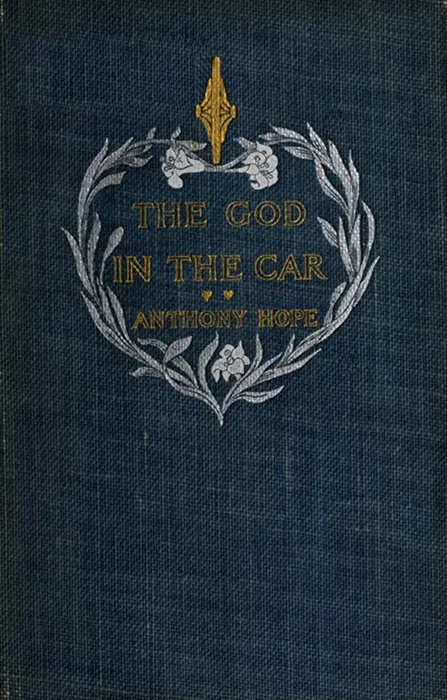
THE CLASSIC COLLECTION · 1894
"The God in the Car: A Novel" by Anthony Hope is a fictional work written in the late 19th century. The story appears to delve into the lives of several socialites navigating relationships and business affairs, with a central character named Willie Ruston who is involved in a new venture concerning the African territory of Omofaga. The narrative seems to oscillate between personal dynamics and the challenging financial schemes of that era, including the challenges posed by competing interests. The opening of the novel introduces a lively social gathering where Miss Ferrars is seeking to identify a man of intrigue, Foster Belford, while exchanging witty banter with Lord Semingham. Social hierarchies and the dynamics of friendship and flirtation are caricatured through the conversations, particularly spotlighting the character of Mrs. Dennison, who is depicted as thoughtful and somewhat troubled by her past connections, especially with Ruston. As the characters engage in discussions about business and memories, the tone hints at underlying tensions tying their personal lives to the larger economic ambitions surrounding Ruston’s endeavors in Omofaga, setting the stage for further clashes between social expectation and personal ambition.
Introduction adapted from the source catalogue; source summaries may be automatically generated.
Free to read · English · 69,737 words · No account needed
MAKE TIME FOR A GOOD BOOK
On by default. Untick to stop anonymous reading totals. Each page counts after 10 seconds in view. How this works.
Anonymous counting is on unless you have switched it off.
Even at that moment, the light of triumph came suddenly gleaming into Ruston's eyes. He looked at Detchmore, who laughed and nodded.
"I think so. I think I shall be able to manage it," he said.
"That's an end to all our troubles," said Semingham. "Come, we'll drink
to it."
He signed to a waiter, who brought champagne. Lord Detchmore gallantly pressed a glass on Mrs. Dennison. She shook her head, but took it.
"Long life to Omofaga, and death to its enemies!" cried Semingham in burlesque heroics, and, with a laugh--that was, as his laughs so often were, as much at himself as at the rest of the world--he made a mock obeisance to Willie Ruston, adding, "Moriamur pro rege nostro!" and draining the glass.
Maggie Dennison's eyes sparkled. Behind the mockery in Semingham's jest, behind the only half make-believe homage which Detchmore's humorous glance at Ruston showed, she saw the reality of deference, the acknowledgment of power in the man she loved. For a brief moment she tasted the troubled joy which she had paid so high to win. For a moment her eyes rested on Willie Ruston as a woman's eyes rest on a man who is the world's as well as hers, but also hers as he is not the world's. She sipped the champagne, echoing in her low rich voice, so that the men but just caught the words, "Moriamur pro rege nostro" and gave the glass into Ruston's hand.
A sudden seriousness fell upon them. Detchmore glanced at Semingham, and thence, curiously, at Willie Ruston, whose face was pale and marked with a deep-lined frown. Mrs. Dennison had sunk back in her chair, and her heart rose and fell in agitated breathings. Then Willie Ruston spoke in cool deliberate tones.
"The King there was a Queen," he said. "You've drunk to the wrong person, Semingham. I'll drink it right," and, bowing to Maggie Dennison, he drained his glass. Looking up, he found Detchmore's eyes on him in overpowering wonder.
"If I tell you a story, Lord Detchmore," said he, "you'll understand," and, yielding his place by Maggie Dennison, he took Detchmore with him, and they walked away in talk.
It was an hour later when Lord Detchmore took leave of his host.
"Well, did you hear the story?" asked Semingham.
"Yes; I heard it," said Detchmore, "about the telegram, wasn't it?"
"Yes, and of course, you see, it explains the toast."
"That sounds like a question, Semingham."
"Oh, no. The note of interrogation was--a printer's error."
"It's a remarkable story."
"It really is," said Semingham.
"And--is it the whole story?"
"Well, isn't it enough to justify the toast?"
Your reading position is saved on this browser. Take it to another device with a library code. Reading pages adapt to text, rather than matching a printed edition.
Anthony Hope

Anthony Hope

Anthony Hope

Anthony Hope
BEHIND THE BOOK
This eBook is for the use of anyone anywhere in the United States and most other parts of the world at no cost and with almost no restrictions whatsoever. You may copy it, give it away or re-use it under the terms of the Project Gutenberg License included with this eBook or online at www.gutenberg.org. If you are not located in the United States, you will have to check the laws of the country where you are located before using this eBook. Read the source licence.
The original source file, including credits and licence, is retained by this library. Request an original-format copy at no charge. Please include the book title and Project Gutenberg identifier #40583.
KEEP YOUR CURIOSITY GOING
Coulson Kernahan

Maurice Baring
Frances Wright
Cécile Tormay

Frederic Jesup Stimson

W. H. P. (William Henry Pope) Jarvis