
Lucinda
Anthony Hope
THE CLASSIC COLLECTION · 1894
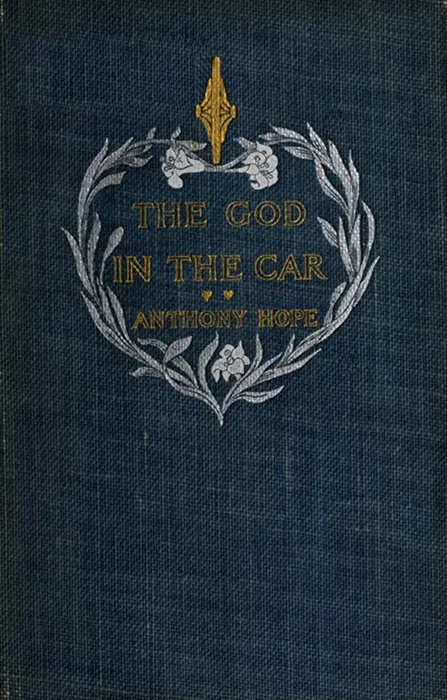
"The God in the Car: A Novel" by Anthony Hope is a fictional work written in the late 19th century. The story appears to delve into the lives of several socialites navigating relationships and business affairs, with a central character named Willie Ruston who is involved in a new venture concerning the African territory of Omofaga. The narrative seems to oscillate between personal dynamics and the challenging financial schemes of that era, including the challenges posed by competing interests. The opening of the novel introduces a lively social gathering where Miss Ferrars is seeking to identify a man of intrigue, Foster Belford, while exchanging witty banter with Lord Semingham. Social hierarchies and the dynamics of friendship and flirtation are caricatured through the conversations, particularly spotlighting the character of Mrs. Dennison, who is depicted as thoughtful and somewhat troubled by her past connections, especially with Ruston. As the characters engage in discussions about business and memories, the tone hints at underlying tensions tying their personal lives to the larger economic ambitions surrounding Ruston’s endeavors in Omofaga, setting the stage for further clashes between social expectation and personal ambition.
Introduction adapted from the source catalogue; source summaries may be automatically generated.
Free to read · English · 69,737 words · No account needed
MAKE TIME FOR A GOOD BOOK
On by default. Untick to stop anonymous reading totals. Each page counts after 10 seconds in view. How this works.
Anonymous counting is on unless you have switched it off.
"I desire you not to chatter about me, Mrs. Cormack."
"Ah, what politeness! I shall say what I please," and she rose and stood
facing him defiantly.
"I wish," he said, "that I could tell you what they do to gossiping women in Omofaga. It is so very disagreeable--and appropriate."
"Oh, I don't mind hearing."
"I can believe it, but I mind saying."
She flushed, and her breath came more quickly.
"No doubt you will enforce the treatment--in your own interest," she
said.
"You won't be there," replied he, with affected regret.
"Well, here I shall say what I please."
"And who will listen?"
"One man, at least," she cried, in incautious anger. "Ah, you'd like to
beat me, wouldn't you?"
"Why suggest the impossible?" he asked, smiling. "I can't beat every----" he paused, and added with deliberateness, "every vulgar-minded woman in London;" and turning his back on her, he sat down and took up a newspaper that lay on the table.
For full five or six minutes Mrs. Cormack sat silent. Willie Ruston glanced through the leading article, and turned the paper, folding it neatly. There was a letter from a correspondent on the subject of the watersheds of Central South Africa, and he was reading it with attention. He thought that he recognised Tom Loring's hand. The watersheds of Omofaga were not given their due. Ah, and here was that old falsehood about arid wastes round Fort Imperial!
"By Jove, it's too bad!" he exclaimed aloud.
Mrs. Cormack, who had for the last few moments been watching him, first with a frown, then with a half-incredulous, half-amazed smile, burst out into laughter.
"Really, one might as well be offended with a grizzly bear!" she cried.
He put down the paper, and met her gaze.
"How in the world," she went on, "does she--there, I beg your pardon. How does anyone endure you, Mr. Ruston?"
As she spoke, before he could answer, the door opened, and Harry Dennison came in. He entered with a hesitating step. After greeting Mrs. Cormack, he advanced towards Ruston. The latter held out his hand, and Harry took it. He did not look Ruston in the eyes.
"How are you?" said he. "You want to see me?"
"Well, for a moment, if you can spare the time--on business."
"Is it about my letter to Carlin?"
Ruston nodded. Mrs. Cormack kept a close watch.
"I--I can't alter that," said Harry, in a confused way. "Sir George is
so crippled now, so much of the work falls on me; I have really no
time."
"You might have left us your name."
"I couldn't do that, could I? Suppose you came to grief?" and he laughed
uncomfortably.
Your reading position is saved on this browser. Take it to another device with a library code. Reading pages adapt to text, rather than matching a printed edition.
Anthony Hope

Anthony Hope

Anthony Hope

Anthony Hope
BEHIND THE BOOK
This eBook is for the use of anyone anywhere in the United States and most other parts of the world at no cost and with almost no restrictions whatsoever. You may copy it, give it away or re-use it under the terms of the Project Gutenberg License included with this eBook or online at www.gutenberg.org. If you are not located in the United States, you will have to check the laws of the country where you are located before using this eBook. Read the source licence.
The original source file, including credits and licence, is retained by this library. Request an original-format copy at no charge. Please include the book title and Project Gutenberg identifier #40583.
KEEP YOUR CURIOSITY GOING
Coulson Kernahan

Maurice Baring
Frances Wright
Cécile Tormay

Frederic Jesup Stimson

W. H. P. (William Henry Pope) Jarvis