
Lucinda
Anthony Hope
THE CLASSIC COLLECTION · 1894
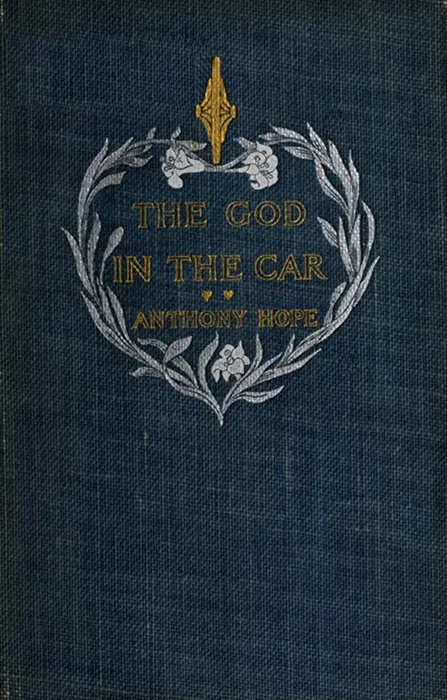
"The God in the Car: A Novel" by Anthony Hope is a fictional work written in the late 19th century. The story appears to delve into the lives of several socialites navigating relationships and business affairs, with a central character named Willie Ruston who is involved in a new venture concerning the African territory of Omofaga. The narrative seems to oscillate between personal dynamics and the challenging financial schemes of that era, including the challenges posed by competing interests. The opening of the novel introduces a lively social gathering where Miss Ferrars is seeking to identify a man of intrigue, Foster Belford, while exchanging witty banter with Lord Semingham. Social hierarchies and the dynamics of friendship and flirtation are caricatured through the conversations, particularly spotlighting the character of Mrs. Dennison, who is depicted as thoughtful and somewhat troubled by her past connections, especially with Ruston. As the characters engage in discussions about business and memories, the tone hints at underlying tensions tying their personal lives to the larger economic ambitions surrounding Ruston’s endeavors in Omofaga, setting the stage for further clashes between social expectation and personal ambition.
Introduction adapted from the source catalogue; source summaries may be automatically generated.
Free to read · English · 69,737 words · No account needed
MAKE TIME FOR A GOOD BOOK
On by default. Untick to stop anonymous reading totals. Each page counts after 10 seconds in view. How this works.
Anonymous counting is on unless you have switched it off.
"I didn't hear," she repeated impatiently, "but I daresay you did. Perhaps it was a man--a thief, or somebody lost in the fog. Would you like me to wake the footman? I can tell him to take a lantern and look if anyone's in the garden."
Marjory took no notice of the offer.
"But if it was anyone, he'll have gone now," continued Maggie Dennison, "your opening the window will have frightened him. You made such a noise--you woke me up."
"Were you asleep?" came in quick question.
"Yes," answered Mrs. Dennison steadily, "I was asleep. Couldn't you
sleep?"
"Sleep? No, I couldn't sleep. I was afraid."
"You're as bad as the children," said Mrs. Dennison, laughing gently. "Come, go back to bed. Shall I come and sit by you till it's light?"
The girl seemed not to hear; she drew nearer, searching Mrs. Dennison's face with suspicious eyes. Maggie could not face her; she dropped her glance to the floor and laughed nervously and fretfully. Suddenly Marjory threw herself on the floor at her friend's feet.
"Maggie, come away from here," she beseeched. "Do come; do come away directly. Maggie, dear, I love you so, and--and I was unkind last night. Do come, darling! We'll go back together--back home," and she burst into sobbing.
Maggie Dennison stood passive and motionless, her hands by her side. Her lips quivered and she looked down at the girl kneeling at her feet.
"Won't you come?" moaned Marjory. "Oh, Maggie, there's still time!"
Mrs. Dennison knew what she meant. A strange smile came over her face. Yes, there was time; in a sense there was time, for the uncertain footfalls had not reached their goal--arrested by that cry from the window, they had stopped--wavered--retreated--and were gone. Because a girl had not slept, there was time. Yet what difference did it make that there was still time--to-night? Since to-morrow was coming and must come.
"Time!" she echoed in a whisper.
"For God's sake, come, Maggie! Come to-morrow--you and the children. Come back with them to England! Maggie, I can't stay here!"
Mrs. Dennison put out her hands and took Marjory's.
"Get up," she said, almost roughly, and dragged the girl to her feet. "You can go, Marjory; I--I suppose you're not happy here. You can go."
"And you?"
"I shan't go," said Maggie Dennison.
Marjory, standing now, shrank back from her.
"You won't go?" she whispered. "Why, what are you staying for?"
"You forget," said Mrs. Dennison coldly. "I'm waiting for my husband."
"Oh!" moaned Marjory, a world of misery and contempt in her voice.
Your reading position is saved on this browser. Take it to another device with a library code. Reading pages adapt to text, rather than matching a printed edition.
Anthony Hope

Anthony Hope

Anthony Hope

Anthony Hope
BEHIND THE BOOK
This eBook is for the use of anyone anywhere in the United States and most other parts of the world at no cost and with almost no restrictions whatsoever. You may copy it, give it away or re-use it under the terms of the Project Gutenberg License included with this eBook or online at www.gutenberg.org. If you are not located in the United States, you will have to check the laws of the country where you are located before using this eBook. Read the source licence.
The original source file, including credits and licence, is retained by this library. Request an original-format copy at no charge. Please include the book title and Project Gutenberg identifier #40583.
KEEP YOUR CURIOSITY GOING
Coulson Kernahan

Maurice Baring
Frances Wright
Cécile Tormay

Frederic Jesup Stimson

W. H. P. (William Henry Pope) Jarvis