
Europe and elsewhere
Mark Twain
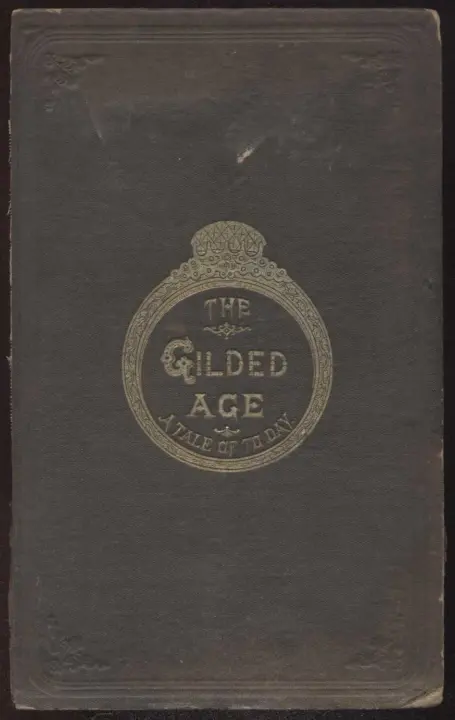
THE CLASSIC COLLECTION · 1873
"The Gilded Age: A Tale of Today" by Mark Twain and Charles Dudley Warner is a satirical novel published in 1873. It follows a poor rural family's attempts to strike it rich by selling their vast Tennessee land, while their adopted daughter Laura becomes a Washington lobbyist seeking congressional support. Meanwhile, two young men pursue fortune through land speculation. The novel skewers the greed, materialism, and political corruption of post-Civil War America—so effectively that it named an entire era of American history.
Introduction adapted from the source catalogue; source summaries may be automatically generated.
Free to read · English · 158,492 words · No account needed
MAKE TIME FOR A GOOD BOOK
On by default. Untick to stop anonymous reading totals. Each page counts after 10 seconds in view. How this works.
Anonymous counting is on unless you have switched it off.
Laura welcomed Mr. Trollop, a grave, carefully dressed and very respectable looking man, with a bald head, standing collar and old fashioned watch seals.
“Promptness is a virtue, Mr. Trollop, and I perceive that you have it. You are always prompt with me.”
“I always meet my engagements, of every kind, Miss Hawkins.”
“It is a quality which is rarer in the world than it has been, I believe. I wished to see you on business, Mr. Trollop.”
“I judged so. What can I do for you?”
“You know my bill--the Knobs University bill?”
“Ah, I believe it is your bill. I had forgotten. Yes, I know the bill.”
“Well, would you mind telling me your opinion of it?”
“Indeed, since you seem to ask it without reserve, I am obliged to say that I do not regard it favorably. I have not seen the bill itself, but from what I can hear, it--it--well, it has a bad look about it. It--”
“Speak it out--never fear.”
“Well, it--they say it contemplates a fraud upon the government.”
“Well?” said Laura tranquilly.
“Well! I say 'Well?' too.”
“Well, suppose it were a fraud--which I feel able to deny--would it be
the first one?”
“You take a body's breath away! Would you--did you wish me to vote for it? Was that what you wanted to see me about?”
“Your instinct is correct. I did want you--I do want you to vote for
it.”
“Vote for a fr--for a measure which is generally believed to be at least questionable? I am afraid we cannot come to an understanding, Miss Hawkins.”
“No, I am afraid not--if you have resumed your principles, Mr. Trollop.”
“Did you send for me merely to insult me? It is time for me to take my
leave, Miss Hawkins.”
“No--wait a moment. Don't be offended at a trifle. Do not be offish and unsociable. The Steamship Subsidy bill was a fraud on the government. You voted for it, Mr. Trollop, though you always opposed the measure until after you had an interview one evening with a certain Mrs. McCarter at her house. She was my agent. She was acting for me. Ah, that is right--sit down again. You can be sociable, easily enough if you have a mind to. Well? I am waiting. Have you nothing to say?”
“Miss Hawkins, I voted for that bill because when I came to examine into
it--”
Your reading position is saved on this browser. Take it to another device with a library code. Reading pages adapt to text, rather than matching a printed edition.
BEHIND THE BOOK
This eBook is for the use of anyone anywhere in the United States and most other parts of the world at no cost and with almost no restrictions whatsoever. You may copy it, give it away or re-use it under the terms of the Project Gutenberg License included with this eBook or online at www.gutenberg.org. If you are not located in the United States, you will have to check the laws of the country where you are located before using this eBook. Read the source licence.
The original source file, including credits and licence, is retained by this library. Request an original-format copy at no charge. Please include the book title and Project Gutenberg identifier #3178.
KEEP YOUR CURIOSITY GOING
Coulson Kernahan

Maurice Baring
Frances Wright
Cécile Tormay

Frederic Jesup Stimson

W. H. P. (William Henry Pope) Jarvis


