Arsène Lupin, super-sleuth
Maurice Leblanc
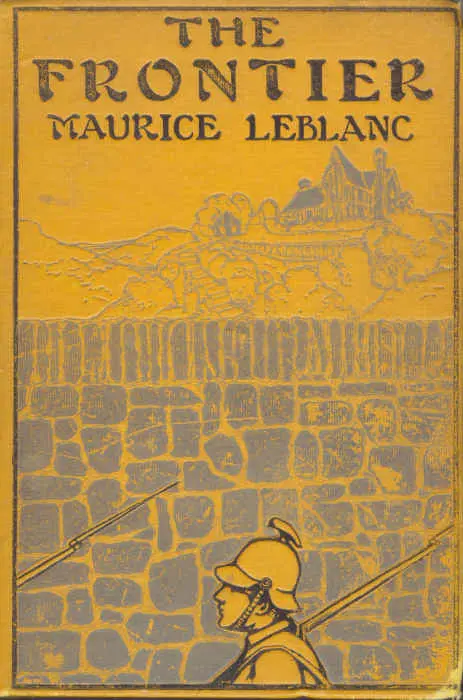
THE CLASSIC COLLECTION · 1912
"The Frontier" by Maurice Leblanc is a novel written in the early 20th century. The story revolves around the character of Morestal, a patriotic farmer and mayor, whose life is intricately connected to the tension between France and Germany, set against the backdrop of looming war. Through the lives of Morestal, his son Philippe, and the intertwining paths of other residents near the French-German border, the narrative grapples with themes of loyalty, national pride, and the personal costs of conflict. The opening of the book sets a tense atmosphere as Morestal and his wife discuss the ongoing disturbances along the French-German frontier, specifically the repeated damage to a boundary post, symbolizing deeper issues of national integrity and personal conflict stemming from past wars. We see Morestal's fierce pride in France and a palpable sense of foreboding as he reflects on the possibility of conflict re-emerging with Germany. The arrival of their son Philippe, a professor who has differing views, introduces an imminent clash of ideologies within the family, encapsulating the overarching struggle between old patriotic sentiments and newer, more progressive worldviews. As Philippe returns home with his wife Marthe, layers of personal history entwine with the national narrative, hinting at dramatic tensions both within the family and across the border.
Introduction adapted from the source catalogue; source summaries may be automatically generated.
Free to read · English · 57,388 words · No account needed
MAKE TIME FOR A GOOD BOOK
On by default. Untick to stop anonymous reading totals. Each page counts after 10 seconds in view. How this works.
Anonymous counting is on unless you have switched it off.
The two men disappeared at the end of the Butte, then returned and, this time, doubtless embarrassed by the propinquity of the German officers, penetrated a few paces into French territory.
A word, here and there, of the conversation reached the tent. Then the two speakers stood still and the Morestals distinctly heard the Statthalter's voice:
"Monsieur le ministre, my conclusion is necessarily different from yours, because all the police-officers who took part in the arrest are unanimous in declaring that it was effected on German soil."
"Commissary Jorance and M. Morestal," objected M. Le Corbier, "state the
contrary."
"They are alone in saying so."
"M. Philippe Morestal took the evidence of Private Baufeld."
"Private Baufeld was a deserter," retorted the Statthalter. "His
evidence does not count."
There was a pause. Then the German resumed, in terms which he picked
slowly and carefully:
"Therefore, monsieur le ministre, as there is no outside evidence in support of either of the two contradictory versions, I can find no argument that would tend to destroy the conclusions to which all the German enquiries have led. That is what I shall tell the emperor this evening."
He bowed. M. Le Corbier took off his hat, hesitated a second and then,
making up his mind:
"One word more, your excellency. Before finally going back to Paris, I determined to call the Morestal family for the last time. I will ask your excellency if it would be possible for Commissary Jorance to be present at the interview. I will answer for him on my honour."
The Statthalter appeared embarrassed. The proposal evidently went beyond his powers. Nevertheless, he said, decisively:
"You shall have your wish, monsieur le ministre. Commissary Jorance is
here, at your disposal."
He clapped his heels together, raised his hand to his helmet and gave the military salute. The interview was ended.
The German crossed the frontier. M. Le Corbier watched him walk away, stood for a moment in thought and then returned to the French tent.
He was surprised to find the Morestals there. But he gave a gesture as though, after all, he was rather pleased than otherwise at this accident and he asked M. de Trebons:
"Did you hear?"
"Yes, monsieur le ministre."
"Then do not lose a moment, my dear Trebons. You will find my car at the bottom of the hill. Go to Saint-Elophe, telephone to the prime minister and communicate the German reply to him officially. It is urgent. There may be immediate measures to be taken ... with regard to the frontier."
Your reading position is saved on this browser. Take it to another device with a library code. Reading pages adapt to text, rather than matching a printed edition.
Maurice Leblanc
Maurice Leblanc
Maurice Leblanc
Maurice Leblanc
BEHIND THE BOOK
This eBook is for the use of anyone anywhere in the United States and most other parts of the world at no cost and with almost no restrictions whatsoever. You may copy it, give it away or re-use it under the terms of the Project Gutenberg License included with this eBook or online at www.gutenberg.org. If you are not located in the United States, you will have to check the laws of the country where you are located before using this eBook. Read the source licence.
The original source file, including credits and licence, is retained by this library. Request an original-format copy at no charge. Please include the book title and Project Gutenberg identifier #28480.
KEEP YOUR CURIOSITY GOING
Cécile Tormay

Moritz Busch
Coulson Kernahan
John L. Ransom

Maurice Baring
Frances Wright