Arsène Lupin, super-sleuth
Maurice Leblanc
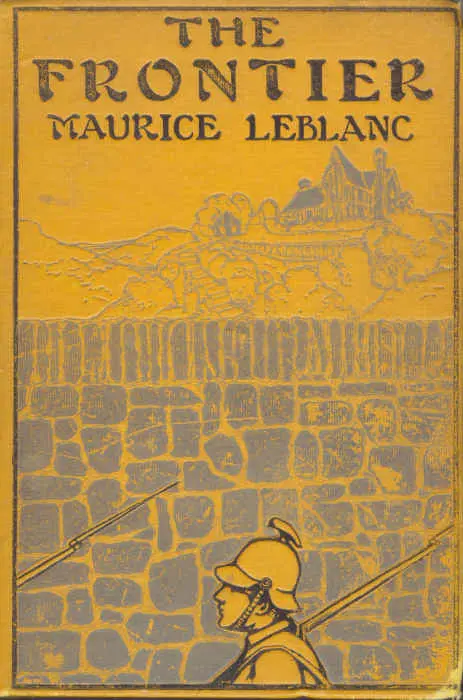
THE CLASSIC COLLECTION · 1912
"The Frontier" by Maurice Leblanc is a novel written in the early 20th century. The story revolves around the character of Morestal, a patriotic farmer and mayor, whose life is intricately connected to the tension between France and Germany, set against the backdrop of looming war. Through the lives of Morestal, his son Philippe, and the intertwining paths of other residents near the French-German border, the narrative grapples with themes of loyalty, national pride, and the personal costs of conflict. The opening of the book sets a tense atmosphere as Morestal and his wife discuss the ongoing disturbances along the French-German frontier, specifically the repeated damage to a boundary post, symbolizing deeper issues of national integrity and personal conflict stemming from past wars. We see Morestal's fierce pride in France and a palpable sense of foreboding as he reflects on the possibility of conflict re-emerging with Germany. The arrival of their son Philippe, a professor who has differing views, introduces an imminent clash of ideologies within the family, encapsulating the overarching struggle between old patriotic sentiments and newer, more progressive worldviews. As Philippe returns home with his wife Marthe, layers of personal history entwine with the national narrative, hinting at dramatic tensions both within the family and across the border.
Introduction adapted from the source catalogue; source summaries may be automatically generated.
Free to read · English · 57,388 words · No account needed
MAKE TIME FOR A GOOD BOOK
On by default. Untick to stop anonymous reading totals. Each page counts after 10 seconds in view. How this works.
Anonymous counting is on unless you have switched it off.
"If they consent, all will be well," said Morestal. "There is no humiliation for Germany in disowning the action of a pack of minor officials. But, if they refuse, if they believe the policemen's lies, what will happen then? France cannot give way."
On Saturday morning, the Boersweilener Zeitung printed the following short paragraph in a special edition:
"After making a careful examination of the French papers, the chancellor has returned them to the French ambassador. The case of Commissary Jorance, accused of the crime of high treason and arrested on German territory, will be tried in the German courts."
It was a refusal.
That morning, Morestal took his son to the Col du Diable and, bent in two, following the road to the Butte-aux-Loups step by step, examining each winding turn, noting a big root here and a long branch there, he reconstituted the plan of the attack. And he showed Philippe the trees against which he had brushed in his flight and the trees at the foot of which he and his friend had stood and defended themselves:
"It was there, Philippe, and nowhere else.... Do you see that little open space? That's where it was.... I have often come and smoked my pipe here, because of this little mound to sit upon.... That's the place!"
He sat down on the same mound and said no more, staring before him,
while Philippe looked at him. Several times, he repeated, between his
teeth:
"Yes, this is certainly the place.... How could I be mistaken?"
And, suddenly, he pressed his two fists to his temples and blurted out:
"Still, suppose I were mistaken! Suppose I had branched off more to the
right ... and ..."
He interrupted himself, cast his eyes around him, rising to his feet:
"It's impossible! One can't make as big a blunder as that, short of being mad! How could I have? I was thinking of one thing only; I kept saying to myself, 'I must remain in France, I must keep to the left of the line.' And I did keep to it, hang it all! It is absolutely certain.... What then? Am I to deny the truth in order to please them?"
And Philippe, who had never ceased watching him, replied, within
himself:
"Why not, father? What would that little falsehood signify, compared with the magnificent result that would be obtained? If you would tell a lie, father, or if only you would assert so fatal a truth less forcibly, France could give way without the least disgrace, since it is your evidence alone that compels her to make her demand! And, in this way, you would have saved your country...."
Your reading position is saved on this browser. Take it to another device with a library code. Reading pages adapt to text, rather than matching a printed edition.
Maurice Leblanc
Maurice Leblanc
Maurice Leblanc
Maurice Leblanc
BEHIND THE BOOK
This eBook is for the use of anyone anywhere in the United States and most other parts of the world at no cost and with almost no restrictions whatsoever. You may copy it, give it away or re-use it under the terms of the Project Gutenberg License included with this eBook or online at www.gutenberg.org. If you are not located in the United States, you will have to check the laws of the country where you are located before using this eBook. Read the source licence.
The original source file, including credits and licence, is retained by this library. Request an original-format copy at no charge. Please include the book title and Project Gutenberg identifier #28480.
KEEP YOUR CURIOSITY GOING
Cécile Tormay

Moritz Busch
Coulson Kernahan
John L. Ransom

Maurice Baring
Frances Wright