Arsène Lupin, super-sleuth
Maurice Leblanc
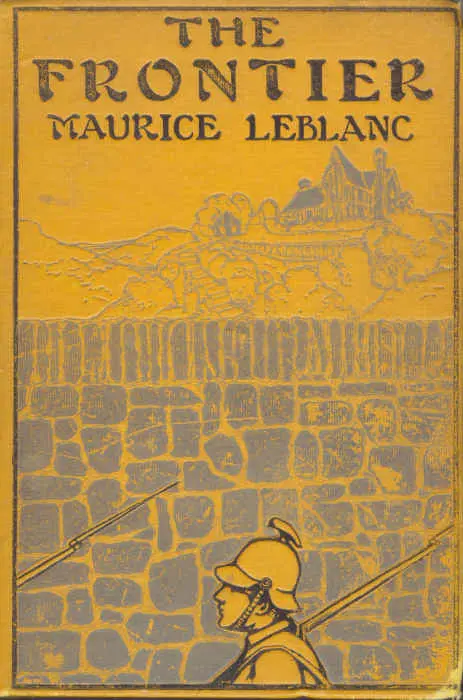
THE CLASSIC COLLECTION · 1912
"The Frontier" by Maurice Leblanc is a novel written in the early 20th century. The story revolves around the character of Morestal, a patriotic farmer and mayor, whose life is intricately connected to the tension between France and Germany, set against the backdrop of looming war. Through the lives of Morestal, his son Philippe, and the intertwining paths of other residents near the French-German border, the narrative grapples with themes of loyalty, national pride, and the personal costs of conflict. The opening of the book sets a tense atmosphere as Morestal and his wife discuss the ongoing disturbances along the French-German frontier, specifically the repeated damage to a boundary post, symbolizing deeper issues of national integrity and personal conflict stemming from past wars. We see Morestal's fierce pride in France and a palpable sense of foreboding as he reflects on the possibility of conflict re-emerging with Germany. The arrival of their son Philippe, a professor who has differing views, introduces an imminent clash of ideologies within the family, encapsulating the overarching struggle between old patriotic sentiments and newer, more progressive worldviews. As Philippe returns home with his wife Marthe, layers of personal history entwine with the national narrative, hinting at dramatic tensions both within the family and across the border.
Introduction adapted from the source catalogue; source summaries may be automatically generated.
Free to read · English · 57,388 words · No account needed
MAKE TIME FOR A GOOD BOOK
On by default. Untick to stop anonymous reading totals. Each page counts after 10 seconds in view. How this works.
Anonymous counting is on unless you have switched it off.
She hurried from the room, to escape the explosion. But Morestal was
fairly started:
"Yes, yes, theories! I insist upon the word: theories! As a district-councillor, as Mayor of Saint-Elophe, I have the right to be present at his lessons. Oh, you have no idea of his way of teaching the history of France!... In my time, the heroes were the Chevalier d'Assas, Bayard, La Tour d'Auvergne, all those beggars who shed lustre on our country. Nowadays, it's Mossieu Etienne Marcel, Mossieu Dolet.... Oh, a nice set of theories, theirs!"
He barred the way to his wife, as she entered the room again, and roared
in her face:
"Do you know why Napoleon lost the battle of Waterloo?"
"I can't find that large breakfast-cup anywhere," said Mme. Morestal, engrossed in her occupation.
"Well, just ask your school-master; he'll give you the latest up-to-date theories about Napoleon."
"I put it down here, on this chest, with my own hand."
"But there, they're doing all they can to distort the children's
minds."
"It spoils my set."
"Oh, I swear to you, in the old days, we'd have ducked our school-master in the horse-pond, if he had dared.... But, by Jove, France had a place of her own in the world then! And such a place!
... That was the time of Solferino!... Of Magenta!... We weren't satisfied with chucking down frontier-posts in those days: we crossed the frontiers ... and at the double, believe me...."
He stopped, hesitating, pricking up his ears. Trumpet-blasts sounded in the distance, ringing from valley to valley, echoing and re-echoing against the obstacles formed by the great granite rocks and dying away to right and left, as though stifled by the shadow of the forests.
He whispered, excitedly:
"The French bugle...."
"Are you sure?"
"Yes, there are troops of Alpines manoeuvring ... a company from Noirmont.... Listen ... listen.... What gaiety!... What swagger!... I tell you, close to the frontier like this, it takes such an air...."
She listened too, seized with the same excitement, and asked, anxiously:
"Do you really think that war is possible?"
"Yes," he replied, "I do."
They were silent for a moment. And Morestal continued:
"It's a presentiment with me.... We shall have it all over again, as in 1870.... And, mark you, I hope that this time ..."
She put down her breakfast-cup, which she had found in a cupboard, and, leaning on her husband's arm:
"I say, the boy's coming ... with his wife. She's a dear girl and we're very fond of her.... I want the house to look nice for them, bright and full of flowers.... Go and pick the best you have in your garden."
He smiled:
Your reading position is saved on this browser. Take it to another device with a library code. Reading pages adapt to text, rather than matching a printed edition.
Maurice Leblanc
Maurice Leblanc
Maurice Leblanc
Maurice Leblanc
BEHIND THE BOOK
This eBook is for the use of anyone anywhere in the United States and most other parts of the world at no cost and with almost no restrictions whatsoever. You may copy it, give it away or re-use it under the terms of the Project Gutenberg License included with this eBook or online at www.gutenberg.org. If you are not located in the United States, you will have to check the laws of the country where you are located before using this eBook. Read the source licence.
The original source file, including credits and licence, is retained by this library. Request an original-format copy at no charge. Please include the book title and Project Gutenberg identifier #28480.
KEEP YOUR CURIOSITY GOING
Cécile Tormay

Moritz Busch
Coulson Kernahan
John L. Ransom

Maurice Baring
Frances Wright