Arsène Lupin, super-sleuth
Maurice Leblanc
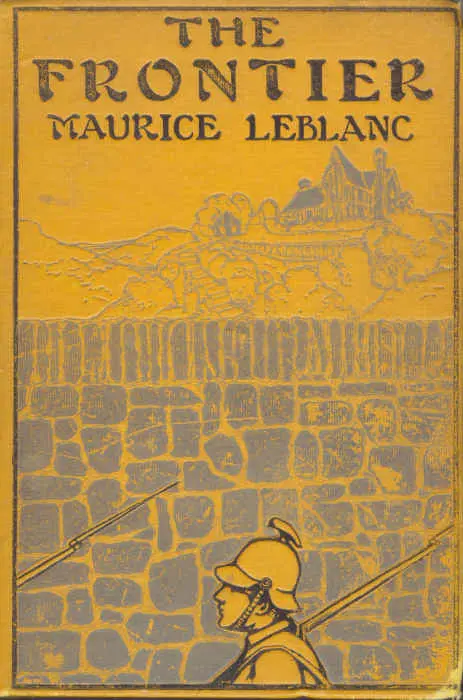
THE CLASSIC COLLECTION · 1912
"The Frontier" by Maurice Leblanc is a novel written in the early 20th century. The story revolves around the character of Morestal, a patriotic farmer and mayor, whose life is intricately connected to the tension between France and Germany, set against the backdrop of looming war. Through the lives of Morestal, his son Philippe, and the intertwining paths of other residents near the French-German border, the narrative grapples with themes of loyalty, national pride, and the personal costs of conflict. The opening of the book sets a tense atmosphere as Morestal and his wife discuss the ongoing disturbances along the French-German frontier, specifically the repeated damage to a boundary post, symbolizing deeper issues of national integrity and personal conflict stemming from past wars. We see Morestal's fierce pride in France and a palpable sense of foreboding as he reflects on the possibility of conflict re-emerging with Germany. The arrival of their son Philippe, a professor who has differing views, introduces an imminent clash of ideologies within the family, encapsulating the overarching struggle between old patriotic sentiments and newer, more progressive worldviews. As Philippe returns home with his wife Marthe, layers of personal history entwine with the national narrative, hinting at dramatic tensions both within the family and across the border.
Introduction adapted from the source catalogue; source summaries may be automatically generated.
Free to read · English · 57,388 words · No account needed
MAKE TIME FOR A GOOD BOOK
On by default. Untick to stop anonymous reading totals. Each page counts after 10 seconds in view. How this works.
Anonymous counting is on unless you have switched it off.
"The first shot fired in the war, Philippe.... They are fighting on the frontier.... It's your country they are defending.... France is in danger.... Oh, doesn't your heart quiver like the heart of a son? Don't you feel the wounds they are giving her ... the wounds they intend to give her?..."
He wore his attitude of suffering, keeping his arms crossed stiffly over his chest and half-closing his eyes. He answered, sorrowfully:
"Yes, yes, I feel those wounds.... But why is she fighting? For what mad love of glory? Is she not intoxicated with successes and conquests? Remember our journey through Europe.... Wherever we went, we found traces of her passage: cemeteries and charnel-houses to bear witness that she was the great victress. Isn't that enough of conquests and triumphs?"
"But, fool that you are," cried Marthe, "she is not trying to conquer! She is defending herself! Picture this vision, for a moment: France invaded once more ... France dismembered ... France wiped from the face of the earth...."
"But no, no," he said, with a gesture of protest, "there is no question
of that!"
"Yes, there is, there is a question of that: it's a question of life or death to her.... And you, you are deserting!"
Philippe did not stir. Marthe felt that he was, if not shaken, at least anxious, uneasy. But, suddenly, he uncrossed his arms and, striking the table with his fist:
"I must! I must! I promised to!... And I was right to promise! And I will keep my oath! What you call deserting is fighting, but fighting the real fight! I too am going to wage war, but it will be the war of independence and brains; and my comrades in heroism are waiting for me. There, Marthe, I won't listen to you any longer!"
She glued her back to the door, with her arms outstretched:
"And the children! The children whom you are abandoning!"
"You will send them to me later."
She raised her hand:
"Never, I swear it on their heads, never shall you set eyes on them again! The sons of a deserter!... They will disown you!"
"They will love me, if they understand."
"I will teach them not to understand you."
"If they do not understand me, it is I who will disown them. So much the
worse for them!"
He took her by the shoulders and tried to push her away. And, when Marthe resisted, he jostled her, exasperated by the fear of the unforeseen obstacle that might spring up, the arrival of his mother, perhaps the apparition of old Morestal himself.
Your reading position is saved on this browser. Take it to another device with a library code. Reading pages adapt to text, rather than matching a printed edition.
Maurice Leblanc
Maurice Leblanc
Maurice Leblanc
Maurice Leblanc
BEHIND THE BOOK
This eBook is for the use of anyone anywhere in the United States and most other parts of the world at no cost and with almost no restrictions whatsoever. You may copy it, give it away or re-use it under the terms of the Project Gutenberg License included with this eBook or online at www.gutenberg.org. If you are not located in the United States, you will have to check the laws of the country where you are located before using this eBook. Read the source licence.
The original source file, including credits and licence, is retained by this library. Request an original-format copy at no charge. Please include the book title and Project Gutenberg identifier #28480.
KEEP YOUR CURIOSITY GOING
Cécile Tormay

Moritz Busch
Coulson Kernahan
John L. Ransom

Maurice Baring
Frances Wright